Anything you would like to see in the next issue should go to:
trnutr@dgs.dgsys.com
This includes but is not limited to: low fat recipes with nutritional analysis, personal experiences, questions, comments, suggestions, recommendations....
Please use descriptive subject headings for your messages to the list, not a generic Re: Training-Nutrition #xxx.
Please do not send subscribe/unsubscribe/FAQ requests to the digest address!
3.2) List addresses: Requests
For requests
- to subscribe or unsubscribe,
- to change a subscription from one address to another,
- to get one or more of the FAQs,
- to have your URL added to or removed from the list of subscriber links,
- or for other matters
trnutreq@dgs.dgsys.com
Please do not send digest contributions to the request address!
If you would like to discuss something with the moderator, use the request address.
3.3) Other Important Details
Please use descriptive subject headings for your messages to the list, not a generic Re: Training-Nutrition #xxx. This is important for a number of reasons. First, it makes the process of assembling each issue a bit easier. Second, it is more informative to other list subscribers reading the issue. Finally, it makes a big difference using the search engine on the back issues.
If you are replying to a post in a previous issue, edit it so that you requote only the relevant material.
We would prefer NOT to see: flame wars, personal attacks, requests for drugs, solicitation for customers, wholesaling or other blatant advertising, supplement questions that rehash advertising claims, other bad things. Especially if you disagree with another poster, please try to keep rebuttals FACTUAL and avoid personalizing the dispute. Everyone makes mistakes, even me. And you. Dialogue, not diatribe.
Also, DO NOT use "vacation settings" or other automatic acknowledgment functions with your email. The automated replies come directly to the digest address and clog up the inbox. No one on the list cares what time you read the digest, or that you are on vacation until June 18th. If it happens repeatedly, you will be unsubscribed.
Please keep email addresses and URLs on the subscriber links page current.
You should unsubscribe when you know your address will become nonfunctional, rather than staying on the list and letting the moderator figure that out when mail starts bouncing back. Not only is that inconsiderate, but sometimes the error daemons do not include site-specific data in the bounce message. This means that there is no way to tell WHERE the bounced message is coming from.
3.4) Problems with email
If your mail bounces, there are two immediate possibiilities. First, you made a typo in the address. Check it again. Second, there is a problem at dgsys (ie, on the list side of things). If you get a strange unix-like message back and the address is correct, then most likely the system here is experiencing problems. Please resend the message in a day or so. I'm not happy about that, but it's the only option since I have no control over the mail server.
If you submit a post to the list and see strange characters in it when the issue comes out, there are several possible problems. An "=" sign replaces a line feed character when non-standard LF's are used, and "=20" replaces a carriage return. Quotation marks of all sorts also mutate, especially if you use smart quotes. Check your email program text settings and try to find a plain text option.
If your text formatting comes out all messed up, your email program is putting more than 80 characters on a line before wrapping. Cut it down to 70 or 80 if you can.
3.5) Length of time
If you're thinking it's been a long time since you've seen an issue of Training-Nutrition, don't worry. Issues come out on an irregular basis, essentially whenever I think there's enough new material for a new issue. So if you haven't seen anything for a while, contribute something to the list. That might be enough to get a new issue out ;) If it's been more than a week or two, send a question to the request address. There may be a problem with your site or the address as read by the list.
Contributions may not appear in the very next issue, depending on total traffic. Subscription requests will be processed when the next issue is sent out. At that time, you will receive the FAQs for the list. Your subscription will then start with the following issue. Unsubscribe requests also will not take effect until the following issue.
3.6) Editorial matters
I take an active role in putting out each issue. I may edit your letter before sending out to the list. I may indicate such editing by putting in ... where material was removed. Then again, I may not. I may make a comment on what you wrote. I may disagree with a position you have. Don't take it personally. I don't know you, I don't have any reason to be gunning for you, and frankly, I've got better things to do with my time. Chalk it up to a clash of ideas, and forget about it. If you think that I have made an uninformed statement and have a reasonable way to explain what my misconception is, sure, let me know. Send messages like that to trnutreq. Otherwise, don't bother.
I have put a great deal of work into compiling the FAQs for general reference. Please make an effort to read through them. The volume and depth of material in them can be daunting, but they have been designed to be accessible and comprehensive.
3.7) Copyright and Reuse of Material
Each post to the list is implicitly copyrighted by the original author. Each issue of TN is a new work (of compilation, editing, and formatting of those posts), which is also copyrighted. When you submit material to the list, you are granting me a discretionary right of reuse of that material: the right to edit, publish, not publish, compile, combine with other posts, illustrate, htmlize, and so on as I see fit. I reserve the right to any potential future reuses of this material in all media as well. You still have a copyright on your posts. Public access and availability of TN from the archives does not affect the copyright validity or enforcement. In other words, I do not have to constrain distribution in order to protect my rights or yours.
The Fair Use doctrine allows people to copy copyrighted material for personal, education, critical, or commentary purposes. *But* it requires proper attribution of the source, although it does not necessarily require explicit permission. Web pages are a new medium to the law, but as long as they are personal pages with no commercial purpose or gain, then Fair Use allows people to copy and edit TN material WITH ATTRIBUTION. On the other hand, reuse without attribution, and commercial reuse (of any sort) without permission both are copyright infringement and are legally actionable.
You don't *have* to *ask* me if you can reuse TN material on a brief web page, or in a quick email to a friend, or a letter but you DO have to CREDIT both TN and the original poster. If you are going into great depth and using a large number of issues to create something new, then you do need to ask both me and the people who posted.
How do posters' copyrights work in relation to the TN copyrights? Jane Poster sending in a post to TN is conferring on me a right of discretionary use of her post. Let's say Jane is a prolific poster and decides she has enough material to write her own nutrition book, _Look Back In Indigestion_. She has not surrendered her rights, so she can write the book and not worry about infringement, IF she only quotes herself. If she uses material that OTHER people have sent into the list in response to her posts, then she needs both their consent and mine. If I decide to write a book, then I *should* ask Jane, and probably will, but I don't *have* to, because she consented to my discretionary use from the getgo. Now if Jack Lurker goes and writes a book using Jane's post in TN, he needs both her permission and mine, or else I put on my lawyer hat and go sue his ass, and bring in Jane as a coplaintiff.
If you are not completely bored out of your mind with this subject yet, the Copyright FAQ is at
http://www.cs.ruu.nl/wais/html/na-dir/law/Copyright-FAQ/.html
3.8) Contribution Policy
Although the immediate costs of putting together an issue of Training-Nutrition are fairly low, over time substantial related costs do arise. Reference materials, software, hardware upgrades, and time spent on the digest and web site all add up. As with everything else we keep seeing, there is no free lunch! To recover some of these costs and with the hope of being able to make further investments and improvements in Training-Nutrition as a resource, there is a contribution policy.
In keeping with the shareware philosophy, the cost of Training-Nutrition is a minimum donation of $15 (US) per year. Higher contributions are certainly welcome! Please send checks or money orders to:
Training-Nutrition c/o Paul Moses
1706 North Troy Street #814
Arlington, VA 22201
Checks should be payable to "Paul Moses".
Note: please do not send checks if there is a possibility that they will bounce. Save us both the hassle and bank fees and keep your money to buy groceries. Also please wait until you have been on the list for a month or two before deciding whether or not to contribute. Finally, I make no guarantees about how many issues will come out after you make a donation, the content or relevance to you, or whether the Earth will continue to exist the day after tomorrow. This is a donation, not a subscription fee.
I am willing to consider donations of scientific reference texts, cookbooks, Macintosh hardware or software, invitations and airfare to wild parties, or other various and sundry stuff that might be decent barter. Drop me a note at trnutreq with any such ideas.
I am also considering setting up a sponsorship program, but have not worked out the details. Possibly there would be a Sponsors' Page on the web site where sponsors would be recognized with links to their pages or content. However, to avoid a conflict of interest I think that supplement manufacturers and diet book programs would have to be out of bounds. Anyone else - gyms, supermarkets, magazines, airlines, car manufacturers - should be fine.
4) RECOMMENDED RESOURCES
A comprehensive reference text on nutrition is _Total Nutrition: The Only Guide You'll Ever Need_ from the Mount Sinai School of Medicine, edited by Victor Herbert, M.D., F.A.C.P. and Genell J. Subak-Sharpe, M.S., St. Martin's Press, New York, 1995. ISBN# 0-312-11386-2
_Nancy Clark's Sports Nutrition Guidebook_ is narrower in focus. Author: Nancy Clark, MS, RS, Leisure Press, Champaign, IL, 1990. ISBN# 0-88011-326-X
_Power Foods_ by Liz Applegate, Ph.D is another solid overview of sports nutrition. Rodale Press, Emmaus, Pennsylvania, 1991. ISBN# 0-87596-21199-X.
_Diet For a Small Planet_ by Frances Moore Lappe, Ballantine Books, 20th Anniversary Edition - September 1991. ISBN 0-345-37366-9.
_Fats That Heal, Fats That Kill: The Complete Guide to Fats, Oils, Cholesterol and Human Health_ by Udo Erasmus. Alive Books, 1993 ISBN: 0920470386
For counting calories, _The Complete Book of Food Counts_ by Corinne T. Netzer is useful. Dell Publishing, New York, 1994. ISBN# 0-440-21271-5.
Bowes & Church's, _Food Values Of Portions Commonly Used_, Sixteenth Edition is another very reliable food count book. Author/Editor Jean A. T. Pennington, J.B. Lippincott Company. ISBN# 0-397-55087-1.
_Textbook of Biochemistry with Clinical Correlations_ 3rd ed., Thomas M. Devlin, editor, Wiley-Liss, 1993. ISBN #0-471-51348-2
_Color Atlas of Physiology_ 4th ed., Despopoulos and Silbernagl, Theime Medical Publ, 1991. ISBN #0-86577-382-3
_The Encyclopedia of Molecular Biology_, Editor Sir John Kendrew. Blackwell Science, Oxford, 1994. ISBN 0-86542-621-X
The journal Nature. URL: http://www.america.nature.com
_Inside Information: Imaging the Human Body_, by William Ewing. Fireside 1996 ISBN 0-684-83108-2. A fantastic book of microphotographs of body structures.
Material in the section on sleep is abstracted (though not copied) from the book _The Enchanted World of Sleep_, by Peretz Lavie, Yale University Press, 1996. ISBN 0-300-06602-3.
Further information about the Glycemic Index is available on the Training Nutrition home page.
The Stretching FAQ contains a detailed explanation of muscular structure and function. The Training Nutrition home page has a link to the Stretching FAQ.
For discussion about weight training, there's the weights list.
Contact weights-request@WeightsNet.com for more info, or visit WeightsNet at http://www.WeightsNet.com
The femuscle mailing list is a discussion group about women and bodybuilding. To join, send email to
majordomo@cybermuscle.com with
subscribe femuscle
in the message body.
Two magazines with some consistently reliable info are HARDGAINER and Natural Bodybuilding and Fitness.
HARDGAINER ($29.95/year, bimonthly)
c/o CS Publishing Ltd, PO Box 390, CY-2151, Nicosia, Cyprus
Natural Bodybuilding and Fitness ($21.50/8 issues, quarterly)
Cheleo Publishing, 350 Fifth Avenue, Suite 3323, NY, NY 10118
There are also several USENET newsgroups devoted to weight training and aerobic exercise issues called misc.fitness.weights, misc.fitness.aerobics, and misc.fitness.misc.
For other food ideas, there's also the EAT-LF list and the fatfree list, both of which are mailing lists strongly influenced by the Ornish and McDougal diet books. Some USENET newsgroups in the alt.food hierarchy can be helpful, too.
Sorry but there is no ftp site for back issues of Training-Nutrition yet.
There IS a web site, where you can find the most current versions of the FAQs, back issues, links to other resources, and even a picture of yours truly. Set your web browsers to:
http://www2.dgsys.com/~trnutr/index.html
5) Macronutrients
5.1) Calories
Calories are units of energy in foods. Specifically, a calorie is the heat required to raise water temperature 1 degree Celsius.
The energy that is received isn't from the "digestion" of the exact substance (like the carbon or oxygen atoms in glucose). The energy is stored in the bonds that bind the carbon, oxygen, hydrogen, and nitrogen (in the case of protein) atoms. Energy is required to keep these atoms bonded together, and whenever that bond is broken, the energy is released. The body "accepts" and uses this energy, which is how the body gets energy to continue it's everyday functions. If the energy isn't needed, then the body stores it.
- Eric Nix
5.2) Carbohydrates: 4 calories per gram
Carbohydrates are the energy fuel of the body. As their name suggests, carbohydrates are chains of carbon, hydrogen, and oxygen atoms. Through digestion, the body ultimately breaks carbs down into carbon dioxide and water. Carbohydrates take several forms, depending on their structure and complexity. The most basic carbohydrate form is the monosaccaride (literally "one sugar"). Examples are glucose and fructose. Disaccarides are carbohydrate molecules combining two monosaccarides. Sucrose, also known as table sugar, is a disaccharide that consists of one glucose molecule and one fructose molecule. The mono- and di- saccarides are often grouped together under the label "simple carbs". Oligosaccarides are groups of 3 to 10 sugars, but these are indigestible and create gas (this is why beans have negative social consequences). Finally, polysaccharides are groups of ten or more - possibly many more, up to thousands of - sugars. Polysaccharides are commonly called "complex carbs". Starch is the most common form of polysaccharide found in the diet. The bonds between the simple sugars resist digest more strongly in polysaccharides, partially because there are so many more bonds to break and partially because of the nature of the bonds themselves, so starch digestion takes longer than sugar digestion. Breads and potatoes are examples of foods containing starch. Another important polysaccharide is glycogen.
Digestion breaks all carbohydrates down to glucose, a simple sugar which goes into the bloodstream to feed all body tissues, especially the brain. Glucose is burned up by body tissues. Since all carbohydrates end up as glucose in the bloodstream,the most relevant factor would seem to be the rate at which they are released.
The Glycemic Index is a measure of how easily a carbohydrate food breaks down into glucose. A piece of white bread is 100 on the Glycemic Index; higher numbers indicate higher sugar levels and lower numbers indicate that more digestion is required for the body to obtain glucose from the food. The higher the blood sugar increase, the more insulin the body will produce. Insulin is a hormone which transports glucose into cells for use as a fuel - glucose cannot get in as easily by itself. Insulin also transports dietary fat into adipose tissue, and shuts down the reverse process. So a high sugar burst will do two things: cause fat to be deposited more easily, and slow down the burning of existing fat.
Surprisingly, some complex carbohydrates - wheat products in particular- have very high indices compared to simple carbs such as sucrose (table sugar) and lactose (found in milk), and are probably more "fattening" in this respect. In other words, some foods (like bread or potatoes) that contain high amounts of complex carbohydrates can have a greater effect on blood sugar than can foods (like apples) that have few complex carbs and more simple carbs . Of course, a major benefit of complex carbohydrate staples is the presence of dietary fiber and B vitamins, which foods high in simple sugars often lack.
When the body is adequately supplied with glucose, excess glucose is converted to glycogen, a reserve which is easily converted back to glucose. The human body can store about 1600 kcal of glycogen when fully fueled; 1200 kcal in the muscles and 400 kcal in the liver. The total amount of glycogen is approximately the amount of carbohydrate we consume daily (in grams)--400-500 grams. The exact number depends on a person's size. It is thought that all the carbohydrate that we consume goes to replenishing that which is lost every day and, consequently, very little ends up being converted to fat. Muscular glycogen can be used only as fuel for the muscle, but the liver's glycogen can be used to increase blood sugar as needed. The body will store some percentage of any meal as fat - glycogen stores don't have to be full for this to happen. Glucose goes to restore muscle glucogen immediately after exercise, so many people recommend consuming a high carb drink (200-400 calories) within 60 minutes after working out. If you haven't exercised, glucose goes to both muscle and fat. There is also a limit on how fast glucose can be stored as glycogen. If you have more glucose than can be converted to glycogen at one time, it ends up as fat. Hence the reason for 6 or more small meals.
Certain carbohydrates are unusual. Fructose, the predominant simple sugar in fruit, differs from glucose in an important way. When digested, fructose - like glucose - first goes to replenish liver glycogen. The liver uses the enzyme fructokinase to convert fructose to glycogen, and in the average person it can handle about 200 calories of fructose a day. But then,UNlike glucose, surplus fructose is converted to triglyceride (fat) even if muscle glycogen is low. This is the reason that precontest dieting means eliminating fruit, which otherwise is very healthy and a good source of vitamins, trace elements, and fiber.
Fiber is also a carbohydrate, but one that is indigestible and so has no caloric content. (However, some nutritional information panels on foods may include fiber carbs in the total carb figures.) The actual definition of fiber is that it is any polysaccharide that is indigestible, though in practice it is mostly cellulose, plant cell walls. Fiber is important in the diet, as it seems to play a role in reducing cholesterol, regulating blood sugar, maintaining regularity, seems to lower risk of heart disease, bowel disorders including cancer, and is beneficial for diabetics. Vegetables and grain products are good sources for dietary fiber.
Lactose is milk sugar, a disaccaride of glucose and galactose. The enzyme lactase breaks lactose down into its component sugars, which the body then burns. A person who is "lactose intolerant" simply consumes more lactose than he or she can process. As with the indigestible oligosaccharides in beans, the excess lactose passes through the digestive tract unabsorbed, and the normal digestive tract bacteria ferment it, producing gas and possibly discomfort or embarassment. There are two solutions for lactose intolerance: either reduce consumption of dairy products, or take lactase supplements, which are available in most drugstores. Also, yogurt contains bacteria which help the body digest lactose.
5.3) Fat: 9 calories per gram
Fat is a highly energy dense substance which plays many roles in the body. Fats are divided into saturated or unsaturated fats.
Chemistry here...
Fats are naturally occuring esters of long-chain (twelve to twenty carbons) carboxylic acids and triol glycerol. In other words, three fatty acids are joined together by a glycerol backbone, hence the name triglyceride for fat. The structural formula:
                                 O
                                //
                        H   O - C - R
                         \ /
                          C-H      O
                     H    |       //
                        > C - O - C - R'
                     H    |
                           C - O - C - R''
                         / \      \\
                        H   H      O
The long-chain carboxylic acids can be saturated or unsaturated. A fat is called saturated if the carboxylic acids are saturated. Saturated fatty acids have no double bonds between the carbons and each carbon is also bonded to two hydrogens. Unsaturated fatty acids have one (monounsaturated) or more (polyunsaturated) double bonds.
-R (-R' and -R'') in the structural formula above.
    H H H H H H                 H H     H H
      | | | | | |                           | |         | |
   -C-C-C-C-C-C-H            -C-C-C=C-C-C-H
       | | | | | |                                 | | | | | |
    H H H H H H                  H H H H H H

    saturated                 (mono) unsaturated
On a side note:
In organic chemistry, lipid is a term that has been used to describe natural substances which are soluble in hydrocarbons and insoluble in water (not only fats but waxes, natural hydrocarbons). Biochemists reserve
the term for natural compounds that yield fatty acids upon hydrolysis.
...end chemistry.
The reason why unsaturated is "healthier" is that because it has double bonds. The charge of the atoms is different around the molecule and therefore it acts differently with other unsaturated molecules. It's also harder to pack unsaturated fats in your arteries because of the distribution of charge, whereas saturated molecules are easier to pack, because the charge is evenly distributed. Think of it like making a brick wall. Saturated fats are cuboidal bricks, easy to fit with each other, whereas unsaturated fats are irregular jagged bricks, hard to fit. Reducing saturated fats in the diet as a permanent change means that long term risk of arteriosclerosis (hardening of the arteries due to heavy fat deposition) will be lower.
You may have seen the term "partially hydrogenated" or "hydrogenated" vegetable oil in a list of ingredients of pre-packaged food. This is also known as the dreaded "trans" fatty acid. Hydrogenation is just that - the addition of hydrogen atoms to a fat solution in order to change its chemical properties. Normally, unsaturated fats are curved (the "cis" configuration) because there is an asymmetric distribution of hydrogen atoms on the two sides of the carbon chain, which causes it to bend. This results in fat staying liquid at room temperatures. Turning it into a trans fat by hydrogenation straightens it out and allows it to become solid at ordinary temperatures. This new molecule may have the formula of a mono or poly- unsaturated fat, but its structure is so different that its function changes dramatically. It is essentially a saturated fat to the body.
The body uses fat in many important ways.
Structurally, fat has both a protective function and a reserve function. Essential fat insulates the body and surrounds the organs and nervous pathways like a shield or buffer. To the extent a person has more fat, the rest works as a reserve - not only for energy but also for fat soluble vitamins and other substances, including certain drugs. The body tends to store excess fat in adipose tissue, specialized cells that have large vacuoles (empty spaces) that work as receptacles for fat molecules. The body forms adipose tissue up to the age of twenty or so, and after that, it no longer does. So childhood obesity can have lifelong repercussions. On the other hand, the good news about fat is that the body tends to store it rather than form it. For a given amount of excess calories, more will be stored as fat *if it comes from dietary fat* in the first place; excess calories from carbs or protein *require energy* to be converted to fat, so ultimately less fat is generated from those sources.
Dietary fat does fulfill a key role. As with amino acids, certain fatty acids are essential, meaning that the body cannot synthesize them out of raw materials. These Essential Fatty Acids (EFAs) must come from dietary fat. There are two EFAs: linoleic acid (LA) and alpha-linoleic acid (LNA). LA is an omega-6 fatty acid, and LNA is an omega-3 fatty acid. Plant oils such as sunflower or soybean are the best sources for EFAs.
There are numerous other omega-3 fatty acids which are not essential, but scientists and nutritionists believe that dietary omega-3 fatty acids have a variety of beneficial effects because they substitute for more harmful fatty acids in biochemical reactions and produce less damaging byproducts. Seafood and especially fish are the main source of omega-3 fatty acids. The *kind* of fat in your diet makes a big difference. Keep your diet below 30% Calories From Fat (CFF), include seafood on a regular basis, and avoid saturated and trans fats as much as possible.
Eating a diet low in fat (and especially saturated fat) is also important because the majority of cholesterol in a person's body is produced from the amount of saturated fat that he or she consumes. Cholesterol is another type of lipid, used in building cell membranes, the outer portion of nerve fibers, and sex and adrenal hormones. Digested globules of saturated fat pass from the small intestine, into the bloodstream, and eventually reach the liver, which breaks them down into the low density lipoprotein (lDL) form of cholesterol. LDL cholesterol circulates through the bloodstream and carries cholesterol to cells. This is the"bad"form of cholesterol that physicians often concentrate on controlling. High levels of saturated fat mean high levels of lDL cholesterol. If it's in overabundance, it can become dangerous though there is presently some dispute over exactly how harmful high cholesterol levels are. On the other side of the equation, hDL is considered the "good" cholesterol and is required by the body. hDL seems to perform the reverse function, carrying cholesterol out of cells and then out of the body. Doctors and scientists believe genetics set cholesterol levels to some extent, but monitoring your diet and exercise both do reduce levels of cholesterol.
Another major function of fat is to serve in energy reactions.
Fatty acid is fuel for muscle mitochondria. Fat taken out of adipose tissue gets broken down to fatty acids, which are burned in muscle cells as fuel. This process is ongoing, though its extent varies. The body burns fat primarily in the periods between meals, and during endurance aerobic activity. You may have heard that you need to exercise for "at least twenty minutes" before the body exhausts its glycogen reserves and starts burning fat as a fuel. This is a myth. It would be impossible for the body to do anything if there was no glycogen. The 20 minute standard is arbitrary. The body burns both glucose and fat all the time, but the ratio between these depends on what the individual has eaten, what he/she is doing, and his or her individual biochemisty.
When the body truly is experiencing a severe glucose shortage, fat will be broken into ketone bodies which serve as a functional substitute for glucose - especially in the brain. The body uses this as an emergency fallback reserve to protect the brain. This is why diabetics will lapse into a coma; their bodies have run out of usable glucose *and* ketones and the system has "crashed". Note that this is due to insufficient insulin levels; there may be plenty of sugar that simply is not being used.
It is well known and accepted that excess dietary and body fat has drastic negative consequences - high blood pressure, heart disease, and diabetes being the most recognized. Fat is almost universally dreaded and carries powerful social and psychological stigmas. BUT we must remember that it has an irreplaceable role in the body. While it is important to keep dietary fat below 30% CFF, too little fat can be detrimental as well, and the threshold may be around 20% CFF. Too little dietary fat can lead to deficiency in vitamins A, D, E, and K. Dry skin, brittle hair and spots are initial signs and more serious symptoms (such as : eczema, psoriasis, slow healing of wounds, hair loss) may follow if there is an imbalance. The body converts dietary fatty acids into hormone bases and therefore a very low fat diet will alter the body`s hormone balance. Also, extremely low bodyfat levels may reduce the body's ability to fight disease and recover. Women may experience irregularities with the menstrual cycle and bone density. It is extremely important to consult a physician if such problems occur. Some professional bodybuilders have in fact DIED after heavy pre-contest dieting and dehydration to achieve the "ripped" look for competition. So it's no joke: you need fat. Don't allow tunnel vision and ego to blind you to warning signs.
5.4) Protein: 4 calories per gram
Protein plays more of a structural role in the body. Proteins are extremely long chain molecules, composed of amino acids. If a protein is like a train, amino acids are the boxcars. There are twenty amino acids, which can be recombined into an infinite number of proteins. The body can produce certain amino acids on its own, but not all. The ones it cannot produce must come in via the diet, and are called Essential Amino Acids (EAAs). (There are nine EAAs: isoleucine, leucine, lysine, methionine, phenylalanine, threonine, tryptophan, valine, and histidine. The eleven nonessential aminos are: glycine, glutamic acid, arginine, aspartic acid, proline, alanine, serine, tyrosine, cyestine, asparagine, and glutamine.)
All animal proteins are "complete", meaning that they have all nine EAAs. Plant proteins, though, are incomplete, meaning that they do not have all nine. Vegetarian diets must combine different plant products (like beans and rice) to include all nine EAAs.
When protein is consumed, the chain is broken and all the component amino acids are freed, then reassembled where the body needs them, most likely in a new configuration. It is commonly thought that the body can process only 30 grams of protein at any one time (ie per meal). This is a myth. Protein digestion is highly variable, depending on the type of proteins involved and the individual.
Protein goes to a variety of uses in the body. Some is broken down to amino acids which are resynthesized into new proteins that the body needs (eg red blood cells, muscle) for normal functioning. Some protein is broken down into glucose to fuel body tissues - this occurs under conditions of low carbohydrate supply. For this reason it is said that dietary carbs "spare" protein. Glucose formation from protein can occur with dietary protein, but it can also occur with body tissues...ie muscle! Protein can also be converted into ketones that the body either uses or stores (as fat). Finally, amino acids that are not used for protein formation are converted to urea and excreted.
The RDA for the general public has been set at 0.8 g protein per KILOGRAM of lean body weight per day. [A kilogram is approximately 2.2 pounds. Note that *lean* body weight is the standard - calculate total bodyfat and subtract that from current bodyweight.] Most scientists generally accept that this amount is too low for athletes and weightlifters since their protein turnover (ordinary daily breakdown and synthesis) is higher. Protein turnover is estimated to be around 24 grams a day for an average 70 kg man. An appropriate intake for athletes and bodybuilders is still unclear, and realistically it will vary for each individual. A fair but conservative estimate is along the lines of 1 to 2 g protein per kg lean body weight, depending on whether you are in a weight-maintenance cycle or actively trying to gain mass. Higher levels of protein may or may not be more beneficial. The goal is to have a "positive nitrogen balance", which means that you have more protein in your system than you excrete. In other words, your body keeps some and builds new muscle tissue with it. High protein intake (> 3 g/kg) possibly could place stress on kidney functions, because protein contains nitrogen and excess amounts form toxic ammonia which must be excreted, but extensive studies have failed to show any link between high protein intake and actual kidney damage. (Some professional bodybuilders have needed kidney transplants, but that is probably due to the truckloads of steroids they took.)
Thanks to Joe Altenbuchner, Bryan Chung, Bob Koss, Scott Siler, Michael Burns, Dag, and Eric Nix.
5.5) Hydration
An inactive person requires a minimum of 1.2 liters (40 oz) of water a day to keep all body systems functioning properly. Some level of activity (walking around, normal daily actions) doubles this requirement. High humidity again can double the needed amount, as can hard exercise. It may not be unusual to reach a need of 8-10 liters (2 - 2.5 gal) a day.
To adequately rehydrate yourself at the end of the day, drink water slowly, one glass at a time, until you have to "answer the call". Then continue to drink more water, until the need arises a second time.
Remember that caffeine and alcohol are diuretic, so consuming coffee, tea, beer, etc, will cause the body a net LOSS of water. One indicator of insufficient water intake is the color of urine - the darker it is, the more water you need. (However other medical conditions and drugs may also have a discoloring effect.) Since your body runs on autopilot for six to eight hours while you are asleep, try to get enough water in the evening. This may allieviate the snacking urge a little, and your kidneys will be much happier, too.
Exercising in hot weather means dehydration, no question about it. The body cools itself by circulating blood closer to the skin, and through sweating. Dehydration makes these cooling mechanisms less efficient, leading to more rapid fatigue and a higher risk of heat exhaustion and heatstroke. In tests, cyclists who did not have adequate water intake experienced significantly faster heart rates at lower speeds than the control subjects, who were well hydrated.
Symptoms of dehydration after a workout include heavy fatigue, lethargy, headache, dizziness and nausea. These may persist for a day or longer without adequate water replacement. Dehydration is common. Normal sweating during exercise in heat means between a 2 to 6% loss of bodyweight. (As an example, a 180 lb man could lose 7 pounds of water.) Also, acclimation to heat means a person gets more efficient at cooling off - through sweating and blood circulation - so an acclimated person requires MORE water, rather than less.
How much water should you drink in hot weather?
     - 500ml (16 oz)    2 hrs before exercise
     - 250-500 ml (8-16 oz) right before exercise
     - Weigh yourself before and after exercise and drink 500 ml (16 oz) for
          each 0.5 kg (pound) you lose.
Cool water 4.4 - 10 C (40-50 degrees F) is easiest for the body to absorb - better than very cold water. A 5-7% sugar solution (no higher!) may speed absorption and assist recovery.
It is possible to drink too much water. The effects can include nausea, convulsions, and vomiting. The condition is called hyponatremia, an excessively low sodium concentration in the blood due to dilution. On the same lines, "water intoxication" has occurred in marathoners and others engaging in prolonged activity. Apparently one physiological adaption to exercise is the release of antidiuretic hormones and a slowing of kidney functions.
6) Minerals and Vitamins
Minerals are similar to vitamins in that both vitamins and minerals are generally found in relatively small quantities in the body, yet have major roles in key body functions. Minerals differ from vitamins in that minerals are simply elements, not organic compounds. The minerals known to be necessary are sodium, chloride, potassium, calcium, phosphorus, iron, zinc, chromium, magnesium, fluoride, iodine, copper, manganese, molybdenum, and selenium. Diet and a general multivitamin supplement are likely to provide an adequate supply of these minerals.
6.1) Sodium and Electrolytes
Sodium is an element (Na), usually found in the body as an ion with a positive charge (Na+, a cation) in conjunction with chloride (Cl-). NaCl is more commonly known as table salt. Salt, and more precisely, the appropriate level of salinity, is crucial to the proper function of the body. Sodium concentrations in the blood and body tissues directly affect the osmotic flow of water; high sodium concentrations attract water into the blood and tissues, and the higher fluid levels are linked directly to hypertension and high blood pressure. Think of it this way: life evolved in the ocean, and we now carry the ocean around inside us. Chemical reactions are highly sensitive to salinity, so the body has evolved to maintain the necessary levels at any cost. So if you consume more sodium than is necessary, the body must dilute the concentration (by retaining water). Potassium is another element (K or K+ cation) that is also used in many of the same processes as sodium.
From: Scott Bean (scotbean@ksu.ksu.edu)
Subject: Recommended Sodium Intake
I have a quick question concerning sodium. Everyone says to keep sodium
levels as low as possible, but how low is low? What is a good number to
shoot for in terms of mg/day? I have recently started tracking my
sodium intake, but I have absolutely no idea what the numbers mean.
Scott
From: GaNightowl@aol.com
Subject: Re: Recommended Sodium Intake
Scott
The American Heart Association recommends that a person consume no more than 2,400 mg of sodium per day.
It should be noted that studies of high sodium intake have NOT been directly linked to high blood pressure, heart disease, or other ailments in your future life (i.e. sodium isn't like fat, which has been shown to increase your risks for the above three with time).
However, sodium intake is usually directly related to your *current* blood pressure. If you visit your family/internal physician and he or she deems you as having high blood pressure or "borderline" high blood pressure, then he or she may put you on a sodium restricted diet (sometimes as low as 200 mg per day, which is EXTREMELY hard to accomplish). The restricted sodium intake will usually lower your current blood pressure and probably will keep you off of blood pressure medication. If this approach fails, then he or she might consider the use of antihypertensive medications. PLEASE DON'T TAKE THIS TO MEAN THAT IF YOU TAKE MEDICATION FOR HIGH BLOOD PRESSURE THAT YOUCAN STOP TAKING IT AND CUT YOUR SODIUM INTAKE TO LOWER YOUR B/P. CONSULT WITH YOUR PHYSICIAN FIRST!
If you don't have high blood pressure and you consume 4,000 mg of sodium per
day, then you could probably get by with that amount. If your blood pressure
starts to rise, then you'd better adjust it. Even though you could get by
with it, I wouldn't recommend it. I don't consume any more than 2,000-2,400
mg per day, and I recommend to my patients to not consume any more than 2,400
mg per day.
Eric
Unfortunately, many convenient foods for bodybuilders are very high in sodium. Sneaky sources of sodium include: cottage cheese, lunch meats (sodium nitrate as a preservative), bakery products (sodium bicarbonate or just plain salt), and diet soft drinks (sodium saccharine) from "fountains" in restaurants and markets. This is not an exclusive list; there are probably numerous other sources that are just as subtle, so it pays to pay attention.
Besides the health concerns, the other direct consequence of high sodium is water retention, which obscures the hard-won results of dieting and aerobics. The bottom line again is to strike a balance based on your own goals and your own chemistry. Not everyone is equally susceptible to water retention, and similarly, it might be worth the convenience to keep the nonfat cottage cheese. Look at your diet and make some tradeoffs - for example, if you eat both lunch meat AND cottage cheese, replace one or the other if not both.
Drinking more water is effective in reducing sodium levels. This is another good reason to make an effort to adequately hydrate yourself every day. Remember, thirst is not a valid indicator of the body's need for water.
On the flip side, it is unlikely that anyone is deficient in sodium. The average American diet today contains far, far more salt than the body needs. Even heavy aerobic exercise with profuse sweating is unlikely to seriously deplete one's sodium levels. Any shortfall will soon be corrected by dietary sodium. Sports drinks that advertise their "electrolyte replacements" are treading on hype. However, endurance aerobic activity can actually create a significant short-term loss of sodium, usually indicated by cramping. Examples are long distance bike or running marathons, triathalons, "Iron Man" competitions, and so on. People engaged in these events may need sodium replenishment to ward off painful muscle cramps Also, people who have been vomiting may also have a sodium imbalance, especially if they have the "dry heaves" and cannot keep plain water down. A sports drink or some salt in the water may be helpful.
6.2) Potassium
Potassium, like sodium, is another element usually found as an ion (K+ cation) in the body. Potassium is also used in many of the same processes as sodium, notably the transmission of nerve impulses, muscle contraction, and the absorption of glucose into blood from the digestive tract. Potassium ions also regulate the secretion of hydrochloric acid in the intestines and stomach.
Potassium and sodium are both present as positively charged ions in and around certain cells. Nerve cells in particular rely on the difference in relative concentration of these two ions to relay impulses. An "action potential" is a wave of charge that travels along nerve cells through the body. As it moves along the nerve cell, ion channels in the membrane open. Sodium flows into the cell and potassium flows out. After the impulse passes, the reverse process restores the previous balance.
From: eskra1@jeflin.tju.edu (Benjamin D. Eskra)
Subject: Low K+ and muscle cramping
Why does a shortage of potassium lead to muscle cramping?
There could be 2 different effects of low K+ that could lead to cramps.
First, K+ is involved in the repolarization of the muscle membrane during an
action potential. If the K+ concentration is low within the cell, the driving
force on K+ is lower, and the repolarization is slower. This will have no
effect on the absolute refractory period of the action potential (the time when
it is impossible to initiate another action potential), but the muscle cell
will be more depolarized than usual following the absolute refractory period
and thus closer to the AP threshold.
The result may be that fewer action potentials are required to reach tetanus (maximal force resulting from temporal summation from multiple stimulation). The end result could be an overuse of ATP (at a fixed duration of neuromuscular stimulation) compared to the normal state, and thus a need to rely more heavily on anaerobic glycolysis to provide energy with its subsequent increase in lactate, and thus cramps.
Secondly, there may be a K+-lactate symport (secondary facilitated diffusion
mechanism) that removes lactate from the muscle cell. If such a transporter
exists, low K+ levels would slow the removal of lactate from the muscle
cell - resulting in cramps when excess lactate accumulated.
Ben Eskra
There is no RDA for potassium, but the basic requirement is estimated to be around 2,000 mg for adults. Good dietary sources include oranges, bananas, apricots, avocados, potatoes, lean meats, dried peas and beans, coffee, tea, and cocoa. Deficiency can occur from dehydration, use of laxatives or diuretics, vomiting, or inadequate dietary sources. Symptoms of deficiency include irritability, weakness, and erratic or slowed heartbeat.
From: eskra1@jeflin.tju.edu (Benjamin D. Eskra)
Subject: A bit more about potassium
Potassium levels are maintained in a very narrow range. Any deviations from
the normal levels can have devastating effects on the heart and central nervous
system. Luckily, the body is very good at regulating potassium concentration,
and severe deficiencies or excesses (hypokalemia and hyperkalemia,
respectively) are uncommon unless the body is stressed by disease or chronic
malnutrition. The body is able to respond within a few hours to a large intake
of potassium, but the response is much slower to a depletion. Aldosterone, a
hormone secreted by the adrenal cortex, promotes increased sodium reabsorption
in the kidneys and increased excretion of potassium. Aldosterone is released
when sodium levels fall due to salt excretion in sweat. Increased
aldosterone secretion promotes loss of potassium. Diuretics, such as caffeine,
enhance this loss. Vomiting and diarrhea are also responsible for a
considerable loss of potassium (so is black licorice).
Muscle fatigue is one of the prominent symptoms of moderate potassium
depletion. Therefore, it is important during intense exercise to replenish the
lost potassium with fluid electrolyte replacement drinks. Many sports drinks
are beginning to contain the proper proportions of NaCl and potassium.
Ben Eskra
6.3) Calcium
Calcium is an element (Ca), also a mineral, which is the primary component in the bones, teeth, and nails. In its ionic form (Ca+), calcium also plays an important role in muscular contraction. Too little calcium in the diet can lead to osteoporosis - soft, brittle bones - in the long term, and too much can cause kidney stones and interfere with the absorption of other minerals such as iron and magnesium. The major sources of dietary calcium are dairy products.
An early study indicated a correlation between high protein diets and an increase in calcium excretion, but it is disputed. In one study, men were given 47, 95, and 142 grams of protein per day. All lost less calcium when they consumed 47 grams of protein than when consuming 95 grams of protein; and all except two lost more calcium when consuming 142 grams. The representative daily calcium loss increased from 184 to 394 milligrams of calcium when protein intake increased from 47 to 142 grams. Source: Linkswiler, H.; Calcium - Present Knowledge in Nutrition, The Nutrition Foundation, 1976
This study later was criticized for poor methodology, and a subsequent, more rigorous study found no evidence of accelerated calcium loss with simiar high protein diets. (Herta Spencer at Hines VA Medical Center in Illinois). OTOH, the methodological problem with the original study was the fact that *purified* protein was used, rather than meat. So someone taking large amounts of purified protein supplements conceivably could have a calcium depletion problem. Of course, most purified protein supplements come in the form of shake mix powders, which are combined with...milk. Milk being one of the best sources for calcium, it seems the conundrum disappears.
From: Michael A Burns (burn0039@gold.tc.umn.edu)
Subject: Calcium and Phosphorus
What effect does dietary phosphorus have on calcium?
Phosphorous is metabolized with calcium in the human body, which means
that excessive P intake will deplete calcium. If dietary calcium
is insufficient to match dietary phosphorous, it will make up the
difference through skeletal catabolism.
A 1987 abstract from Spencer et al. states that phosphorus intake up to 2g/day and complex proteins do not cause calcium loss. Negative calcium balance among the test subjects at a normal intake of 800mg/day was brought into balance and plateaued at a level of 1.2g per day. The identity of the test subjects, as well as any other data, were completely omitted from the abstract. They may have been lemurs.
Several more recent studies actually discovered a correlation between
dietary phosphorus (and/or dietary protein) and endogenous calcium loss
but these experiments were ubiquitous in that they involved less than 30
subjects and that the dietary constraints involved a calcium intake of
under 800mg/day and twice as much phosphorus as calcium.
Michael A. Burns
So to answer two of the most common questions relevant to us:
1) Will a high protein diet cause calcium loss?
Most likely not in itself. A meat-based diet is unlikely to increase calcium excretion beyond normal levels. Exclusive use of protein powder supplements might, if there is no offsetting consumption of dairy products.
2) Will the phosphoric acid in soft drinks cause calcium loss?
Again, most likely not in itself. A few soft drinks a week will not make a substantial difference. A pattern of heavy consumption of soft drinks and few dairy products might deserve a closer look, though.
You probably do not need to worry about your calcium levels, unless you chronically avoid dairy products or have an unusually high intake of phosphorus (possibly including phosphocreatine supplements) or purified protein. However, the average American diet contains higher levels of phosphorus than of calcium in general. If you eat a lot of highly processed food, calcium supplementation might be a good idea. Other materials suggest a level of 1,000 mg/day (1 gram). A pair of calcium antacid tablets has one-third the RDA for calcium, but be careful to avoid aluminum or magnesium based antacids. Also, many multivitamins now also include calcium, though not a full gram.
The efficiency of calcium absorption generally will vary based on need and intake. High demand and low intake will result in greater efficiency of absorption. Childhood growth, menstruation, pregnancy and breast feeding will all raise calcium needs and thus absorption. Exercise on a regular basis may as well, particularly if it produces higher bone density.
Some dietary factors include the presence of vitamin D, lactose, and fat in the digestive tract. These all increase absorption. This is one reason dairy products are an important part of your diet. Also, absorption of calcium increases when a full meal is consumed, rather than if it is taken by itself.
Note: lactose, also known as milk sugar, enhances absorption in most people because most people have normal levels of lactase, the enzyme which breaks it down. But for people deficient in lactase, lactose will reduce absorption. Vitamin D also must be "active" to be beneficial. See the vitamin section for more details.
Inactive vitamin D, and low intake will lower calcium absorption. So will oxalic acid (found in spinach, rhubarb, beet greens, and chard), phytic acid (found in the husks of certain grains),and some medications.
Calcium is lost in sweat at a rate of around 15 mg a day. Heavy exercise increases calcium loss. Caffeine and theophylline intake may cause calcium loss. Some studies have found a link between caffeine consumption and calcium loss, on the order of 5 mg of Ca for each 6 oz of coffee or 24 oz of cola consumed. Extended immobility, from bed rest or having an arm or leg in a cast, willincrease calcium loss due to a lack of coordinated tension on the bones. This also occurs in the weightless condition of space flight, which is why astronauts have to make an effort to exercise.
6.4) Phosphorus
Phosphorus is the second most abundant element in the body after calcium. Phosphorus has critical roles in energy production, bone formation, cell metabolism and growth, and cell membrane structure.
Cell membranes are primarily composed of fatty acids with attached phopshorus atoms. These phospholipids are arranged in a double layer with the phosphorus at the outer and inner boundaries.
This arrangement has distinct structural advantages. Phosphorus tends to attract water, while lipids tend to repel it. ( "Oil and water don't mix." ) As a result, there is a very distinct barrier separating the cell interior from the surrounding environment, allowing greater control over which materials can and cannot enter and leave the cell. Specific structures and mechanisms regulate this.
(outside of cell)

PPPPPPPPPPPPP
||||||||||||||||||||||||||
||||||||||||||||||||||||||

||||||||||||||||||||||||||
||||||||||||||||||||||||||
ppppppppppp

(inside of cell)
Phosphorus is a critical structural component of DNA and RNA. DNA has a double helical organization, like a twisted ladder. The "rungs" of the ladder are nucleotides (adenosine, cytosine, guanine, and thymine). The rungs attach to a sugar (deoxyribose) and a phosphate group. RNA is similar, but the sugar is different (ribose), and so is one of the nucleotides (uracil occurs in place of thymine); also RNA is only single stranded.
Phosphorus is the critical part of adenosine triphosphate (ATP), the energy currency of cellular metabolism. The ultimate result of all food intake is chemical reactions that generate ATP. Most often, ATP is broken down to ADP (adenosine diphosphate) + P + energy, though if energy needs are high, ATP can go down to AMP (adenosine monophospate). There are a variety of ways the body generates ATP, including glycolysis, lipolysis, and the Krebs cycle. More on those in the More Complex Biochemisty section of the FAQ.
ATP can also be processed into cAMP (cyclic adenosine monophosphate), which is a component of a hormonal control system within the cell. cAMP activates enzymes within the cell by phophorylating them. cAMP causes a "free" phosphorus atom to bond to the enzyme and this bond changes the physical orientation of the enzyme because the addition of the new atom alters the distribution of electrical charge within the molecule. The change in charge and shape of the molecule changes its reactive tendencies, making it more reactive. Conversely, removal of a phosphorus atom from such an enzyme accomplishes the reverse, creating a different structural change that will tend to make the enzyme less reactive.
Dietary sources of phosphorus include milk, meats, beans, whole grain cereals and breads, and even soft drinks and snack foods (in the form of phosphoric acid). The average recommended intake is around 800 milligrams, but most people get plenty of phosphorus without having to make any special effort.
6.5) Iron
Iron plays a key role in the transport of oxygen and carbon dioxide during respiration and is an active component of enzymes involved in mitochondrial energy processes. It also seems to be involved in the immune system and in higher mental functions. Since it is connected with such basic processes, it is very important to avoid iron deficiency.
An iron atom is found in the center of the protein heme. Hemoglobin and myoglobin contain heme. Hemoglobin occurs in the red blood cells of the blood stream and contains four heme groups. Myoglobin resides within muscle cells and contains only one heme group. Oxygen binds cooperatively to the iron in the heme group (oxygenating rather than oxidizing). Hemoglobin binds oxygen in a slightly different way than myoglobin does;there is a structural bias in hemoglobin that favors all four heme groups loading and unloading simultaneously, while myoglobin picks up oxygen as a matter of simple diffusion. This makes sense if we consider hemoglobin's function as a carrier molecule. Myoglobin is more of a relay messenger.
Carbon monoxide is a deadly poison because it binds more strongly to iron than oxygen does. O2 is happy to connect and disconnect with the iron atom on cue from the body, but CO remains bonded. Prolonged exposure to carbon monoxide runs the risk that the majority of hemoglobin in the blood will become locked away and unavailable for oxygen transport. Cyanide has a similar effect, though it binds with the oxygenated iron atom, and also acts more quickly. (That's why it is the favored drug of captured Nazi war criminals in old movies.)
Iron is also found in enzymes in the mitochondria, small organelles found in every cell. Mitochondria are the place where the Krebs cycle energy reactions occur. Iron deficiency can reduce the production of ATP, the basic cellular energy currrency. (Mitochondria have their own DNA that is separate from the other cellular DNA, and some scientists believe that these organelles were originally independant bacteria which developed a symbiotic relationship with larger organisms.)
The body has homeostatic mechanisms to maintain necessary levels, and if needs rise, it takes steps to increase absorption from dietary sources. Of course, even high absorption may be inadequate if intake is too low, or if other factors interfere with absorption.
Date: Tue, 4 Feb 1997 10:09:25 -0500 (EST)
From: Lynne Meyer-Gay (meyergay@user1.channel1.com)
Subject: Iron absorption
Iron absorption can be tricky. I had to learn about it by trial and error (and
reading) when I was losing lots of blood every month.
There are two kinds of iron--heme (animal protein source) and nonheme
(iron supplements, veggies). When I was a vegetarian, even though I was
taking in 1200 mg (!!!) per day of ferrous sulfate (doctor
prescribed--equivalent to eating a tiny iron skillet every day), I didn't make
any real progress toward increasing my hemoglobin and hematocrit until I gave
up vegetarianism and became a carnivore. Then my iron levels zoomed. Heme iron
is vastly superior to nonheme for absorption.
The Recommended Dietary Allowance (RDA) for iron is 10 mg per day for men, 15 mg per day for women. Although I took 1200 mg per day of iron supplements for correction of a severe problem, a more reasonable dose for iron deficiency might be about 30 mg of ferrous sulfate or ferrous fumerate twice a day.
Your doctor will probably tell you to take iron supplements with a glass of orange juice (or a vitamin C pill), but he/she probably doesn't know that you should also avoid taking iron supplements or iron-rich foods in combination with calcium-rich foods or calcium supplements because the calcium will bind with the iron. Also too much fiber inhibits absorbtion of nonheme iron from foods. Tannin in coffee and tea binds with iron, making less available. A cup of tea with breakfast can block 3/4 of the iron you would have absorbed. Cooking foods in an iron pot whenever you can adds nonheme iron to your foods. And, of course, eat iron-rich foods. If you have trouble with constipation, eat prunes, for they are God's food, containing among their properties both iron and the antidote to too much iron. Working out and other forms of exercise also increase the body's ability to absorb iron.
I was operating at less than half mast for years due to heavy blood losses and
attendant low iron, not knowing that was what was wrong with me. I thought it
was depression. Now, every time I hear a woman of menstruating age mention
she's depressed or bagged out, I bring up the iron issue and urge her to get
tested.
Lynne
--------------------
Like Lynne says, heme iron is the best dietary source of iron, and is found in meat, fish, and poultry. However, meat is a much better source for heme iron than fish or poultry. Recent health trends towards more fish and chicken consumption pose a potential risk of inadequate iron intake. So, it looks like a good idea to keep some red meat in your weekly meal plan. The best dietary iron sources in descending order are: liver, shellfish, kidney, red meat, poultry, fish, beans, and egg yolks.
The average adult loses around 1 mg/day of iron, but athletes may lose more. As would be expected, vegetarians, pre-menopausal women, and children are considered to be most at risk for low iron levels.
There is some confusion currently over whether high or low levels of iron are more desirable. The traditional view was that high iron levels had no effect on health, but this was challenged recently by a Finnish study which linked high iron levels with an increased risk of heart disease.
A study was conducted by the National Institute on Aging (NIA) to investigate the results of the 1992 Finnish study, which found a correlation between high iron levels in elderly men and coronary disease.
The NIA study intentionally took a broader range of subjects, with a broader disparity in iron levels, and found essentially the opposite of the Finnish study. The subject group comprised almost 4,000 men and women at least 71 years old. Elderly men with high iron levels were only 20% as likely to suffer from coronary disease as elderly men with low iron levels. Women with high iron levels were only half as likely to have coronary problems as those in the lowest iron group.
Dr. Jack Guralnik, the lead researcher, stated, "...in the general older population, we saw a clear trend in the direction where the higher the iron, the lower the risk."He went on to say that nutrition was probably not the only factor involved, but iron levels are probably a good "barometer" of possible disease risk. Reference: American Journal of Cardiology (1997:79;120-127).
So it may not be necessary to keep iron levels down by donating blood. Still, it is probably a good idea to keep track of your iron levels and also to give blood occasionally if you have the stomach for it.
6.6) Zinc
Date: Sat, 18 Jan 1997 16:22:47 -0600
From: Eddy (nbafvideo@usa.pipeline.com)
Subject: Zinc
Zinc! Not much is written about this key nutrient. You won't see any
big ads for zinc. Why? Because you can purchase zinc supplements just
about anywhere, for just a few dollars a bottle.
Testosterone, the most effective anabolic our bodies naturally produce, is known to be closely interrelated with zinc. Mild deficiency causes a low sperm count. Double blind studies have shown that supplemental zinc can increase blood levels of testosterone in men with deficient zinc levels -- and most people, when tested, are shown to be deficent. Male athletes with just mild zinc deficiency will increase their plasma levels of testosterone with supplementation.
Another important effect of zinc is on wound healing. In one study on a group of patients recovering from wounds, one group received 150 milligrams of zinc daily, and a control group received no supplemental zinc. The group that received the zinc were completely healed in 46 days. The control group took eighty days for complete healing.
Additional research has shown that zinc is essential for cell-mediated immunity, may help to inhibit several types of cancer, including prostate, and is useful in fighting the common cold. Zinc appears to help prevent a vision loss in the elderly called macular degeneration, and even plays a role in taste and smell. (In fact, the only noticeable symptom of zinc deficiency is diminished taste sensations.) There is some evidence that zinc may have anti-inflammatory properties as well.
RECOMMENDATIONS:
The RDAs for zinc are: 15 milligrams for men, 12 for women, 3 for infants,
10 for children ages 1 to 10, 15 for pregnant women and 16 to 19 for those
nursing. Older people may require higher amounts as our ability to absorb
zinc decreases with age. Athletes may require more as sweating can cause a
significant loss. Those on high fiber and vegan diets may have an increased need as well.
The best food sources of zinc include brewers yeast and wheat brand or germ
(this may be the reason that many bodybuilders have had good results with
these), whole grains and, of course, oysters.
Walter Eddy NBAF
From: Jeff Johnson (performance@ICDC.COM)
Subject: Re: Zinc
Ron Nirenberg asked:
>About zinc: if it is recommended that athletes take more than the
>RDA because of loss during perspiration, does this mean that it is
>water-soluble? I always thought that minerals stay in the body during
>sweating and only water soluble vitamins (like C) are lost in sweat.
Zinc is water soluble, as are dietary minerals in general. Minerals can be lost in perspiration. The saltiness of sweat due to its sodium content is an example.
Zinc is an essential "trace" mineral and is required to produce testosterone. "Trace" means you require very little of it. Zinc deficiency inhibits testosterone production, but zinc supplementation will not produce excess testosterone. Zinc is a component of many enzymes, assists in the mineralization of bone, the digestion of protein and the conversion of macro-nutrients to energy.
>What are the negative side effects associated with too much zinc?
While it is relatively non-toxic in doses up to 45mg daily, exceeding this amount can impair copper absorption. Long term doses of 80-150mg daily might lower HDL cholesterol. (HDL is the "good" cholesterol which reduces risk of heart disease.) DO NOT USE a zinc supplement by itself. Instead, use a quality multi-vitamin which contains 15mg zinc and take it with food. This amount in adition to your dietary intake will provide all of the zinc you need.
Jeff Johnson
Performance Fitness & Nutrition
Zinc lozenges have recently gained attention as a treatment for the common cold. Mast cells in the immune system release the Zn2+ ion as a weapon against cold rhinovirii. These ions both attack the virii directly and stimulate production of interferon, which also attacks cold virii. Supplementation with zinc to increase levels of Zn2+ during colds has been shown to reduce the duration and intensity of illness.
The catch is that not all zinc lozenges are equally effective. The best choices, in order, are Zinc Acetate, Zinc Chloride, and Zinc Gluconate. There is a bitterness problem with zinc lozenges; the more potent forms tend to react badly with sugars and other ingredients normally found in lozenges. Zinc acetate and zinc chloride are the most effective, but apparently zinc acetate has a somewhat better taste. Zinc gluconate is about half as effective. Other formulations are either minimally effective, or actually can *worsen* immune response and cold symptoms due to chemical reactions between the ingredients and the zinc.
6.7) Other trace minerals
Iodine is necessary for proper functioning of the thyroid gland and thyroid hormones (thyroxine, T4, and tri-iodothyronine, T3). Low levels of iodine can cause hypothyroidism, essentially a sluggish metabolism with impaired energy utilization. Chronic deficiency can cause an abnormal swelling of the thyroid gland called a goiter. The RDA for iodine is 150 mcg. Iodine is added to salt and deficiency is uncommon.
Magnesium is important in energy metabolism. Low levels of magnesium can decrease the efficiency of oxygen use. Healthy subjects with low magnesium levels used ten to fifteen percent more oxygen during low intensity aerobic exercise than subjects with normal magnesium levels. The low magnesium subjects also experienced heart rates 10 beats per minute faster during exercise. "[L]ow magnesium is associated with increased physiological demands to do the same amount of work as when magnesium is adequate....Therefore, people will not be able to work as long or as productively when they are on a low-magnesium diet." said Dr. Henry Lukaski, the U.S. Department of Agriculture researcher involved in the study. The RDA for magnesium is 350 milligrams. Good sources include green vegetables and unprocessed grains.
Fluorine, copper (RDA 3 mg), manganese (RDA 2-5 mcg), and selenium (RDA 100 mcg) are some other important trace minerals. Taking amounts of trace minerals far in excess (4x and greater) of the RDA has been shown to have detrimental effects.
6.8) Vitamins: Take a daily multivitamin like Centrum or One-A-Day.
A vitamin is an organic substance that your body requires to help regulate functions within cells. There are thirteen vitamins: A, B1, B2, riboflavin, B3/niacin, B6, folate, B12, biotin, pantothenate, C, D, E, and K. These are either fat soluble or water soluble. Water soluble vitamins pass through the body in 24 to 48 hours and so are important to have in the diet. Fat soluble vitamins, on the other hand, are stockpiled in fat in the adipose tissue, so short-term dietary deficiencies are not critical.
Fat-soluble vitamins: A, D, E, and K.
Vitamin A, also known as retinol, has several key functions. It works like a steroid hormone in cell growth and division because it directly affects the production of certain key proteins involved in the process. It works as a signalling agent in retinal nerves when light strikes them. It works to maintain healthy skin by regulating mucus production. It also serves as an antioxidant.
Deficiencies of vitamin A can result in dry, scaly skin, increased levels of infection due to the drying out of mucus membranes, possible impaired functioning of the immune system, night blindness, and possible increased risk of cancer.
The RDA for vitamin A is 1,000 mcg (of retinol). The best sources are liver, egg yolks, whole milk, and butter. Beta carotene is a precursor compound to vitamin A, and it is found in dark green and yellow vegetables. Six units of beta carotene are converted to one unit of retinol, so the RDA for beta carotene is 6,000 mcg. Most people get about 2/3 of the RDA, since vegetables are frequently left out of people's diets. Supplemental vitamin A or (better) eating more spinach, carrots, squash, and similar vegetables would be a good idea. Vitamin A overdoses can be toxic and since this is a fat soluble, excess amounts can accumulate, though this is unlikely with dietary sources.
Vitamin D also has significant hormone-like function. It is central to calcium level regulation in the bones and blood. Two forms exist, vitamin D2 and D3, and the body uses them identically. Exposure to sunlight three times a week for ten to thirty minutes (depending on intensity) should cause the body to produce adequate levels of D3, but many foods are also fortified with extra D2. Vitamin D is processed first in the liver and then in the kidneys. This produces the "activated" form of D (1,25(OH)2D).
Parathyroid hormone stimulates the production of this "activated" hormone-like form of D. Low blood calcium levels trigger release of parathyroid hormone, which activates D.
Blood calcium levels are maintained from two sources - diet and bone. When levels drop, parathyroid hormone levels rise, which increases production of "activated" D. Activated D functions like a steroid hormone in intestinal cells and causes the formation of certain proteins which handle calcium absorption in the digestive tract. Activated D also works to release calcium from bone when dietary sources are inadequate. When levels rise, parathyroid hormone levels drop, a different form of D is produced, and calcium excretion and bone mineralization increases.
Deficiency of vitamin D results in rickets in young people (deformed bones) and osteoporosis or bone fractures in older people. Due to fortification, deficiencies are rare. Excess vitamin D (10 -100 times the RDA) can be toxic and can lead to kidney stones. The RDA is 10 mcg.
Dietary sources of D are dairy products, saltwater fish like salmon and herring, liver, and egg yolks.
Vitamin E, also known as alpha tocepherol, is sort of a nutritional mystery. It seems to function as an antioxidant, and indirectly in cellular respiration and in heme formation. Deficiencies are hard to create so its role still is unclear. The RDA (80-100 mcg) seems adequate for most people. There may be toxicity at dosages above 600 mg a day.
Recently we have learned that Vitamin E exists in two forms, alpha and gamma tocepherol. Most vitamin supplements contain only alpha tocepherol. Gamma tocepherol can be found in dietary sources of vitamin E, like soybeans, nuts, and grains. The two forms seem to work together in neutralizing so-called "free radicals" in the body. Some researchers believe that taking only the alpha form (via supplements) will deplete the gamma form and will result in higher levels of free radicals and more damage. Others suggest that eating a diet with sufficient fruits and vegetables will have a compensatory effect and that there is no need to be concerned about taking vitamin E supplements. The more cautious view suggests taking no more than 100 IU of vitamin E a day.
Vitamin K comes in two forms. K1 is found in green vegetables, and K2 is produced by intestinal bacteria. K1 is a necessary part of the reactions which occur in blood clotting. Deficiencies of K are often shown by people who bruise easily and have slow coagulation. The RDA is 60-80 mcg (*micro*grams).
Water Soluble Vitamins (Energy reaction related)
Vitamin B1, also known as thiamine, quickly forms thiamine pyrophosphate (TPP) in the body. TPP is a coenzyme which mediates several important steps connected with the Krebs cycle, such as the conversion of pyruvate to acetyl co-A, and one step of the Krebs cycle itself. TPP also seems to have a role in nerve impulse transmission. Symptoms of thiamine deficiency include loss of appetite, fatigue, depression, nausea, irritability, and constipation. Severe deficiency can lead to beri beri. Due to food fortification, thiamine deficiency is rare and usually only occurs in alcoholics and people on very restricted diets. The RDA is 1.0 to 1.5 mg.
Riboflavin, vitamin B2, is the precursor for FAD, an energy reaction compound widely used in the body. Due to food fortification, deficiency is rare and usually only occurs in alcoholics. Milk, meat, eggs, and cereals are good sources. The RDA is 1.5 to 1.7 mg.
Niacin, vitamin B3, is the precursor for NAD and NADH, another energy reaction compound commonly used in mitochodria. Again, due to food fortification, deficiency is rare and usually only occurs in alcoholics. Meats, legumes, and cereals are good sources. The RDA is 13-19 mg.
Vitamin B6 occurs naturally in several forms, all of which turn into pyridoxal phosphate, which has a major role in the metabolism of amino acids, the formation of serotonin and norephinepherine, and also seems to be involved in the formation of nerve cell myelin and heme. Mild deficiency symptoms include nervousness, irritability, and depression. B6 requirements seem to be linked to protein consumption, and the RDA is 1.5 to 2.0 mg for an adult eating 100g of protein a day. Some evidence suggests that B6 supplementation might be a good idea. The recommended supplementation is .6 mg a day.
Pantothenic acid is a necessary precursor to acetyl co-A, the basic fuel of the Krebs cycle. Fortunately it is very widespread in food sources so deficiencies are uncommon.
Biotin has a number of functions, one of which is the formation of oxaloacetate, the basic substrate of the Krebs cycle. Sources include peanuts, chocolate, and eggs. However, the protein avidin in raw egg whites binds to biotin and takes it out of the body. Consuming large amounts of raw egg whites (more than 20 a day) results in biotin deficiencies. This is another reason to cook those eggs!
Other Water Soluble Vitamins
Folic acid is important in amino acid and purine synthesis. Deficiency can inhibit DNA formation. Pregnant women should take supplemental folic acid (400 mg/day) to avoid nervous system birth defects.
Vitamin B12, cobalamine, is an essential factor in preventing pernicious anemia and is thought to be important in cell division and replication. Deficiencies are rare, since the liver can store up to a six year supply.
A recent study found that HIV positive people deficient in vitamin B12 tend to develop AIDS in roughly half the time that people who are not deficient (4 years vs 8 years). Perhaps the extremely high turnover of immune system cells that occurs with HIV is responsible for depletion of B12. Low B12 levels might hamper replication of cells in the immune system and hasten its collapse. No advantage has been found so far in supernormal levels, but more studies will be done. The RDA is 6 mcg.
Vitamin C, ascorbic acid, functions to help normal collagen and bone formation, wound healing, and in capillary support. It increases absorption of dietary iron and spares other vitamins by acting as an antioxidant. Deficiencies may show up as easier bruising, impaired immune function, scurvy, or osteoporosis. Poor diet and stress are the major causes of inadequate levels of vitamin C. Recent studies point to 200 mg a day as the maximum amount that the body can absorb.
Prevention magazine suggests you look for the following in a multivitamin:
- Iron - up to 18 milligrams (mg)
- Vitamin A/Beta-carotene - 5,000 International Units (IU)
- Vitamin D - 400 IU
- Vitamin B6 - 2 mg
- Folic acid, or folate - 400 micrograms (mcg)
- Magnesium - 100 mg
- Zinc - 15 mg
- Copper - 2 mg
- Chromium 50-200 mcg
The article recommends taking a second combined supplement of:
- Vitamin C - 200 -500 mg
- Calcium - 500-1,000 mg
- Vitamin E - 100-400 IU
Depending on your diet, this may not be necessary. The second supplement should be taken at a different time of day than the first because calcium can interfere with iron absorption.
An entire industry has grown up in the past twenty or thirty years, designed to sell you supplemental vitamins. What surplus vitamins will do is give you expensive urine and a lighter wallet, but not a longer life, improved athletic performance, or great sex. Just like with supplements, the hype far exceeds the reality, and you are far better off spending your money on real food and focusing your attention on making good meals and training harder and smarter.
NONNUTRIENTS
Nonnutrients is a blanket group of compounds people frequently use which have no direct nutritional value.
7.1) Aspartame aka Nutrasweet
Aspartame is a widely-used artificial sweetener. Most people take it for granted, but a few voice vocal opposition to it.
Nutrasweet is the commercial name for the chemical compound aspartame, which is composed of the amino acids phenylalanine and aspartic acid. In nearly everyone, these amino acids are processed normally, but in a very small number of people who suffer from the disease phenylketonuria (PKU), levels of phenylalanine are dangerous. PKU is a genetic disorder whose sufferers lack the enzyme to break down phenylalanine. High levels can accumulate in their blood and cause brain damage. Likewise, the same thing can happen to fetuses, but unless the pregnant mother has PKU, it is very unlikely that the levels will be anywhere close to a dangerous amount.
In the US the accepted daily intake is 50 mg per kilogram of bodyweight. (In Canada it is 40 mg.) This means a man of 175 lbs (80 kg) could consume 4,000 milligrams a day. An average can of diet soft drink has around 200 mg of aspartame, so this means 20 cans a day. A packet of Equal has 35 mg, so our hypothetical friend could have 114 of those. It is pretty unlikely that anyone would want to consume enough aspartame to run into problems.
From: ssiler@nature.Berkeley.EDU (Scott)
In the last issue Jerry wrote:
>>I heard that NutraSweet has wood alcohol in it. Anyone know anything about
this? Maybe that's what can cause an insulin spike? <<
There is indeed methanol (wood alcohol) in aspartame. Aspartame is a
dipeptide (two amino acids linked together) that has been chemically
modified. The modification is the introduction of the methanol. When
digested and absorbed, the methanol is liberated and introduced to the
bloodstream as the amino acids are. Methanol will not provoke any
insulinemic response. Methanol is actually a compound that is toxic to
humans and other animals. In particular, it affects vision by
interfering with the biochemical processes that occur. In very small
doses, negative side effects, like blindness, are negligible. Methanol is
the primary alcohol in that legendary stuff, Moonshine (anyone remember
those old Abbot and Costello movies?) Trace amounts of methanol are found
in many commercially prepared foodstuffs, particularly those that have been
artificially produced. In other words, most all of us are exposed to small
doses - particularly from aspartame - and I've never heard of a case of
methanol-induced blindness.
Scott
There may be a very minor, anticipatory release of insulin associated with Nutrasweet consumption. When the body senses something sweet, salivary enzymes send a neural impulse to the pancreas, where other enzymes get ready to release insulin. The same thing is likely to happen when you are drooling over that piece of chocolate cake (or even a picture of it!). Keep in mind that there is no sugar actually present in the blood yet to trigger an insulin burst, so the insulin reaction from say drinking a Diet Coke is miniscule compared to drinking a non-diet Coca-Cola.
Some people report a reaction to aspartame, saccaharin and sorbitol. After consuming an artificially sweetened soda or similar product, they experience dizziness, blurred vision and a severe headache. If it bothers you, stay with honey, molasses, fructose, stevia (an herb), or granulated sugar. Other people find aspartame to have a calming effect in stressful situations.
One last concern with aspartame is that you should avoid heating it. or consuming hot products (such as coffee, tea, cocoa...) that contain it. At high temperatures it breaks down into a number of side products, including methanol, and methanol breaks down into formaldehyde.
7.2) Caffeine
Nearly everyone knows what caffeine is and does. It is the classic stimulant. Nearly everyone consumes it on a frequent basis, whether in coffee, soft drinks, chocolate, headache remedies or other sources. It is as close to a completely safe substance as we know, though overdosing can be very unpleasant, with severe jitteriness, and even fatal in cases of extremely high consumption (something on the order of 200 cups of coffee or 50 vivarin tablets). The Caffeine FAQ is exhaustive in its explanation of facts about this drug, and it is worth a quick read. For our purposes, we will just cover a small portion of this subject.
Caffeine is one of a group of central nervous system stimulants called methylxanthines (others are theophylline and theobromine - found in tea). These agents have the following effects:
- Stimulate the central nervous system
- Act on the kidney (as a diuretic)
- Stimulate cardia muscle (at low doses might even depress)
- Relax smooth muscle (esp. bronchiole )
Three cellular actions of this group of compounds have received the most attention.
- translocation of intracellular calcium
- increasing accumulation of cyclic nucleotides (cAMP)
- competetive antagonist of adenosine
1) Calcium has a basic role in triggering muscle contraction. Caffeine concentration in the area can cause the sarcoplasmic reticulum to release calcium even without a nervous impulse. If the concentrations are high enough, there can even be a muscle twitch!
It is also thought that theophyline can cause secretion of catecholamines (epinepherine & norepinepherine - the "fight or flight" hormones) in the absence of calcium.
2) & 3) Many peptide and amine hormones are mediated via cyclic nucleotides like cAMP (cyclic adenosine monphosphate). Normally, when the hormone detaches from the receptor in the cell membrane, enzymatic reactions deactivate cAMP. But methylxanthines seem to delay this deactivation. More cAMP remains active than would otherwise, and the effects of the hormone are greater, since more secondary messengers are available. It's sort of like paying overtime to tellers at the bank. The number of customers remains the same, but more of them can finish their transactions before the bank closes for the day.
The physiologic mediator (traffic cop) of cyclic nucletides is adenosine. Since methylxanthines are antagonists of adenosine, the end result will be opposite of the action of adenosine stimulation. Adenosine receptors can either lead to increased cyclic nucleotide formation or decreased cyclic nucleotide formation, depending on the organ system, or cell we are talking about.
Adenosine will:                         Caffeine will:

1)dilate cerebral blood flow            1) constrict cerebral blood flow
2)inhibit(strongly) hormone             2) lead to the release of epinepherine
  induced lipolysis                        which we know--> lipolysis.
3)inhibit release of neuro-             3) enhance the release of neuro-
  transmitters in CNS                      transmitters in the CNS
4)inhibit release of norepi             4) enhance release of norepi from
  from autonomic nerves                    autonomics.
The methylxanthines are easily oxidized to uric acid which is also very similar in chemical structure. This could explain why caffeine is a diuretic. When it breaks down to uric acid, the body tries to maintain the correct balance, and so must use water to dilute the uric acid concentration...which it then excretes.
Caffeine's half-life is 3.5 hours, and most effects wear off after about six. So keep this in mind when considering a cup of coffee or a cola later in the day or evening. All traces are gone after 12 hours, and this is the point at which "withdrawal" effects will start to occur in heavy users.
The caffeine molecule.
                           CH3
                            |
                            N
                           / \
                     N----C   C==O
                    ||   ||   |
                    ||   ||   |
                    CH    C   N--CH3
                      \  / \ /
                       N    C
                       |   ||
                      CH3   O
Caffeine increases the level of circulating fatty acids. This has been shown to increase the oxidation of these fuels, enhancing fat burning. Caffeine has been used for years by runners and endurance people to enhance fatty acid metabolism. But apparently the effect is more pronounced in people who are not habitual users of caffeine.
For the above reasons, it is a myth that taking "too much" caffeine will cause an insulin burst and lead to weight gain.
Caffeine is not addictive in the sense that drugs like heroin or alcohol are. Caffeine use does not progress in a continuous upward spiral of increasing doses. It is not difficult to stop using it. Caffeine is not linked to antisocial behavior, nor is it associated with any chronic health problems. However, habitual use does have negative side effects, including irritability, restlessness, tension, insomnia, and similar symptoms. Acclimated users can experience severe headaches or grogginess if their daily intake drops suddenly. (This is essentially a rebound effect of adenosine rising to high levels since its normal antagonist is missing.) Further, acclimation to the stimulant and fat burning effects occurs. Also, caffeine use has been linked to accelerated calcium loss, which does have important long term consequences. (Now we can see a possible explanation of why this happens, given the discussion above.) Finally, remember that although caffeine delays the onset of fatigue, it does nothing to allieviate it, so the longer you put it off, the more recovery you will ultimately need.
So it makes sense to keep tabs on your caffeine intake. If it is high, the common remedy is to gradually reduce the amount you consume by about half a cup of coffee (50-75 mg) a day until you reach the desired level. Given its prevalence, it is easy to consume it several times in the day without even noticing. Two cups of coffee in the morning, a soda at lunch, an Excedrin or two, and a cup of cocoa....and you've reached nearly 400 mg. 250 mg is considered to be a threshold for *overdose*, though the effects are fairly mild, body size has a major effect, and in the example above, we're talking about a whole day, not a few hours. But the point remains: cutting back your "gratuitous" caffeine intake will give you more benefit from the other times you use it.
Typical doses:
Coca-Cola  12 oz.         65 mg
Mountain Dew   12 oz.     54 mg
Jolt Cola    12 oz.       71 mg
Drip coffee    6 oz        115-175 mg
Espresso  (1.5-2oz)        100 mg
Brewed coffee    6 oz      80-135 mg
Instant                   65-100 mg
Decaf                      3-4 mg
tea, iced (12 ozs.)        70 mg
tea, brewed   6 oz         40-60 mg
milk chocolate   1 oz.      1-15 mg
dark chocolate  1 oz.       20 mg
Anacin/Anacin-3  2          64 mg
Excedrin     2              130 mg
Midol  2                     64 mg
No-Doz    2                200 mg
Vivarin      1              200 mg
Visit the Caffeine FAQ at http://daisy.uwaterloo.ca/~alopez-o/caffaq.html
for more high octane facts.
Thanks to Mitch Lieberman for most of the biochemistry stuff.
7.3) Alcohol: 7 calories per gram
The alcohol that people drink is ethyl alcohol, also called ethanol. Other forms of alcohol are toxic to the body. Three different classes of alcoholic drinks exist: beer, wine, and distilled spirits. Beer generally has the lowest concentration of ethanol, wine is higher, and distilled spirits are the highest.
Alcohol is not digested. Instead it passes directly into the bloodstream from the stomach and lower intestine. Once there, its concentration is the blood alcohol level, the direct indicator of intoxication. The liver metabolizes alcohol in two steps. First, it uses the enzyme alcohol dehydrogenase to break ethanol into acetaldehyde, but this is still poisonous so the liver uses aldehyde dehydrogenase to break it into acetic acid (more commonly known as vinegar). The liver then processes acetic acid into carbon dioxide and water. The rate of alcohol metabolism is fixed, around 10-15 mL of ethanol per hour. You cannot accelerate the sobering up process (with cold showers or black coffee, etc).
Concentration               Nature of effect

<50 mg/dL                   Increased sociability; euphoria

50-100 mg/dL                Disturbances in gait
                            Lack of concentration
                            Increased reaction time

100-150 mg/dL               Ataxia
                            Impaired mental and motor skills
                            Impaired short-term memory
                            Slurred speech

200 mg/dL                   No response to sensory stimuli
250 mg/dL                   Coma
500 mg/dL                   Death
One mixed drink will usually raise BAL by 20-35 mg/dL.
Rather than going into a lot of details about intoxication and alcoholism, we will just say there is a lot of material available on this subject that is worth reading. It depresses the nervous system, impairs motor ability and judgment, and at high levels can produce unconsciousness, vomiting, and even death. Alcohol is a diuretic, which may lead to dehydration in hot weather or with excess consumption. It is also addictive, and some evidence suggests a genetic link to alcoholism. Long term brain damage from alcoholism occurs by literally shrinking the brain, and the result is a demonstrable reduction in abstract thinking and problem solving abilities (as compared to nonalcoholics).
Liver damage is another major consequence, which progresses through several stages. First is "fatty liver". Alcohol takes priority in the liver, so fatty acids that enter the liver at this time do not get broken down, but instead get stored there, as fat deposits. Think about that the next time you go for a burger after having a few drinks! Fatty liver is reversible. The person can simply use up the stored fatty acids as an energy source when there is no alcohol around to interfere. But keep in mind how difficult fat loss can be.
The next, more serious, stage of liver damage is hepatitis. The liver becomes inflamed and its function is impaired. After this comes cirrhosis, where the liver cells themselves actually die off and are replaced by cartilage. A severe case of cirrhosis shows a liver that is mostly a spiderweb of cartilage, instead of vital liver cells. This feeds a vicious circle, in that the remaining liver cells are taxed more to filter the poison out of the blood, and as they are stressed more and more heavily (even if the alcohol consumption remains at the same level), more die, leaving even fewer, which must work even harder, and so on.
More immediately, though, alcohol has a number of metabolic effects that adversely affect bodybuilders and other athletes. Aside from fat in the liver, it can add to overall bodyfat for a number of reasons. First, it is highly caloric in itself, and is often consumed to excess. Second, it is often mixed with soft drinks and fruit juices which are filled with simple sugars. Alcohol, as a depressant, may also slow the rate at which the body burns fuel, making it harder to use up all these surplus calories. And a huge insulin spike from a lot of sweet mixers or sugars in beer and wine does not help much. Beyond this, alcohol has a substitution effect. A person who consumes a lot of alcohol calories will later have little desire to eat, although the body is running very low on glucose. Simultaneously alcohol also hampers the conversion of amino acids into glucose, AND certain protein synthesis. So there is little glucose in the system, and no carbs or protein coming in because the person is not feeling hungry. Alcohol also breaks testosterone down, and converts androgens into estrogens! Doesn't bode very well for gaining muscle or losing bodyfat, does it? Put it all together and it's an awful mess. No wonder you feel so bad the next morning.
Beer 150 calories per 12 ounces.
"Light" beers 70-140 per 12 ounces.
Liquor -80 Proof 97 calories 1.5 ounces
Liquor -100 Proof 124 calories 1.5 ounces
Mixers can add 60-80 additional calories per 6 ounces.
7.4) Aspirin
Aspirin is a common over-the-counter pain reliever and remedy. Chemically, aspirin is acetylsalicyclic acid, an NSAID (non-steroidal anti-inflammatory drug). There are many NSAIDs, some others also used as pain relievers, though aspirin is the best known. Though scientists do not know for sure, they believe that the NSAIDs probably all work in similar ways. Aspirin works by blocking the formation of certain prostaglandins.
Prostaglandins are water-soluble, polyunsaturated fatty acids with hormone-like actions in the body. The body converts some of the Essential Fatty Acid (EFA) linoleic acid into arachnoidic acid, and arachnoidic acid is the precursor to prostaglandins. Very biologically active but also very short-lived, these compounds are produced where needed in the body, do their job, then are destroyed either on site or in lungs or kidneys. Prostaglandins are produced in very small amounts, but by every cell in the body (except red blood cells). Likewise, every cell also has the ability to destroy prostaglandins.
What do prostaglandins do in the body?
- play a role in inflammation, blood clotting, arthritis
- control blood flow and pressure in kidneys
- regulate microcirculation, neurotransmission, and immune response
- control vascular tone
- broncho constriction and dilation
- facilitate calcium binding to membranes
- neuromuscular activity regulation
Many of these effects are mediated by cAMP and cGMP. Related compounds called thromboxanes and eicosanoids are similar metabolic byproducts of arachnoidic acid.
When the body suffers a trauma, the normal tissue is disrupted and apparently prostaglandins are released as a clean-up crew. Inflammation follows, which may aggravate sensations of pain. Aspirin stops or at least slows the entry of more prostaglandins into the area, so the feeling of pain lessens.
So what does aspirin do? It reduces risk of heart attack and blood clots by working to block platelet aggregation. Aspirin prevents the formation of a precursor to prostaglandins and thromboxanes by literally jamming the enzyme which makes them. The raw materials cannot be converted into prostaglandins and thromboxanes.
Omega 3 fatty acids have similar effects. Some famous studies on Eskimos show that dietary omega-3 fatty acids (from fish) are directly correlated with a lower incidence of heart disease, longer bleeding time and less platelet adhesion.
Aspirin relieves headaches and hypertension in the same way, by preventing the formation of prostaglandins which work to constrict blood vessels. In other words, the blood vessels remain dilated, and plenty of blood can flow to and from tissue in the brain or elsewhere.
Regular use of aspirin may be beneficial, but the body may experience more bleeding due to slower clotting time and lose iron. Iron deficiency may be a concern with high aspirin consumption (but remember that too much iron may pose risks of its own). Also, aspirin seems to increase the rate at which the body loses vitamin C and folic acid. Individuals taking high doses of aspirin need to eat a diet rich in fruits for vitamin C and leafy green vegetables, liver, and beans for folic acid and iron.
Two of the most common other nonprescription pain relievers are acetaminophen and ibuprofen.
Acetaminophen (found in Tylenol among others) works to relieve pain and reduce fever, but differs from aspirin in that it is not an anti-inflammatory. Avoid using it with alcohol. Overdose (consumption above 10-15 grams) runs the risk of liver failure, and so may chronic use. Kidney problems may also occur. Acetaminophen can return a false positive on diabetic glucose tests.
Ibuprofen (found in Motrin) works as a pain reliever and an anti-inflammatory and appears to have a lower level of stomach irritation and bleeding than aspirin. Long term use - even in normal dosages - may have negative effects on kidney functions. No more than 2400 mg (2.4 g) should be consumed in one day (taking doses 3 times a day, six hours apart).
Subject: Re: Anti-inflammatories
From: brenda@vail.al.arizona.edu (Brenda Orr)
Be careful with the use of anti-inflammatory drugs... especially ibuprofen!
I also made the mistake of taking ibuprofen after hard workouts. I was taking
600mg 2x/day (sometimes 3x). Within 4 months I had the painful gift of 7 (yes,
7) ulcers. Tests indicated that the placement and size of them were commonly
seen in patients with a history of prolonged use of ibuprofen. If they must be
used, they should definitely be taken with food to help protect the stomach.
I have since had good results from the use of Cats Claw and Muira Puama
which a few good friends were kind enough to send me.
Brenda
7.5) Ephedrine
7.5.1) What is it, what does it do?
Gayle O'Connor wrote:
> Here's the question:
>
> What's the difference between a bottle of Ephedra that says it is 375 mg of
> Ephedra and a bottle of Ephedrine that says it is 25 mg Ephedrine HCI?
Ephedra is the common name of a plant. The "bottle of ephedra" is
probably ephedra tea containing 375mg of plant parts. Ephedrine is the
trivial name of a chemical compound, an alkaloid. Ephedrine HCl is the
hydrochloric acid salt of ephedrine. Now forget the last two sentences
-- because any references to "ephedrine", an easily oxidized,
fishy-smelling free base with a melting point of 79 degrees Celsius
actually refer to ephedrine HCl, a nice, happy stable salt which acts as
a bronchodilator and central nervous system stimulant and melts at over 200
degrees Celcius.
> How many Ephedra does it take to make one ephedrine tablet?
Most ma huang or ephedra concoctions I have seen have been standardized
to 6% ephedrine, so I will take that as fact: 375mg ephedra are equivalent
to 22.5mg ephedrine, or nearly one 25mg tablet.
> Why can someone in California still find ephedra on the shelves of the health
>food stores, but ephedrine is getting more difficult, if not impossible
>to locate?
Politics. Ephedrine is supposedly a precursor to an easily manufactured form of
speed called CAT, so the idea is, get rid of the ephedrine, get rid of the CAT.
> What's the difference?
Ephedra has plant parts in it.
> Finally, what about the liquid from of ephedrine? Bottle
> recommends a couple drops on the tongue.
I don't know what is in the "liquid ephedrine" except that it's not
liquid ephedrine, and that it's probably more expensive dose-for-dose than
ephedra or ephedrine HCl.
Michael A. Burns
7.5.2) How to use it?
Ephedrine is a powerful stimulant in its own right, but gains additional efficacy when used in conjunction with aspirin and caffeine. The so called "CAE stack" is commonly used both as a way to enhance the intensity of workouts and to speed fat burning.
Although ephedrine and pseudo-ephedrine are over-the-counter drugs widely used in many remedies, they are drugs and pose some degree of risk. This section exists to suggest maximum dosage ranges, so that people do not fall into the "some is good so more must be better" mindset.
That said, THERE IS NO ASSURANCE THAT THE AMOUNTS SPECIFIED HERE ARE SAFE for **your** **personal** use. Consult your physician if you have ANY concerns, and do it **before** experimenting with ephedrine or the stack.
The general procedure for the stack is as follows.
The stack itself is 20 to 25 mg of ephedrine, 325 mg of aspirin, and 200 mg of caffeine. In practice this usually works out to be one tablet of each, though some caffeine tablets might be weaker. Generic brands of caffeine tablets may increase the jitteriness effects of the stack.
When starting, take the stack at most ONCE a day before training for five days
or longer. You can skip it on non workout days. After that, if you don't feel
too jittery, you can try taking the stack twice a day: once after breakfast,
and once before working out. Eventually if you feel acclimated and not overly
stressed, you might add a third dose later after training. This would be for a
serious bodyfat loss cycle, and three a day is probably way too much unless you
are a really big guy.
ALWAYS WAIT AT LEAST FOUR HOURS BETWEEN DOSES.
ALWAYS "TAPER" ON AND OFF THE STACK.
Watch out for insomnia, irritability, and depressive moods. Reduce your other caffeine consumption as much as possible.
There is more about how the CAE stack works on the Info page.
NEVER FORGET THAT THIS IS A POWERFUL STIMULANT. Ephedrine is very similar to amphetamines, though of course not as strong. Still, the very real risks include cardiac arrhythmia, hypertension, tremor, and occasionally stroke and even death. It may generate "amphetamine psychosis" in some individuals.
DO NOT EVER TAKE MORE THAN 90 MG IN ONE DAY.
NEVER TAKE MORE THAN 20-25 MG AT ONE TIME.
More is not better. If you feel like you need more doses to get the same effects, it is probably time to stop taking it.
Think carefully if considering whether or not to use the stack. Decide what you want to accomplish. Do you want to use it for a pre-workout boost on days when you're feeling sluggish? Is it part of your cutting up cycle? Have you really fine tuned your workout to the point where it seems like a good choice? Whatever you do, never take it for granted. Always keep in mind its effects, risks, and addictive potential if you do decide to use it.
And if you do take it, LESS OFTEN IS ALWAYS BETTER.
7.5.3) Effects
>>> Can anybody outline the ACTUAL side effects of ephedrine for us
lurkers out here in idiot land......?????<<<
Sure, here goes... but first a little background on its indications and usage.
Indications: Treatment of respiratory diseases (i.e. chronic bronchitis, emphysema, asthma, etc. through bronchodilation). Also it can be used as an alternative treatment of hypotension and shock through increased perfusion when other methods have failed (i.e. fluid boluses, Dopamine, etc.) when given intravenously.
Dosage: Adult PO (by mouth) is 12.5-50 mg bid-qid (twice daily-four times daily), but not to exceed 400 mg/day. I'm not including the IV/IM/SQ dosages due to the lack of need for them.
Side effects/adverse reactions: Dyspnea (difficulty in breathing), palpitations, tachycardia (heart rate above 100), chest pain and dysrhythmias, nausea and vomiting, hypertension, tremors/anxiety, dizziness/confusion, insomnia, headache, hallucinations, and convulsions.
Those with hypersensitivity to sympathomimetics, narrow-angle glaucoma, cardiac disorders, enlarged thyroids, diabetes (mellitus) and enlarged prostates should NOT take this drug. Also, those that take the following types of drugs should not take Ephedrine: halothane, digitalis, guanethidine, hydrocortisone, pentobarital, phenobarbital, secobarbital, and theiopental. These drugs may counteract Ephedrine, may increase its effect, or may be incompatible with them. Check with your local pharmacist if you think you are taking one of these medications and you plan on taking Ephedrine.
The reason that the drug usually works is the increase in the heart rate and metabolic demands when coupled with exercise, thus allowing more calories to be burned. The bronchodilation of the drug will usually prevent any exercise induced asthma (however, if you have this condition, check with your doctor before taking this drug as it may not be beneficial in your case and may be detrimental) and will allow more oxygen to pass through the bronchioles (but not into the aveoli). Hypertension is usually not a marked condition until an overdose is consumed, although those that are sensitive to the drug may have a sudden onset of hypertensive crisis and/or anaphylaxis with pronounced hypotension and airway obstruction.
Hope this helps..
Eric Nix
7.5.4) Other notes
Using the CAE stack may enhance feelings of stress, aggression, and moodiness, especially in conjunction with a low-carbohydrate meal plan. Resting heart rate may rise, and insomnia is possible. Loss of appetite is common.
For workouts, you may have a high level of energy while exercising, but then crash later on. Acclimation to ephedrine occurs. New users often feel like a single dose is very intense, even scary, but after months of (occasional) use, the effects become less pronounced - sometimes even minimal. Even so, no one should ever exceed three doses in a day, spaced four hours apart. When in doubt, take less, not more. Use it less often rather than more often. When getting ripped, add aerobic activity, then modify diet, then let both reach their full results before even considering using the stack.
What is Guaifenesin?
Guaifenesin is a decongestant. Supplement manufacturers have recently added it to ephedrine products, supposedly under pressure from the FDA. Guaifenesin apparently makes it more difficult to process ephedrine into speed in underground labs. It also induces nausea and vomiting at higher doses. In this respect it is sort of a "safety" against overconsumption of ephedrine - take too much and you might throw it back up. Don't count on this, though.
What is Pseudo-Ephedrine?
We're not exactly sure. It is probably an isomer of ephedrine, ie a molecule that shares the same chemical formula but differs a little in its structural configuration.Pseudo-ephedrine is commonly found in over the counter cold and cough remedies like Sudafed. It's likely that it has comparable effects to ephedrine, but it may be a little less powerful.
7.6) Creatine
7.6.1) What is it? How does it work?
Creatine monohydrate is a popular and effective supplement that serves as an energy reserve in muscle cells. The breakdown of ATP (adenosine triphosphate) to ADP (adenosine diphosphate) powers the process of muscular contraction. When all the ATP is broken down, creatine phosphate in the muscle donates a phosphate group to ADP, and further energy reactions can occur for a few more seconds. In effect, there is more kindling wood to keep the fire going. After this point, fatty acid metabolism (in the Krebs cycle) regenerates more ATP.
Creatine monohydrate is a precursor to creatine phosphate. CP does not work as a supplement because the body will break it down to amino acids long before it reaches muscle. Conversely, the body builds creatine phosphate on its own out of the amino acids arginine, glycine, and methionine, but these are also used in many, many other proteins and so natural CP production may be suboptimal. By supplementing with CM, CP levels in muscle apparently are maximized, and more muscular work can occur, since there are greater energy reserves to use. When levels of creatine phosphate drop, the muscle has to resort to anaerobic glycolysis for short term ATP, which produces lactate (lactic acid) and the dreaded "burn" which makes further work painful or impossible.
Creatine is found naturally in red meat, but at low concentrations. 2 pounds of red meat contains 4 grams of creatine. If you ate enough meat to get an adequate amount of creatine, you would have a serious problem with cholesterol and fat.
Another theory is that creatine also helps with resistance training through water retention, allowing for greater leverage and requiring the muscle to move less and lift more weight. While this may seem kind of trivial, some researchers today think that anabolic steroids may actually work in part because of cellular fluid retention in the muscles. The swelling action and the related stretching of the cells may in and of itself cause a reaction which stimulates the muscle cells to grow. So in this respect creatine might be as good as steroids.
7.6.2) How should I use it?
Powder form is preferred over capsules.
Most users recommend a loading phase when first starting with CM. For 5 to 7 days, take a teaspoon ( apprx 5 grams ) 5 times per day. After that, most people continue by taking 5 grams twice per day. Some research evidence suggests that a mere 3 g a day may be sufficient to maintain the benefits after the loading phase. Many people wonder whether either step is necessary, and the short answer is this is the best way, but if you feel like being different, skip the loading phase or skip the maintenance and see how it works for you. Studies have shown that levels of creatine drop back to pre-supplementation levels about a month after discontinuing use.
Mix it in water, coffee, tea, a protein shake, or whatever you like. Some people suggest using a sweet drink like grape juice or Gatorade to create an insulin spike to increase the speed of uptake into cells, but this is unnecessary for the vast majority of people. Creatine does not have to dissolve to be effective. When to take it - before or after working out - is pretty much up to you.
Some evidence suggests that caffeine may interfere with creatine, but the studies involved used very large amounts of caffeine, and no definitive conclusions have been reached. There probably is no reason to avoid caffeine, but if you are concerned, wait three or four hours between using caffeine and taking creatine, or vice versa.
7.6.3) Other notes
The good: Many people report increasing their lean muscle mass between 6 and 10 lbs while using CM, though gains seem to stop after that point. Some gains made while using creatine *will* be kept even after going off it, though this varies between individuals. Gains due to intramuscular water retention will be lost, but gains in muscle that come from the additional effort one can exert will remain. CM is nontoxic, even in large amounts. Creatine is creatine - so long as the purity is good, get the cheapest brand you can find.
The bad: Some people report symptoms including headaches, clenched teeth, intestinal distress, and the sound of blood rushing in their ears while using CM. Creatine's effects on blood pressure are an open question. Since it may have the effect of fluid retention in muscle, it might increase blood pressure in the same way high sodium levels do, but this has not been established or refuted. Also, it can be expensive.
The indifferent: Creatine creates a byproduct called creatinine, which may show up on medical tests. Creatinine is usually a sign of kidney problems, but it is harmless as a side effect of creatine supplements. In other words, this is a false positive result.
8) SELF ANALYSIS
By now you're saying to yourself, OK, I agree with all that, but WHAT ABOUT GETTING BUFF or RIPPED??? This is the whole point, after all, eh? At least of this FAQ and list...
Well, there are a couple things you need to do. First, you've got to be challenging yourself in the gym in the right way for your particular goals. Without that, the rest of this doesn't make much difference. But if you are, then
8.1) Set your goals
You have to decide WHAT YOU WANT. Use the tools in the next few sections to assess where you are right now, and then decide where you want to be, realistically, in eight or twelve weeks. You must pursue different tactics for different goals.
- Strength increase is different from increased muscle mass
- Endurance training is different from resistance training
- Getting ripped/cut up is different than increasing muscle mass
Posting a generic question to the list that says "I want to get bigger and get more toned" shows that you have not prioritized your goals. How can others give you advice in this situation? If you want feedback, remember GIGO: garbage in, garbage out. The more detailed info you provide, the more likely that others can provide a useful suggestion. And in fact as you look at the details of your own situation, the answers might become clearer without having to ask someone else.
8.2) Count calories
Buy a paperback book of food counts to get a sense of how healthy certain
foods are (protein/carb/fat/total calories). Take a good look at what
exactly you are eating now and when in the day you eat. If motivated, keep
a written record of what you eat over the course of a few days or a week
and add up the calories, fat, etc.
ADJUST YOUR FOOD HABITS to
- reduce fat
- get enough protein
- eat more earlier in the day and less later
- try to have smaller meals more often rather than a few large meals far apart (4, 5, or 6 in place of "the big 3")
That's still fairly general advice but it will take you a long way. Make sure you are eating enough to power you through workouts, but not so much that you get fat! Also, too few calories will kick your body into "starvation mode" where both gains in size and loss of fat are few and far between. Figuring out a good target range of calories depends on a lot of factors, including your daily activity level, your basal metabolic rate, your goals (getting bigger vs getting cut up), and other stuff too.
Some basic touchstones to consider here are your basal metabolic rate (BMR) and your bodyfat level. There are numerous professional tests that can be done to determine these accurately, but (1) these require someone else to do them and (2) they'll cost you money. So if you're looking for a quick, cheap way to get a *ballpark* figure on these, you can try these simple algebra equations...
8.3) BMR - Basal Metabolic Rate
For BMR:
From: Lec13@aol.com
Subject: BMR Calculation
Straight from the ACSM, here it is...
BMR= 1.4 x 24 x weight in kilos (to get this multiply wt. x .45)
This is your minimum daily maintenance level of calories.
Or...
From: TMccull230@aol.com
Date: Tue, 2 Jul 1996 15:23:32 -0400
I found a reference from recommendations of the Food and Nutrition Board of the National Research Council:
Approximate daily caloric intake needed to maintain desirable body weight:
- very sedentary
(movement restricted such as patient confined to house)- 13 cal/lb - sedentary
(most Americans, office job, light work) - 14 cal/lb - moderate activity
(weekend recreation) - 15 cal/lb - very active
(meet ACSM standards for vigorous exercise 3x/wk) - 16 cal/lb - competitive athlete
(daily vigorous activity in high energy sport) - 17 + cal/lb
Tom
Figuring out your BMR should give you a floor, a minimum target for your diet planning. You will want to set your total calories somewhere between 130% - 160% of BMR for mass building or 70% - 110% for fat loss. Remember, everyone needs to experiment to see what works for them. These are NOT hard and fast rules, and not even guaranteed to be "healthy". (Eg if you eat 160% of BMR by consuming only Doritos you wouldn't likely be in as good condition as someone eating 90% BMR with fish, chicken and milk!) These are some extremely ROUGH GUESSES only.
Thanks to Lori and Tom McCullough for the formulae.
8.4) Protein Requirements
Another way to get an estimate of your total caloric needs involves figuring out your protein requirements. This covers some of the ground addressed before, in the Protein section of the Macronutrients FAQ.
"Positive nitrogen balance" is a term sometimes thrown around in the muscle magazines. What it means is that the body is retaining more nitrogen than it excretes. This is important because nitrogen (in the form of an amine group in amino acids) is a central component of protein. It is basically another way to say that someone is in an anabolic (tissue-building) state.
However protein is used for so many functions in the body besides simply muscle that it is hard to tell what exactly PNB means. Most bodybuilders get more than enough protein in their diets. That said, here is the formula:
FIRST: assess the subject's base level of calories:
For men: BEE = 66 + 13.7(W) + 5(H) - 6.8(A)
For women: BEE = 65 + 9.6(W) +1.7(H) - 4.7(A)
* W is bodyweight in kg; H is height in cm; A is age in years.
* 1 kg equals 2.2 pounds and 1 inch equals 2.54 cm.
At this point two additional components come in, activity factor (AF) and injury factor (IF). IF is irrelevant for our interests here.
Activity factors:
1.2 - bedridden or immobilized persons
1.3 - low activity people
1.5-1.75 -people with a normal level of activity
2.0 - high activity level(like athletes)
Multiply BEE by AF. The product will be an estimate of the daily calories needed.
For those who wish to gain weight add 500 calories a day. For those who want to lose, subtract the same amount. (There are 3500 calories in 1 pound)
SECOND:Calculate the ratio of kcal/g of dietary nitrogen. The given ratios are 150:1 for anabolism and 200:1 for maintenance.
THIRD: Figure out the amount of nitrogen required:
N required(g) = kcal/kcal:N ratio
FOURTH: now figure the amount of protein needed.
Protein (g) = Nitrogen (g) X 6.25
This is how much protein you need to consume to get however much nitrogen necessary for anabolism, or maintenance - depending on your goals.
An example:
I am 162 lbs at 5'9" and 30 years old. This is 73.6 kg at 175.3 cm.
My BEE=66+ 13.7*(73.6) + 5*(175.3) -6.8*(30) = 1746.1
My AF is 2.
Maintenance calories = 2*1746.1 = 3492.2
N required = 3492.2 / (150) = 23.3 g
Protein required = 23.3 * 6.25 = 145.6 grams a day
Or, to put it more simply, I need to eat slightly less than one gram of protein for each pound of bodyweight if I want to gain mass.
These numbers should be in the same general area as you can get with the other methods we've used before, though they probably won't be exactly the same. Experimentation and experience are the best way to decide how to fine tune the numbers.
8.5) Bodyfat
Test #1: The YMCA formula
For bodyfat percentage: two steps
Step one - calculate total bodyfat
For men: Bodyfat = -98.42 + 4.15*waist - .082*bodyweight
For women: Bodyfat = -76.76 + 4.15*waist - .082*bodyweight
where "waist" is your waist measurement in inches, and "bodyweight" is
your total body weight in pounds.
Step two: Bodyfat Percentage = Bodyfat / Bodyweight
Don't forget to do both steps!
Test #2: The U.S. Navy Circumference Method
From Hodgdon, J. amd Beckett, M. Prediction of percent body fat for U.S. navy men and women from body circumferences and height. Reports No. 84-29 and 84-11. Naval Health Research Center, San Diego, Cal. 1984)
WOMEN:
R= .85, SEE= 3.72 %fat for n=214
%Fat=495/(1.29579 - .35004(log(abd1 + hip-neck)) + .22100(log(height))) - 450
MEN:
R= .90, SEE=3.52 %fat for n=602
%Fat=495/(1.0324-.19077(log(abd2-neck))+.15456(log(height)))-450
Where the circumferences, measured to the nearest .5cm, are:
ABD1: Horizontal, at the level of minimal abdominal width
ABD2: Horizontal at the level of the navel
HIP: Largest horizontal circumference around the hips
NECK: Inferior to the larynx with the tape sloping slightly downward to the front
HEIGHT: Is measured to the nearest .5cm without shoes
Figuring out your bodyfat percentage on a regular basis should give you some feedback as to how well your meal planning is working.
The general yardstick here is something on the lines of:
15% bodyfat = "smooth"
10% bodyfat = "cut"
5% bodyfat = "ripped"
...for men. For women, the percentages are slightly higher, probably
closer to 20% = smooth, 15% = cut, 10% = ripped.
However it is much easier to get from "smooth" to "cut" than it is to get from "cut" to "ripped"! Be very careful when trying to get ripped... 5% BF may actually be too low for you. The threshold is higher for women.
From: Andrea Rasmussen (aras@acs.bu.edu)
Subject: Too low bodyfat?
From what I've heard, women who get and stay below 10-12% bodyfat,
depending on their individual thresholds, frequently stop producing
normal amounts of estrogen. The most common side effects are cessation of
the menstrual cycle, which isn't so bad unless you're trying to get
pregnant, and loss of bone density, leading to frequent stress fractures.
Women who are attempting to maintain such low levels of bodyfat should
get some supervision from a sports doctor, and women who are plagued with
stress fractures might want to get their bodyfat checked.
(Is that cautious enough?)
Andy
Use common sense...if people start asking about your health or say you look too thin (notably parents :), you may need to cut yourself some slack on the weight loss. Or if you just can't break 8%, ask yourself whether you really NEED to. And you can always try again later on.
8.6) Heart Rate
Aerobic activity has very positive effects on cardiovascular health, but excessive activity can overstress your system, and your heart rate is a clear indicator. To check this, you can monitor your pulse rate and blood pressure at the same time each day, preferably first thing in the morning. If your pulse is elevated (increased by 8-10 beats per minute) above your normal rate, or your systolic blood pressure (the higher number) is elevated 10mm Hg or more over your normal reading, you should reduce your training load.
Date: Wed, 14 Feb 1996 10:19:06 -0400
From: mleberte@sas.upenn.edu (Michelle Leberte)
Subject: target heart rate
I know the usual formula for finding your target heart rate (220-age...)
but I read somewhere that this is not very accurate as it does not take
into account your physical shape. The formula I saw had you take your
resting heart rate (first thing in the morning before you move AT ALL) and
do something with it... I can't remember!
Does anyone know about this?
------------------------------
Date: Thu, 15 Feb 1996 18:14:23 -0600
From: jlreik@students.wisc.edu (Jonathan Reik)
Subject: re: heart rate equation
Michelle,
The equation my coach gave me was as follows.
[ (220 - age - resting heart rate) x percent desired] + resting heart rate
The equation more commonly seen is
[ (220 - age) x percent desired]
My numbers, with a resting rate of 50, an age of 19 (about 20) at 85% of
max would be as follow for each equation:
(220-20) x .85 = 170 for the common equation
and
[ (220 - 20 - 50) x .85 ] + 50 = 178
My coach told me that this formula assumes that because you are a trained athlete, your heart is conditioned to have a higher maximum rate, so you have to take it to a highed level to stress it than normal untrained individuals would. Hope that this helps.
Jonathan Reik
University of Wisconsin
jlreik@students.wisc.edu
------------------------------
Date: Fri, 16 Feb 1996 19:54:02 -0500 (EST)
From: psnider@nr.infi.net (PSnider)
Subject: Re: Heart rate
The formula for predicting the target heart rate range you posted is
correct. It is called the Karvonen formula. However, it is not used to
determine your maximum heart rate. Exercise has no effect on your maximum
heart rate. That is an age related variable.
The beauty of this formula is that it lets you factor in how LOW your heart
rate gets when you are at rest. The better shape you're in, the lower your
resting heart rate and the bigger the number for your target heart rate range.
Phillip Snider, MS,RD
"Standing still is a waste of oxygen"
------------------------------
Date: Fri, 16 Feb 1996 08:09:46 -0800
From: pippin@primenet.com
Subject: Resting Pulse Rate & Maximum Heart Rate Questions
The resting pulse rate, measured when first waking up in the morning can
be a good indicator of the overall level of stress in the body - at least this
works well for me. I have found that my pulse level can be elevated by
BOTH mental & physical stress which I thought was most interesting. Like
any "tool" this became more meaningful after learning to use it and
interpret the results correctly, i.e. Too much sodium will also elevate my
at rest pulse rate.
My training cycle of aerobic exercise is hard-easy; if the hard workout is really a hard one I will then go with a really easy day followed by an off day. The level of my at rest pulse the following morning tells me how hard my hard day really was and therefore indirectly "suggests" the level of workout intensity for the day after the hard day. With experimentation an individual can determine a "non stressed" resting heart rate and move on from there to developing a correlation between an elevated pulse rate and how hard a workout should be for that particular "pulse rate day."
For maximum heart rate I too wondered about the 220-"your age" formula. To resolve this question I took a treadmill test to determine maximum heart rate, VO2 Max (The 2 is a subscript), and my anaerobic threshold. At the time of the test my calculated maximum heart rate using the above formula would have been about 172 (this test was performed some time ago). My actual maximum heart rate determined by the testing was 179. (And believe it when it is said that I WAS maxed out, i.e. there was absolutely NOTHING left to give !!)
The individuals performing the test advised that an individuals anaerobic threshold is the best indicator of the level of fitness and training. This statement may only apply to the level of fitness for aerobic conditioning/exercise and may not be applicable to anaerobic conditioning; or does it ?? - can anyone comment on this ??? The anaerobic threshold is that point where an individuals metabolism switches from aerobic to anaerobic metabolism. The occurrence of this transition is determined by measuring the level of lactic acid of the blood by a finger prick blood test taken at 3 minute intervals while running on the treadmill at ever increasing levels of exertion. If I remember correctly (It really has been a long time) the transition point is when the lactic acid level reaches 4 MM/Liter. At any rate, my test indicated that I could exercise up to 84% of my VO2 Max and still be in an aerobic state. Upon completion of my tests the individuals conducting the tests advised that these numbers indicated a very high level of fitness and conditioning; whatever that means.
After completing these tests I "bit the bullet" and spent the bucks for a heartbeat monitor. With the test information AND the heartbeat monitor it was possible to EXACTLY dial in my workout intensity and even more important; get some amount of control over the level of overtraining I was subjecting myself to. This combination really works well for developing ones awareness of what bio-feedback is all about. This experience generated a component of "mental confidence" or, perhaps it was a level of control that did not exist before the testing; to my training program that did not exist before this information was known. This was a very positive experience for me and my training program.
Hope this information is of some benefit.
Keith Pippin
pippin@primenet.com
8.7) Recovery
Not only do you need to provide your body with sufficient amounts of the right kinds of fuel, but you also must give it a chance to use the fuel to recharge and rebuild.
Overtraining is a critical issue for all athletes. Many factors play together to produce this undesirable result. Frequency of training, intensity of training, amount of strenuous non-training activity, total stress levels, amount of rest, and nutrition are all important and independant variables. Put together some or all of these, and you become "overtrainined": reaching a point of systemic overload where even normal performance begins to deteriorate.
Q: Am I overtraining?
A: Look for the following:
- Training begins to plateau
- Strength levels and mass decrease
- Irritability and crankiness
- High resting pulse rate and blood pressure (see above)
- Minor colds, sniffles, or coughs that linger on and on
- Loss of interest in training (say it ain't so!!!)
- Gradual increase in soreness from one training sesion to the next
- Loss of appetite
- Unexplained losses in strength
- Swelling of lymph nodes in the neck, groin, or armpits
- Inability to relax
- Constipation or diarrhea
- Depression
If any of these ring a bell with you, the best advice seems to be what HARDGAINER proposes: a period of "passive rest". Take a week or more off from ALL training, relax, and use the time to catch up on other areas of your life. Then come back to the gym with a new training program and start fresh.
When setting up a new workout routine, be sure to build in adequate recovery time from each training session. This will depend very much on the type of training that you are following. "Active rest" may be an option for some days out of the gym (or whatever the "beaten path" is). Examples of active rest include long walks, light biking or rollerblading, and other aerobic activity that does not go too far into your target heart range. Again, you need to have clear goals. You can't set out to gain mass and then do two hours of hard aerobics on the days off from the weights, for example.
Taking time off from working out can be stressful in itself! Workout addiction is possible and even common among dedicated athletes. Some theories suggest that it is related to elevated levels of endorphins (natural painkillers) released by the body in response to exercise; others rely on a psychological explanation of a need for control and empowerment. In any case, most of us are creatures of habit and if we do not pay attention, we can wind up doing more and accomplishing less. So listen to your body, monitor the signs, and back off a little or a lot if and when it seems necessary. Worrying about missing one day of training or one set of ab work is concentrating on the tree and missing the forest. The bottom line is that you have to be disciplined, but you cannot be rigid.
Strangely enough, overtraining is linked on a very basic level with undertraining. Adhering to the same routine robotically for months on end not only guarantees plateaus, but also underdevelopment in the "blind spots" of your training program. For example, one summer day a few years ago I was getting a haircut and my barber said that I was starting to look "too big". What she meant was, I looked like a pyramid! For six months I had been doing trap work and minimal delts, and it wasn't until I sat down in front of a mirror for half an hour that I noticed the lopsided effects. So I dropped the traps for a while, added more delt work, and by the next haircut I looked a lot more balanced. This is true more generally for all training, and equally valid for eating habits. It's crystal clear:
You may hear about the General Adaptation Syndrome, or the need to periodize your training, or to use a short, infrequent, high-intensity program but these are all getting at the same points. Work must be followed with sufficient rest, and staying in a comfortable rut will get you nowhere. Whether you make big changes or little changes each particular time does not really matter. What matters is making intelligent changes and having to deal with something *new*. As we know by now, eating habits are deeply intertwined with physical activity, so you need to vary both together and balance the effects.
During your downtime, it may be helpful to try massage, saunas, hot baths, or whirlpools. These stimulate bloodflow into sore muscle tissue and may speed healing, beyond just feeling really good.
Stretching also is an excellent idea, but many people neglect it. Stretching
before training helps warm up the muscles and alerts them that more activity is
coming. Stretching after training allows your system a period of readjustment
to a lower level of activity, rather than just suddenly stopping. And
regardless when it is done, it greatly enhances flexibility. For ideas on how
and when to stretch, look through the Stretching FAQ at:
http://www.cis.ohio-state.edu/hypertext/faq/usenet/stretching/top.html
As for sleep, the advice is short and simple, but that's in the next section.
8.8) Sleep
Sleep is probably the most important period for recovery. We cannot definitively explain unconsciousness, because we still do not understand consciousness. But in recent years we have learned a great deal about sleep.
Sleep cycles
Sleep is not a uniform period of shut-down for the body. Measurements
of electrical activity in the brain via brain wave recordings show distinct
stages of sleep. During wakefulness, the brain engages in short, intense,
low voltage activity marked by beta waves. When someone lays down and
closes their eyes to go to sleep, there is a shift to alpha waves, which
are higher voltage and far more regular in their pattern. Alpha waves are
not a sign of sleep, but simply restful wakefulness. This state can
continue for a few minutes or much longer, if someone has trouble falling
asleep.
Sleep state one begins as the person's brain activity shifts to producing theta waves, which have a similar amplitude, but are slower. At this time, the brain seems to relinquish control of the body and the skeletal muscles relax. You may have experienced a feeling of vertigo during this state, followed by a sudden twitch or start. This is called a "hypnic jerk" and it seems to simply be a misdirected nerve impulse; apparently the brain accidentally tells one reflex to contract instead of relax. This stage is also the time when people in dull meetings or classes do the "bob and weave". While they are sitting up, they lose muscle tonus and their head drops down onto their chest, but the sudden movement rouses them briefly and they reawaken, only to be bored back into stage one again, and so on. Sleep stage one is not very deep, and people awakened from it are as likely to say they weren't asleep as to say they were.
Real - though still shallow - sleep begins with sleep stage two, where transient brain activity (called K-complexes and sleep spindles) occurs. Theta waves are still the main activity though, until stage three, a very brief transition stage where activity shifts to delta waves. Delta waves are slower and of higher voltage than alpha or theta waves. Once they predominate over theta waves the person enters stage four, which is deep sleep. This may last thirty or forty minutes, until the person quickly shifts back through stage three, two, one and then into REM sleep, where dreaming occurs. REM stands for Rapid Eye Movement, and the brain wave activity during REM sleep looks very similar to that of an awake, alert person. REM sleep is very close to wakefulness, and this is why people wake up from dreams. Another unusual feature of REM sleep is muscle paralysis, which makes a good deal of sense when you think about it. Scientists have operated on cats to disable this muscle paralysis during REM sleep and the cats wind up stalking around, growling, leaping, and so on - all while sound asleep! However, in people, REM paralysis can unpleasantly linger for a short time as they become awake, producing a scary feeling.
After REM sleep, the person drifts back through the stages again progressively. The whole set of changes is known as the "sleep cycle" and it occurs over about ninety minutes. Most people have four or five sleep cycles a night.
Hormones and body clocks
Some important hormones are critically linked to sleep patterns.
Growth hormone reaches its highest daily release just after a person goes
to sleep, as they enter deep sleep (stages three and four) for the first
time. Cortisol also reaches its highest daily level during sleep, though
later in the night, usually around 4 or 5 am. Gonadotrophic hormones are
released in pulses at ninety minute intervals during sleep; these are the
hormones which control the release of sex hormones like testosterone and
estrogen.
There are two underlying biological clocks at work here. One is the sleep clock, which determines when a person feels like they "need" to go to sleep or get up. Studies done underground and isolated from natural time cues in other ways have shown that the sleep clock, very surprisingly, does not operate on a 24 hour basis but rather 25 to 28 hours, or more, depending on the individual. Environmental cues reset the sleep clock every day. Bright light in the morning will reinforce the sleep clock....but bright light in the evening will delay it. How bright? 2500 lux, or about as bright as a rising sun.
The other biological clock is the body temperature clock. Body temperature varies during the day by about a degree or two (Fahrenheit; half a degree or a degree Celcius). Interestingly, the low points of body temperature correspond to "sleep gateways", times when it is easy for people to fall asleep. The two low points of body temperature are in late afternoon (3-6 pm) and early morning (3-6 am). The early morning period is much lower, and is correlated with the release of cortisol. In the same way, the periods of highest body temperature are directly linked with an inability to go to sleep. By the way, studies have shown that exercise has no effect on the body temperature clock.
The two clocks reinforce each other. The sleep clock generally tells the person to go to sleep just as his body temperature is starting its nightly decline. If the person ignores it, or has thrown off his sleep clock, the body temperature clock comes around and virtually forces him to go to sleep between 4 and 6 am. Then exposure to daylight when the person awakens resets the sleep clock.
Naps
Naps can really mess things up. Some people suggest taking multiple naps during the day, supposedly to enhance GH release, but such a habit is difficult, impractical, and essentially contrary to the way humans are supposed to rest. Infants nap frequently, but as they mature they *very soon* consolidate their sleep into a large continuous block of multiple sleep cycles. Napping also can run directly into the body temperature clock. You may have time to sleep between 6 and 9 PM, for example, but your body temperature is at its highest then (on average), and so it will be very difficult for you to actually fall asleep. If you do nap, you will be less likely to be sleepy at bedtime, and by staying up you will get less continuous sleep and probably will have to get up when you are in the middle of a sleep cycle. Both of these things will make you groggy and tired the next day. Napping may be a good idea if you have an unusual schedule or need to catch up on some sleep. If so, try to get about one full cycle - about ninety minutes. Otherwise, save it for bedtime.
How much sleep?
People vary widely in the amount of sleep that they require. The
majority of people require between 6.5 and 8.5 hours of sleep a day, but
some can function well on four and others need ten. Over a few weeks, observe how much sleep on average you need to feel rested and alert, and plan accordingly.
The more interesting question is WHY we need to sleep at all. The short answer is that we will die without it, after about a week and a half, for no clear reason. Some animal studies suggest that temperature regulation escalates under conditions of sleep deprivation. Sleep deprived rats enjoyed loitering in part of a cage with an ambient temperature of 122 F, while the control group fled from there and preferred a temperature of 86 F. Perhaps losing sleep cheats the body of a normal and necessary period of resetting its systems with various hormones.
Since sleep depends on the transition from alertness to relaxation, it is almost too obvious to say that you should avoid things that increase your tenseness or arousal before bedtime. _Enchanted World_ recommends that exercise never be done less than two hours before bedtime. Avoid caffeine and other stimulants in the evening. You also could take steps to "gear down" in the evening to late evening. Reading, relaxing music, tv, meditation, herbal tea, warm milk...any of these things could be helpful. Tension probably not only delays the onset of sleep but also the "depth" of it - whether you reach certain stages and how long you remain in them.
Lack of sleep may have non-anabolic, or even catabolic, consequences, particularly if the elevated metabolic rate of sleep-deprived animals also occurs in humans.
The bottom line is that you should set a consistent bedtime for yourself, based on your schedule and an assessment of the amount of sleep that you seem to need. Try to get out into the sunlight in the morning to keep your sleep clock in sync. Avoid naps as a habit, but take them when necessary and try to get 90 minutes or so. Deep sleep counts, so find ways to unwind before hitting the sheets.
9) Meal Planning
Now that you've figured BMR and bodyfat estimates, you can use these figures to organize your eating habits. BMR will give you a total calorie figure, but you will have to experiment to find what works for you. It will vary with the types of food you select, your individual chemistry, etc. Remember, this is more an art than a science.
- Do you still feel hungry at times?
- Do you feel energetic during your workouts?
- Do you feel rested in the morning?
- Are you gaining bodyfat?
Numerous (5 to 7) smaller meals throughout the day is the idea. The main question is what to eat at different times of the day.
9.1) Breakfast
Breakfast should be almost entirely complex and simple carbohydrates. Your body has been running on fat reserves throughout the night and a quick infusion of carbs is the best way to stop muscle catabolism. A minimum of protein and fat should be eaten. Breakfast should be by far the biggest meal of the day and should total between 30-35% of your total caloric intake of the day. (However a contrary view argues for a protein-based breakfast. See below.)
Breakfast staples include: bran cereal with skim milk, bagels with fat-free cream cheese and jam, coffee, protein shakes, fruit, toast, juice, cooked (!) eggs or egg whites, pancakes, french toast, breakfast burrito....
9.2) Daytime snacks
Try to eat the bulk of your calories in several more meals throughout the day. Your body is most active now, so it makes sense to be well-fueled for this activity (even if you do have a desk job). You may count lunch separately, as a "meal", or you can simply have larger snacks throughout the day (say, mid morning, early afternoon, mid afternoon).
Snacks include: canned tuna in water, protein shakes, fruit, veggies, muffins (be careful of fat), bagels, energy bars....
9.3) Lunch
Lunch should contain the normal AMA recommendation for protein/fat/carbohydrate intake. It should be in the neighborhood of 50% complex carbohydrates, 30% fat, and 20% protein.
Lunch might be chicken breast, fish, salad, roast beef, pasta, fruit....
9.4) Pre and Post Workout
Here are a variety of suggestions to get you thinking about how to structure your meals and snacks around working out.
Pre-Workout Drink or Meal:
This should be ingested about an hour before working out. A few hundred calories (less than 400 calories, depending on your workout) should be sufficient. This meal should be almost entirely complex carbohydrates. For those that workout in the wee hours of the morning, the breakfast could account for this if you workout within the time frame of two or so hours after breakfast. For those that are mainly aerobicisers, a light snack would be the best, preferably less than 100 calories - like a piece of fruit. This will try to offset any muscle catabolism while the fat-burning process is kicking in.
Another way to go is to eat 100 g of complex carbs in the 3 hrs before training - you could split this into several snacks, for example. Also, others recommend pre-workout protein, not carbs.
Date: Wed, 13 Nov 1996 13:28:10 -0800
From: Garry Holmen (garry@mda.ca)
What to eat prior to your workout.
If you eat anything high in protein (either before or after your workout) it's
going to take a good 60-90 minutes to be absorbed into your blood stream. If
you're looking for an early morning energy boost/glucose peak a high
protein breakfast would probably be unwise unless you had at least 90
minutes between your meal and workout.
Now if you want to best utilize that protein for muscle gains then you want an amino acid peak in your bloodstream after you workout. If you drink your protein shake after your workout it's going to take a while before those aminos are going to be available to you. I typically suggest a medium protein meal about 1/2 hour before you workout and then I hit the iron for about 1 - 1.5 hours and when I'm done I'll ingest some carbs (like a fruit drink.) This should pretty much guarantee an amino acid peak and an insulin peak right after your workout when you could make the best use of it.
To avoid heartburn and nausea don't eat too much... if you find that on certain
days (like when you do squats) this is a problem then adjust your volume
of food that you're intaking.
Garry
Post-Workout:
The important thing is to get some carbohydrates (mainly glucose) and protein. A good drink after a strong workout should have about 50g of simple and complex carbohydrates and about 30g of protein. Drink it within 45-60 minutes of working out - preferably in the 30 min range. Exercise depletes muscle glycogen, and a high carb "recovery" drink of 200-400 calories will replenish it. If there is no protein in your drink, try to have a high protein meal within two hours. One other note: the presence of fructose may encourage a more rapid assimilation of the carbs into glycogen. But remember that fructose turns to fat more easily than glucose, so don't go overboard with a lot of fruit.
Date: Sun, 21 Jul 1996 18:01:23 -0400
From: TMccull230@aol.com
During a bout of exercise catabolic responses cause the proteins and muscle
tissue to be broken down. The higher the intensity of the exercise the more
catabolic the response will be - that is, the more protein and muscle tissue is
broken down. Immediately after exercise, a restorative rebound in the
naturally occurring anabolic hormones occurs. This post-exercise response
is also known as biochemical or metabolic supercompensation. The
combination of these hormonal actions stops the protein and muscle
degradation caused by catabolic hormones produced during exercise and
starts protein synthesis after exercise.
INSULIN and GH both increase protein synthesis in combination with several other natural occurring hormones. In fact, insulin rebound is required for the release of GH, which in turn release IGFs. Protein synthesis will not be able to occur if there is not a sufficient supply of energy (calories) or insufficient free amino acids.
Many sources reveal that amino acid or protein supplements with some added carbs, taken within 2 hours post-exercise further aid in creating a beneficial environment during recovery by further increasing these hormone levels. The addition of dietary carbohydrate causes increases insulin production, which further increases GH release, which in turn, further increases the release of IGF. This increases protein synthesis and muscle growth. Without the insulin rebound after exercise, the body would remain in a catabolic state.
How much of each would I recommend?
20-25 g of protein with 50-100 g of carbohydrate the first 15-30 minutes
after training.
Tom
9.5) Dinner
Dinner should be in the neighborhood of 45% carbohydrates, 40% protein, and 15% fat. Unlearn the habit of the dinnertime feast. A LIGHT meal should be consumed, as studies have shown that those you eat heavy meals before bedtime are the most prone for heart attacks. Consequently, those that eat a big breakfast and a small dinner are almost twice as likely to not have a heart attack when compared to their peers who eat a small breakfast or none at all and eat the bulk of their calories at night.
Dinner might be lean beef, veal, venison, skinless chicken, or fish, with veggies...
9.6) Evening/Night Snack
Snacks should be small, because unused calories may be stored as fat during sleep. Protein is good because the body will begin tissue repair shortly after the sleep cycle begins. About 5-10g is all you need. Even a little fat is OK, because the body will run on fat reserves all night. Warm milk is another possibility - it has natural concentrations of L-trytophan, which helps you go to sleep.
A night snack could be fat free yogurt or cottage cheese, chicken, a bagel, a muffin....
Eating carbs at night is controversial.
Some studies have shown that the digestion of carbohydrates secretes various hormones that have been associated with tiredness and sleepiness. Under this reasoning, your snack should be high in simple carbs (high GI) so you get a good insulin response. Insulin will decrease the levels of amino acids in the blood by incorporating them into existing proteins, mainly skeletal muscle. But it seems that insulin does not act on tryptophan. With the levels of the other amino acids reduced, more tryptophan is available to sites in the brain which convert it into serotonin. (Serotonin is a neurotransmitter that facilitates sleep.) So eating a mainly carb meal is a good way to selectively raise the tryptophan levels in the blood, which helps you fall asleep.
Also by this logic, breakfast should be a high *protein* meal. With more amino acids released into the blood, tryptophan has more "competition" for the binding sites and less serotonin gets made; also tyrosine, another amino acid, gets converted into ephenepherine (the classic fight or flight hormone) by the same sites. So, if you have protein at night, you should make sure you have carbs to counteract that effect.
Other people think carbs will key you up since they are a basic energy fuel, hindering sleep. Another claim against carbs is that having a high blood sugar level will inhibit the release of growth hormone (hGH) when you go to sleep. hGH is a key factor in muscle development and growth, so this would be undesirable.
One undisputed fact is that you should not eat too much at night. Surplus calories are likely to go unused and be converted to fat. Hunger at night most likely indicates that you need to eat more *during the day*.
Last word: Each individual must evalulate these suggestions to his or her own needs. None of this will be perfectly applicable to everyone, and even some of the "facts" themselves are in dispute. We have put together these suggestions to make meal planning easier, but ya gotta try em on for size yourself. Don't force yourself into a plan that makes you miserable or doesn't work for your goals.
Thoughts, comments, additions and revisions are welcome.
Thanks to Eric Nix and Darcy Semeniuk for substantial contributions to these sections.
9.7) Food Sources
Here is a quick and probably incomplete summary of good sources for the major food categories of carbohydrates, fats, and protein.
Carbohydrate Sources:
Simple carbs: basically any kind of sugar. Honey, molasses, sucrose,
fructose, non-diet soft drinks, candy, most baked goods. Avoid these things
most of the time. Fruit and recovery drinks contain high amounts of simple
sugars and you should use them sparingly.
Complex carbs: Think starches. Pasta, bread, bagels, potatoes, yams,
oats, bran, grains.
Fiber: Bran, grains, vegetables, and fiber supplements.
Fat Sources:
The general rule of thumb is that the harder the fat is at room
temperature, the higher the percentage of saturated fat it contains. For
example, beef fat is more solid than chicken fat, and it has more saturated
fat.
Meat and dairy products are well known as sources of fat. Choose lean cuts of meat and trim off as much fat as you can. Do not eat chicken skin. Get low fat or non fat cheese, yogurt, and cottage cheese and skim milk. Choose butter over margarine, because margarine is highly processed (see below), but do not use either more than occasionally.
Plants may also have high amounts of fat, especially seeds and nuts, so do not assume that vegan eating is necessarily low fat.
Oils are simply liquid fat. They can be an exception to the rule of thumb because many are commercially processed. Hydrogenated oils are structurally unsaturated, but function in the body like saturated fats.
Processed and prepackaged foods usually are full of hydrogenated oils. So is fast food. Avoid these at all costs.
Unsaturated oils can be monounsaturated (olive, canola, and peanut oil) or polyunsaturated (corn, sunflower, safflower, or cottonseed oil). Whenever possible, use these instead of saturated fats like butter or margarine. With olive oil, always get "extra virgin".
Flax seed oil is supposed to be the best source of lineoleic acid, the only essential fatty acid. It probably would be a good oil and vinegar salad dressing.
Protein Sources
Dairy products: nonfat yogurt, skim milk, cottage cheese, cheese...all
good sources. Cheese has high fat content and cottage cheese is high in
sodium. Some people may have problems with lactose intolerance.
Chicken: boneless skinless breasts are a basic bb staple. Cook thoroughly.
Eggs: another very good source. Cook them, because raw eggs carry a significant risk of food poisoning from salmonella. Hard boiled eggs are a good portable snack. If you eat eggs often, leave out the yolks, which are high in fat. If you eat them occasionally a yolk or two is OK.
Fish: great source of protein. Also provides omega-3 fatty acids. Be sure it is fresh - not fishy smelling - and cook it well. Watch out for bones.
Beef: lean cuts are best. Even lean cuts have a relatively high fat content.
Other meat: venison - deer meat - is usually very lean and healthy. turkey is fairly close to chicken. lamb is high in fat, and pork is about the worst.
Beans: cheap, but may require long cooking time. Plant proteins are incomplete so you need to combine them with a "complementary" plant protein. The best example is red beans and rice. Again, a possible gas problem.
Nuts: almonds, walnuts, peanuts, cashews, macademia nuts, nut butters. High in protein, but also high in fat. This is a vegetable protein like beans, so it is also incomplete.
Protein powders and BCAAs: Convenient, but very expensive compared to the other sources. Also these products will not supply important vitamins and minerals found in real food. Supplemental protein comes from three sources: whey, egg, and soy. Whey is the recent favorite, with some evidence supporting a higher absorption than egg, but both are good sources. Soy protein has some question marks around it. The biggest concern is that consumption of soy protein has been linked to higher levels of estrogen, which is detrimental for muscle building. Regardless of what unresolved research may suggest, one difference is clear. Whey and egg protein are animal proteins and are complete, while soy is an incomplete plant protein. Animal feed relies heavily on soy protein with supplemental methionine, so this might be one way to "improve" the quality of soy protein.
0.1) Various Mealplan Strategies
There are a variety of ways that you can organize your eating habits. Several of the more well-known approaches are summarized here. This is not an extensive or comprehensive explanation of the pros and cons of each, but rather just a glance so that you get the basic idea. Likewise, there may be other approaches that are not here that might be better for you to use in reaching your goals. These approaches are not in any particular order and none are recommended above any other. As always, keep in mind that the most important thing about an eating plan is to keep you in good health, so be alert to any discomfort or unusual side effects if you change your diet to follow one of these approaches. Consult a doctor or registered dietician if you are concerned and remember: your health is too important to trust to anonymous advice alone.
The "Traditional" High Carbohydrate diet is most in keeping with the conventional wisdom of today. Basically, this approach shoots for around 60% of calories from carbohydrates, under 30% from fat, and the rest (10-20%) from protein. Complex carbohydrates are emphasized over simple. Mono- and poly- unsaturated fats are far preferable to saturated fats. A high carb diet will provide very good glycogen replenishment, so endurance athletes like runners often favor this approach. However, bodybuilders may find the general protein levels too low. 15% of 3500 calories works out to about 132 grams of protein, which certainly meets basic daily needs, but may not be enough to adequately provide for new muscle growth. Also, the high carbohydrate intake will have a corresponding insulemic effect, and this may frustrate efforts to lose bodyfat.
The Anabolic Diet, also known as the Ketogenic Diet, the Atkins Diet, or the "High Fat" Diet is the polar opposite of the Traditional High Carb diet. With the AD, a person consumes a high level of dietary fat and at the same time a very low intake of carbohydrates for five consecutive days, then for two days flips this around and eats high carb and low fat, then goes back to high fat, low carb. The person must keep carbohydrate intake very low, below 30 grams a day, while in the high fat consumption periods. The reason is that the approach relies on a basic shift in metabolic processes. Reducing carbohydrate intake to that low level forces the body to break down fats to provide basic nutritional energy. If carb intake is constrained, the high fat diet stimulates the body to use up all the dietary fat AND THEN to dip into bodyfat reserves and burn those off as well, resulting in actual fat loss. However, the AD runs 100% contrary to all currently accepted norms of diet. Most nutritionists will recoil in horror at the idea. Certainly a major problem with the AD is that it does not change the mindset that views fatty foods as treats". (After moving to a low fat diet, many people find fatty foods to be revolting!) Most people report a fairly uncomfortable transition period of about 5-7 days when starting the AD, with very low energy and constipation, but after this time the body seems to adjust and energy levels rebound. The Training-Nutrition list does not endorse ketogenic diets in any way, shape, or form, and if you must experiment with this, do so for *absolutely no longer than two months*.
"Starvation" diets have been suggested by various sources at various times, but are NEVER a good idea. Never, ever, ever take your caloric intake below your minimal BMR for any length of time. About the most you might want to do is dip down to 15% below it for a day or so once a week, with the remainder of the week at BMR and a day later in the week at 15% ABOVE BMR to compensate. Another way some people present a starvation diet is to shortchange the basics. You need to add all three basics - carbs, protein, and fat - together to form 100% of your caloric intake (which should be 100% or more of your BMR). But some diet plans tell you to eat X grams of protein and Y grams of carbs each day and to stay low fat. Guess what? The total is too low! You always have to get up to the threshold, and if you are short with one group, you must use another. The consequences of not getting enough food are just that: starvation, malnutrition, and a host of related, serious illnesses. Anorexia and bulemia will also cause these problems and if you think you might have a problem with these or with your self-image in relation to food, please seek further information and talk with others who have been there. We are extremely fortunate to live in a society of plenty; there is no reason whatsoever to starve. This is not the way to lose bodyfat.
The "Zone" diet proposes an approach to eating which balances all nutrients in every meal at roughly the same proportions: 40% carb, 30% protein, 30% fat. Many people report great satisfaction and success with this approach, others find it confusing and time-consuming to prepare every meal with the proper proportions. Also, it has been criticized for being a bit too "flexible" with the percentages, because this approach can encourage people to adjust them up or down based on their personal ability to stay in the "zone", which is a sort of feeling of being energized that results from the proper continued flow of insulin and other digestive enzymes after each meal. Proponents of the Zone claim better strength gains than from the AD. The book is _The Zone_, by Dr. Barry Sears, with Bill Lawren, Harper Collins Publishers, Inc, 10 East 53rd Street New York, NY 10022, ISBN 0-06-039150-2. This is provided only for purposes of completeness and does not constitute an endorsement.
The classic high protein bodybuilder diet is now a part of all these other approaches. The idea of Eat Big to Get Big is still with us, but today we have a better understanding of what is going on with our bodies and our eating habits. We can operate with less guesswork and more feedback and get better results. Keep it in perspective: discipline is good, but obsession is not. Food is fun, and the best solution is one that lets you achieve your goals AND enjoy your meals.
10.2) Carbohydrate Manipulation: Loading and Cycling
Carbo-loading is a technique first developed by runners in preparation for a competition. This concept involves two phases: a depletion phase to reduce glycogen stores to minimal levels followed by a loading phase which will HOPEFULLY lead to greater endpoint glycogen stores due to overcompensation (storage) resulting, in part, from the extreme glycogen depletion which exists at the start of carbo loading.
In the classic method to initiate carbo loading, the muscles and liver are completely depleted in a long workout 4-7 days prior to the event. Several hundred grams of carbs are then consumed in the next 24 hours. Because the muscles are so depleted, most of the carbs are stored as glycogen, not fat.
The depletion could also consist of continuing light training AND restricting carb intake. The loading phase could consist of continued very light training (or no training at all) and literally stuffing oneself with more the complex carbs. In all likelihood there will be some carb "spillover" into fat storage but we are really talking about a very short time period in the overall scheme of things, i.e. a week or so for the depletion & loading phase which would amount to a couple of days of some fat storage.
This can be quite stressful on the body (depending on how extreme the depletion stage is) in particular when occurring just before a strenuous event (Physical & mental) such as running a marathon. The procedure (time of depletion & loading) and benefits received will tend to be highly individualized, i.e. a world class marathoner might benefit whereas a middle of the pack runner might notice no difference at all. In extreme ultramarathon distances (ranging from 50KM to 1000+ miles) carbo loading just doesn't make any difference.
Most well-informed and well-trained endurance athletes no longer utilize the classic carbo loading since most are now able to burn fat (bodyfat) as a high percentage of their fuel. They also know they can get enough carbs by eating a bit more carbs in the 1-2 days prior to an event, and right before and during the event. There is enough glycogen in you to get you thru 60 minutes of training. Eat or drink carbs before and during, and you'll be fine up to about 3 hours. In other words, maintaining glycogen levels during the event itself can give as much if not more benefit.
Carbo-cycling is slightly different. It involves varying your total intake of calories by 10-15% during the week in order to lose bodyfat. Determine the number of calories you need to maintain your present weight, and then depending on whether you're trying to gain or lose you add or subtract 10-15%. So if your target is 3000 cal, most days you would hit that, but one day you would hit 3300 and one other you would go down to 2700. You do this by changing total carbs. You can flip a coin or pick odd number days or choose some other plan to decide how to space apart the days - it doesn't really matter how you do it. Apparently this also works for gaining weight, but you just don't have a low day. It is not clear how well carbo-cycling really works, so if you have tried it, let us know what you think.
Thanks to Keith Pippin, Rich Muller, Bob Koss, and Warren for the material in this section.
10.3) Getting Ripped
The following list should give you a good idea of what it takes to shred out.
1) Aerobic exercise. You need it but not too much. General ballpark is to do 15-30 minutes after weights on several (not all) training days, and 40-60 minutes on a day off from the weights. Remember that muscle is the tissue that burns fat, so too much aerobic activity will reduce your muscle mass and hinder your progress all the way around. Doing aerobics at a lower percent of your max heart rate (below 70%) burns fat more efficiently and exclusively; working at higher intensity is less efficient - will burn carbs as well and will be somewhat catabolic - but will burn more total calories.
2) Food. Reduce fat as much as possible. Cut carbs to the point where you are getting enough to have energetic workouts, but no more. Juggle calorie levels somewhat from day to day - one day a week, cut carbs by 25%, then the next day have *slightly* more than normal. Cut calories a little but not so much as to kick yourself into the dreaded "starvation mode". Eliminate fruit from your diet. You will probably increase total protein intake, and using supplements may help with this.
3) Hard workouts. Muscular exertion burns fat, so don't go easier on the weights just because you're running or hitting the rowing machine. This is another reason not to cut calories too much. Some people advocate using a higher rep/lower weight approach, which is debatable but the key thing is intensity.
4) Sun and sweat. Get out into the sun for at least a few hours a week. Everyone looks better with a tan, and sunlight stimulates the body to produce some vitamins and hormones important to growth. Use sunscreen when sunworshipping and watch for unusual moles. Thermogenesis is essential in getting cut up, so you will need to break a sweat pretty often. Multiple layers of clothing during workouts can help you ease into heavy exertion without shocking your body unnecessarily - as you warm up, strip down, as you cool off, bundle back up. Be alert to signs of overheating and be careful. Drink LOTS of water!
5) Sodium levels. Sodium causes water retention, which is not a good thing when you're trying to look your leanest. Avoid soft drinks, dairy products, and foods high in sodium. Drink lots of distilled water.
6) Timeframe. Expect this to take time. Weight loss generally proceeds at a rate of about 1 lb of fat a week. Think 8 to 10 weeks. Monitor your progress by weighing yourself and doing bodypart measurement. If weight loss stalls, or if you seem to be losing muscle mass, cut down the aerobics for a few days and relax. Don't get into a downward spiral of more and more aerobic activity...you will end up way overtrained and no leaner.
7) Caffeine can help in weight loss, but you will need to restrict your consumption. Try to have caffeine just before working out or doing aerobic activity, and not at any other time of the day. Caffeine can enhance fat loss, but only in people who are not acclimated to its effects. You can also take caffeine in conjunction with ephedrine and aspirin, but the CAE stack can be *extremely* hard on your body and nerves, so it is not a something to be taken casually. DO NOT take the CAE stack if you have any concerns with high blood pressure, heart problems, circulatory problems... If you have any doubts, consult your physician first! The stack is 200 mg caffeine, 20-25 mg ephedrine, 300 mg asprin (one tablet of each, usually). Take the stack for as limited a time as possible if you do use it. It is a last step, when all other methods have taken you as far as they can. Minimal carbs are important too, because a high carb diet will negate the fat burning effects of the stack.
All suggestions here are meant to work *in addition to* the general guidelines set out in the previous sections. Also check out Tim Mansfied's Abdominal Training FAQ at http://www.dstc.edu.au/TU/staff/timbomb/ab/ab-top.html .
10.4) Mass Building
Mass building requires a much different approach than getting ripped. While this may sound obvious, it is easy to overlook some necessary changes when you are shifting gears. Habits get ingrained, and sometimes outlast their usefulness. At the same time, it is hard to make a complete turnaround from one approach to the other, so it may be a good idea to have an intermediate training cycle after getting cut up. In this time, you can gradually reduce the amount of aerobics you've been doing over four to six weeks, rather than suddenly just *stopping*. Similarly, you can phase in other changes, like eating more calories. OTOH, if you've been in a rut for a while, you might want to jump straight in with a new set of habits.
1) REDUCE YOUR ACTIVITY LEVEL! Cut back aerobics. Watch out for overtraining on the weights. You might shift to a hardgainer or HIT style workout (shorter duration, about an hour or so a day, high intensity, heavier weight). Eliminate all other optional physical activity *outside* the gym (like raving until 5 am Sunday morning! biking across town in 90+ heat!).
2) EAT ENOUGH CALORIES. Target range will be 3000-3500 or more, depending on your body size, weight, and activity level. Look over the BMR formulae again to calculate an estimate. Unlike with getting ripped, now you *want* carbs, especially in the morning and after working out. Still, be very careful to avoid fat calories and overeating, because burning off fat is a grueling process.
You might try this John Parillo-style approach: Record your calories carefully. If bodyweight doesn't go up, add 500 calories a day for a week. Still no results? Add 500 more calories on the same scheme until bodyweight responds. (this can work, but eating 5,000 calories a day at 10% CFF is a tough task).
3) REST AND RECOVERY ARE KEY FACTORS. Get 7 or 8 hours sleep every night. Build in enough recovery time in your training schedule. Hardgainer approaches say not to work out more than 3 times a week. You could also go 2 on /1 off, maybe 3 on /1 off at the most. (2 on/1 off would mean M, T - work out, W -off, Th, F -work out, Sat -off, Sun, Mon -work out, etc...3 on/1 off would be M,T,W -work out, etc). Other possibilities could be 3 on/2 off or 1 on/1 off...it's really up to you. The key thing is to see what works for you.
One last thing to keep in mind: You want to gain muscle, not get fat! A mass building cycle is not a license to eat anything in sight. Be smart - eat smart!
Again, all suggestions here are meant to work *in addition to* the general guidelines set out in previous sections.
10.5) Bodybuilding Weight Classes
So you've decided where you are and where you want to be in six weeks, six months, or whenever. You've set up a challenging training schedule, get enough rest, and eat the right foods. You've seen the pictures in the muscle mags and you're wondering who you would be up against when you hit the stage after meeting all your training goals. (OK, so its been a slow day at the office ;)
Posted to weights, #1177
From: "Louis Messina" (LouMessina@msn.com)
Subject: NPC Weight Classes
I've noticed individuals trying to figure out the weight classes. The weight
classes vary by each sanctioning organization. Some do not go by weight but
by height. I believe NABBA goes by height. Here are the weight classes for
the NPC which pretty much dominates the competitive circuit here in NYC:
MEN
Bantamweight:           up to 143.25 lbs;
Lightweight:            over 143.25 to 154.25 lbs;
Middleweight:           over 154.25 to 176.25 lbs;
Light-Heavyweight:      over 176.25 to 198.25 lbs;
Heavyweight:            over 198.25;

WOMEN
Lightweight:            up to 118 lbs;
Middleweight:           over 118 to 132 lbs;
Heavyweight:            over 132 lbs;

TEENAGE DIVISION
A Class:                13 - 17 years;
B Class:                18 - 19 years.
Cold water time: *Most* bodybuilding competitions either are not drug-tested or have very lax standards. Most competitors are steroid users, even in "natural" competitions. This is not a reason to join their ranks. Rather, it is a matter of expectations.
Comparing yourself to someone who uses drugs to build their physique is a waste of time. Concentrate on your own potential and technique, and watch the difference that dedication makes FOR YOU.
11) Hormonal Control
11.1) Hormones
Date: Sun, 19 May 1996 14:32:55 -0400
From: Ralph Giarnella
Subject: Hormones and the body's response to supplementation
A hormone is a chemical substance that is produced usually in very small amounts (1 picogram-one millionth of a millionth of a gram - to at most a few micrograms -one millionth of a gram per cc of blood) and secreted into the body fluids by one cell or a group of cells (gland) and has a physiological control on other cells of the body (target organ).
Every hormone ever studied is controlled very exactly by some internal control system. In most instances this control is exerted through a negative feedback mechanism.
Each hormone has its own specific mode of stimulation and control. The best way to explain this mechanism of negative feedback action would be to compare the hormone system to the heating system in your house (assuming you live in a climate which requires a furnace). Your furnace (gland) sits in the basement and when turned on will continue to produce heat as long as it has the proper raw material available (oil,gas, wood etc). Your living room (target organ) receives the heat by way of a conduit (blood) such as hot water, hot air, steam etc. The objective of furnace is obviously to heat up the room to a preset comfortable temperature (65-70deg far). What happens when the objective is reached- well unless we have a feed back mechanism the furnace will continue to produce heat and the room will continue to heat up until we either open the windows, the furnace runs out of fuel or we run down stairs to turn it off.
Feedback mechanism:
The thermostat in the living room senses the level of heat and sends a
signal back (negative feedback) to the furnace to turn off the
circulators. When the temperature in the room drops below the preset
level the thermostat stops the negative feed back signal and the
circulators are turned on again etc.
The target organs through various means likewise send back signals to the glands to turn down production or stop releasing the hormones. Likewise when the target organ begins to decrease its function or output the negative feed back diminishes and the glands begin releasing the hormone again.
What happens when we add supplemental hormones to our bodies? To get back to our analogy- Imagine the living room is at its desired temperature of 65-70F and we wish to raise the temperature but we have no way to adjust the thermostat upwards. Instead we bring in a space heater or we light a fire in the fireplace. The thermostat sensing the temperature to be at 65-70 will not signal the furnace to continue sending up heat and eventually all the heat in the room will be produced by the space heater or the fireplace. The rest of the house may become cold and the pipes freeze up, especially if there is only one thermostat in the house and it is located in the living room.
In our body some glands, if turned off for a period of time because of
externally supplied hormones, will begin to atrophy. If they are turned
off for a long enough time it may be very difficult to get them going
again once the externally supplied hormones are no longer supplied.
Ralph Giarnella MD
-------------------------------------
The body produces three kinds of hormones: amine, peptide, and steroid hormones. Peptide hormones are formed by the classic DNA->RNA -> protein pathway, then are packaged and secreted into bloodstream. Peptide hormones are simply special proteins with bioregulatory functions. The peptide hormone binds to a receptor site on the target cell and then the peptide enters cell, or it activates a "secondary messenger" system. Amine hormones are similar except they are all made from the amino acid tyrosine. They are packaged, delivered, and work in the same way as peptide hormones.
Steroid hormones are not based on proteins but on cholesterol. Cholesterol is converted into pregnenolone, which travels throuhg the blood to specific glands where it undergoes further modifications (becoming testosterone, progesterone, cortisol, or aldosterol depending on whether the testes, ovary, or adrenal gland is at work). Steroid hormones go into the blood UNpackaged (unlike amine and peptide hormones), but blood has high levels of transport proteins which will bind with free steroid hormones.
Examples:
Amine hormones: adrenaline/ephinepherine, noradrenaline/norephinepherine, dopamine, serotonin, thyroxine
Peptide hormones: glucagon, insulin, growth hormone, ACTH, LH, FSH
Steroid hormones: testosterone, progesterone, cortisol, aldesterone
11.2) Protein Synthesis
Protein synthesis is another process of central concern for all athletes. Proteins, especially muscle proteins like actin and myosin, depend on steroid hormones.
Let's take a step back. We have seen that dietary fatty acids or free fatty acids will get packaged into vlDL cholesterol in the liver and then return to the blood. From there the cholesterol molecule travels to the the testes in men, is absorbed and processed into testosterone in the Leydig cells, at an average rate of 7 micrograms a day. The testosterone molecule enters the blood, and probably binds with a carrier protein, which keeps it inactive while circulating through the bloodstream. When the carrier-steroid complex reaches the target skeletal muscle cell, the testosterone dissociates from the carrier. (Some very small quantities of sex hormones remain unbound in blood.)
Unlike amine and peptide hormones, steroid hormones are fat soluble, so the testosterone molecule diffuses directly across the cell membrane and into the cytoplasm, where it binds with a specialized receptor protein. The combined steroid-receptor then crosses the membrane of the cell nucleus and attaches to DNA at specific binding site. (The receptor might also be located within the nucleus itself.)
DNA and RNA are the carriers of heredity, and are found in every cell. These long molecules literally spell out the codes that define exactly who and what we are, and how we particularly will differ from every other individual and organism on the planet. DNA stands for deoxyribonucleic acid and RNA stands for ribonucleic acid. DNA is always found in the nucleus of cells. Its structure is a double helix. The best example would be a spiral staircase or a twisted ladder. The "railings" of the staircase are sugar combined with a phosphate group; the sugar is deoxyribose. The "steps" are made of nucleotides - adenine, guanine, cytosine, and thymine. Actually, each "step" is really two nucleotides. The nucleotides each are anchored in the sugar-phosphate backbone of the helix, and the molecule forms a double helix because the nucleotides bind to each other. Only certain nucleotides are compatible. Adenine and thymine can only bind to each other and cytosine and guanine can only bind to each other. If one of these nucleotides is on one strand of DNA, the complementary nucleotide must be on the other strand. DNA strands thus are very, very, very long strings of nucleotides.
A section of DNA might read                              ATTCCGGTAATTACG
The complementary section would read              TAAGGCCATTAATGC

RNA is closely related to DNA in structure and function. The sugar is different (ribose rather than deoxyribose), and it is single stranded, not double. Also, in RNA the nucleotide uracil appears as the complementary partner for adenine. Thymine is not used in RNA. There are two kinds of RNA: messenger and transfer.
The sequences of nucleotides in DNA are the code which define the uniqueness of each organism. Certain stretches along the way are meaningful because we know that they code for specific proteins or other functional molecules the cell manufactures. These meaningful stretches are what we call genes. But much longer stretches of DNA seem to contain a great deal of "noise". It used to be thought that these areas were meaningless, but now we believe that these sections may contain instructions for "processing" genes. They may tell how many copies of a certain gene to transcribe, or which helper molecules should assist in transciption.
Let's go back to the steroid-receptor complex now. As we said before, this complex attaches to the DNA at a specific binding site...which is the beginning section of a gene. When the steroid-receptor complex binds to the DNA, the double helix "unravels", at least in part, and gene transcription occurs. The exposed section of the DNA forms a template for a strand of (messenger) RNA to form.
Again, if our DNA segment reads  ATTCCGGTAATTACG
our mRNA segment will read       UAAGGCCAUUAAUGC
The messenger RNA passes out of the nucleus, back into the cytoplasm, and attaches to a structure called a ribosome. There, strands of transfer RNA "read" the messenger RNA. Each set of three nucleotides is called a codon, and different tRNA strands assign different amino acids to specific codons. For example, the codon UAU attracts a certain kind of tRNA which attaches a tyrosine at that point in the sequence. In this way, tRNA creates a chain of amino acids based on the codons of the mRNA. This new chain is a new protein strand.
12 Carbohydrate and Fat Metabolism
12.1) Glucose storage and glycogen breakdown
When glucose trickles into the bloodstream from the digestive tract, it circulates freely and stimulates release of insulin from the pancreas. Insulin is a very large molecule, a peptide hormone composed of two proteins bound together, which does not actually enter the cell. (Neither do any other peptide or amine hormones.) Insulin binds to specific receptors in cell membranes and facilitates diffusion of glucose into the cell. Normally the cell membranes are impermeable to glucose, but when the cell receptor is activated the membrane becomes highly permeable to glucose and allows for a rapid entry of glucose into the cells. The cell membrane also becomes more permeable for certain amino acids (valine, leucine, isoleucine, tyrosine, and phenylalanine), and potassium, magnesium and phosphate ions.

But how? It turns out that insulin binds to a different sort of cell receptor than glucagon or epinepherine. The insulin receptor activates certain enzymes within the cell which mobilize cell vesicles to float out towards the membrane and merge with it. Cell vesicles are basically little membrane sacs inside the cell. They are made of phospholipids just like the cell membrane, so they can easily merge with the cell membrane (which is the external boundary of the cell). So what?
These cell vesicles are special. They have a bunch of "transporters" embedded in them. These transporters are basically structured like airlocks: always open on one end and not the other. They are also sort of clothes-pin shaped. So when the vesicle merges with the membrane, suddenly the transporters are on the boundary between the inside and outside of the cell. The "clothes-pin" structure opens to the outside, catches a glucose or amino, closes and opens to the inside. The glucose or amino is now inside the cell, and the receptor opens to the outside again. When insulin disengages from the cell receptor, the enzymes change conformation and the section of the cell membrane containing the transporter draws into the cell. First it forms sort of a "C" shape, and ultimately the "C" pinches off into a "O" and...the transporters are once again in storage in the cell, in a vesicle.
Insulin's binding to the cell membrane receptor also activates certain storage enzymes. Inside the cell, hexokinase works on the new glucose and alters its structure slightly so that it can be added into the glycogen storage molecule by a dehydration reaction. Glycogen is an extremely large crystal composed of hundreds or thousands of glucose molecules bonded together. The advantage is that one glycogen molecule exerts only the same effect on osmotic pressure as *one* glucose molecule. If all the glucose molecules were "loose", the cell would draw in so much water that it would immediately rupture. Glycogen is a stable storage form. (When the liver and muscle cells approach saturation, around 300g in muscles and 100 g in liver, the additional glucose is then converted into fat in the liver and fat cells and then is stored in the fat cells.)
The reverse process is more energy intensive, and can, but does not have to, involve insulin's antagonist, glucagon. Two examples will illustrate the difference. First, when the body needs energy for a muscle contraction, but is not undergoing major exertion, nervous stimulation will cause the muscle cell to release Ca++ ions. These activate the enzyme phosphorylase kinase by bonding to it and causing a conformational change (which changes its reactive properties). This enzyme in turn changes another enzyme, which then strips glucose off the glycogen molecule and makes it available for fuel (in the Krebs cycle). This instance would be the case when someone is taking a walk down the street or lifting a book.
The second example is more intense effort. In that case, the body has released ephinepherine and glucagon into the blood and these have found their way to the muscle cell. They bind to a particular receptor site on the cell membrane, and activate several enzymes in a chain reaction. (At the same time the storage enzymes - previously activated by insulin- are *DE*activated.) Adenylate cyclase is attracted to the receptor site on the inside of the cell and serves as a template to convert ATP into cAMP, which then activates protein kinase and also further activates phosphorylase kinase-Ca++ into phosphorylase kinase-Ca++P (a second conformational change by the addition of phosphorus, which further changes - increases - the enzyme's reactivity). Remember that this is happening in addition to the effects of the Ca++ ions. The result is a great acceleration of the breakdown of glycogen into glucose.

Both the Ca++ ions and cAMP are known as "secondary messengers" because they act as relays for the action of hormones. The hormones bring a message to the cell, but the secondary messengers are the ones that "make it so". The complex domino effect of one chemical reaction after another seems confusing until you realize that at each hand off, the previous message is amplified. In this way, very small changes in concentrations of hormones in the blood can have very large effects within the cell.
The other point to remember is that these processes are coordinated. Degradation of glycogen can be enhanced, but will never occur at the same time as storage. Insulin flips the cellular switches one way and glucagon sets them the other; the machine can run forward or backwards, or faster in one direction, but never in both directions simultaneously.
12.2) Fatty acid transport, storage, and release
Digestion also breaks fats down into free fatty acids and monoglycerides. Cells in the lining of the intestine combine these into triglycerides, and then package them into large lipoprotein carrier molecules called chylomicrons. The chylomicron enters the bloodstream and travels to the target cell, where the enzyme lipoprotein lipase catalyzes the release of the fatty acids. Some chylomicrons travel to the liver and are converted into vlDL cholesterol, which then goes back into the blood and travels to target cells, releasing fatty acids in the same way as a chylomicron. Most of the fatty acids enter the cell, though some combine with albumin in the blood. The liver reabsorbs the remnants of both kinds of carriers. (The liver may later convert the vlDL remnant into an lDL cholesterol molecule.)
Insulin and glucagon work in similar ways with fatty acids as they do with glucose. Insulin, the storage hormone, shepherds free fatty acids into some liver cells and adipocytes. Adipocytes are specialized fat storage cells which may be up to 85% triglyceride. They look like a big round fat globule surrounded by a thin ring of cytoplasm and a cell membrane. As we would expect, glucagon and epinepherine here also increase formation of cAMP, which then activates triglyceride lipase enzymes in the adipocytes. These enzymes release free fatty acids from triglyceride much like the way glucose is released from glycogen. Thyroid hormone also increases the sensitivity of adipose tissue to these hormones. As with glucose, insulin inhibits the effects of glucagon and epinepherine on fat cells.
12.3) Glycolysis and Lipolysis
When energy needs require, free glucose within the cell undergoes a series of reactions which change it into a substance called pyruvate. This process is called glycolysis and it releases 2 ATP molecules for each molecule of glucose. If oxygen is available in the cell, which normally is the case, the pyruvate then gets converted into a compound called acetyl co-enzyme A, which is the raw material for the tricarbolic acid cycle (TCA), also known as the citric acid cycle or the Krebs cycle. If there is a lack of oxygen, pyruvate ferments into lactate.
Different kinds of tissues in the body have different preferences as to their favored fuel source. For example, the brain relies almost entirely on glucose, while some kinds of muscle fiber mostly use fatty acids. However, substitutions can occur under conditions of shortage. If glucose is in short supply, the body will break fatty acids down into acetyl co-enzyme A, and if both are low, amino acids will be used.
The interesting thing is that the *only* return path from acetyl co-enzyme A is production of fatty acid. That's why eating too much makes you fat rather than more muscular. Extra fat will simply get stored as fat without undergoing too much change, but extra protein and carbs will get broken down to acetyl co-enzyme A, but will be unused, and eventually this gets processed into fatty acid and cholesterol. Sure, it is energy intensive to make the conversion, but under conditions of surplus, there is energy to spare.
The Krebs cycle is a complicated, circular set of reactions. Incoming acetyl co-enzyme A gets combined with a substance called oxaloacetate. Through a number of steps and intermediary compounds reacting with various enzymes, the acetyl coA is burned into carbon dioxide and water, while releasing 36 molecules of ATP for each incoming fuel molecule. Meanwhile the oxaloacetate is regenerated at the last step of the cycle, ready to take in and burn more acetyl coA. Most of these energy reactions occur within the mitochondria, specialized subcellular structures. Transport of the acetyl co-enzyme A into the mitochondria requires the action of the "carnitine shuttle".

(Graphic courtesy the Neuromuscular Physiology home page.)
All these different factors come into play when a person begins sustained exercise. In the initial stages, light exertion has the effect of activating neural pathways. As we saw before, this stimulates release of Ca++ ions for muscle contraction, and starts to break glycogen down into glucose. This glucose goes to form pyruvate and 2 ATP. As exercise continues, either glycogen levels decrease or exercise intensity increases. More glucose is needed, and free glucose in the blood is the next immediate source. As plasma glucose levels drop, the body compensates by signalling the endocrine system to release glucagon and ephinepherine (and probably growth hormone and cortisol as well). The first compensatory effect is to restore normal plasma glucose levels. Glucagon and ephinepherine activate the breakdown of liver glycogen into glucose and this goes into the blood. (This may or may not be taken up by the muscle cells, because the glucagon and epinepherine also work to accelerate the breakdown of the remaining glycogen within the muscle cells.) At the same time, these hormones are acting on adipocytes and triggering the breakdown of triglycerides into free fatty acids.These free fatty acids travel to the liver, where enzymes break them down into the fuel molecule acetyl coenzyme-A. However, this results in a great surplus of acetyl co-enzyme A with respect to the liver's needs, so it is further processed into ketones (acetoascetic acid - basically two molecules of acetyl co-enzyme A stuck together - beta-butyric acid and very small amounts of acetone). The ketones diffuse directly into the blood and then are taken up by muscle cells, where they are easily reconverted into acetyl co-enzyme A and burned for energy via the Krebs cycle. If you look at this sequence, you can see that the initial stages of exercise are essentially running on glycolysis. It takes some time to generate fuel for the Krebs cycle, and more time to generate this fuel from fat reserves. Cell glucose and glycogen levels must drop, plasma glucose levels must drop, hormones must get released, and then take effect. Blood must circulate to transport these various materials, which means cardiac output increases, the capillaries dilate, respiration increases, oxygen transport is increased, blood is shunted away from certain parts of our body and increased within our muscles. So how long does this all take? It depends on a lot of factors including
A few additional notes: Cells are limited in the amount of ketones that can be oxidized. There are several reasons, the most important of which is that one of the products of carbohydrate metabolism is oxaloacetate. That compound has to bind with acetyl co-enzyme A before it can be processed in the Krebs cycle. A deficiency of oxaloacetate limits the entry of acetyl co-enzyme A into the Krebs cycle. So both carbohydrates and fatty acids must be available at all times for energy needs. (This is why the body has pathways to regenerate carbohydrates from fat and proteins: gluconeogenesis.) Even during long term, high intensity exercise, both kinds of fuel are necessary, though the ratio between them will vary substantially. Normally the ketones that enter the blood are transported so rapidly to the tissue that their combined concentration in the plasma rarely rise above 3mg/dl. Under these circumstances the ketones will not be found in the urine. What are the effects of repeated bouts of exercise? Essentially a shift to
greater use of free fatty acids (FFAs) is the result. A conditioned muscle
has a greater blood supply, meaning a more rapid and extensive supply of oxygen
and fuel to the tissue. Adaptation to aerobic activity increases the total
number and size of mitochondria in the muscle cell. Increased mitochondria
reduces the rate of glycolysis and reduces lactate formation. Lower blood
lactate levels means less inhibition of FFA mobilization from adipose
tissue. Increased mitochondria numbers also means an increase in the enzymes
involved with FFA oxidation. This increases the the rate at which acetyl coA
molecules are formed from FFA for entry into the Krebs cycle, where citrate is
formed. High citrate levels inhibit phosphofructokinase (PFK) activity in the
cytoplasm. PFK is the enzyme that controls the rate at which glucose is
metablized and therefore inhibition of it reduces carbohydrate metabolism.
These steps should make sense if you remember how much more energy results
from the Krebs cycle (36 ATP) than from glycolysis (2 ATP). An organism
that frequently engages in high intensity activity needs to find ways to
"lock in" the preference for high efficiency energy proceses and reduce
reliance on the less efficient sources. Thanks to Dr. Ralph Giarnella and Tom McCullough for substantial contributions and clarifications to sections 11.2, 11.3, 11.4, and 11.5. In trying to understand catabolism, we need to examine the role of the
hormone cortisol and various conditions under which the process of
gluconeogenesis occurs. Exogenous stress, starvation, or certain sleep signals will trigger the
release of adrenocotropic hormone (ACTH), which then triggers the release of
cortisol. This hormone is not released continously, but rather in pulses. An
average person secretes about 20 to 30 mg of cortisol each day. Cortisol being
a steroid hormone it binds with carrier proteins in the blood until it reaches
target tissues and then unbinds and diffuses across the cell membrane. In some
cells, cortisol causes the breakdown of proteins to amino acids, and in others
the breakdown of triglycerides to glycerol and fatty acids. In the short term, cortisol acts on the liver to promote the resynthesis of
glucose. This process is gluconeogenesis. It has a variety of possible
inputs: glycerol, the amino acids alanine and glutamine, pyruvate, and
lactate (aka lactic acid). Likewise, there are a variety of sources for
all these possible inputs. Under conditions of caloric surplus, and particularly surplus protein
intake, excess amino acids are first deaminated in the liver. The amino
(NH2) group is removed, converted to ammonia (NH3) and used to form other
useful products or
excreted in the urine as a waste product. What remains after removal of
the amino group is called a ketoacid. There are two types of ketoacids -
glycogenic and ketogenic. Ketoacids can enter the Krebs cycle which yields
carbon dioxide, water, and the energy currency known as ATP. Glycogenic
ketoacids - those formed from alanine and glutamine - can be used to reform
glucose, which then goes into circulation for use in body tissues. Free glycerol undergoes a similar conversion. During intense exercise, when the body is exceeding its aerobic capacity,
lactate produced in muscle cells travels to the liver and gets converted
back into glucose. This returns to the muscle or other tissues. This is
called the Cori cycle. Under conditions of severe, extended stress or starvation, cortisol has a
more widespread effect in the body. In the longer term, cortisol acts
outside the liver on many tissues. It is a steroid hormone and
glucocorticoid, meaning that it enters other cells and synthesizes new
proteins - enzymes - which will re-establish the glucose balance the body
needs. These enzymes are catabolic. They break down existing proteins
into amino acids in order to supply the liver with more alanine and
glutamine. (In other tissues, fats will be broken down to free up
glycerol.) Generally the body treats muscle as expendable under such conditions.
Another early casualty is the immune system. Since it maintains a vast
variety of proteins, some are sacrificed. That's why stress and
overtraining "run you down" and can make you catch colds more easily. Muscle catabolism and immunosuppression are the bad news, but the good news
is that these negative consequences really take time to occur. Missing a
meal or two is simply not enough to knock your body into catabolism -
ASSUMING YOU EAT PROPERLY IN GENERAL TO BEGIN WITH. Extended stress can do
a lot of damage, but recognizing it and taking steps to mitigate it will go
a long way towards avoiding such damage. Muscle tissue can be one of several types in the body: smooth, cardiac, or skeletal. For our purposes we are concerned with skeletal muscle, which makes up the bulk of the body's muscle and is the tissue we use for physical activity. The muscle that you can see is composed of subunits called fascicles.
Fascicles are bundles of individual muscle fibers. Each fiber is one
elongated cell that may extend for the length of the muscle. Each
muscle fiber cell has several nucleii (unlike most cells, which have
only one), and is segmented into distinct sectional bands. Within
each muscle cell are numerous myofibrils, which also extend for the
length of the muscle cell. Sarcomeres are the basic contractile subunit
of myofibrils. (These graphics are modified from originals at the Neuromuscular Physiology home
page at http://ortho84-13.ucsd.edu/ . Used with permission.) Actin and myosin are the two principal muscle proteins, and they are found
in myofibrils. They are arranged in a ring-like structure, usually with six
(thin) actin strands surrounding a (thicker) myosin fibril. Again, they run
parallel and lengthwise. The myosin fibril has numerous small protrusions
called crossbridges. The actin strand is actually intertwined with an even
thinner, ribbon-like protein called tropomyosin, and a smaller molecule,
called troponin, associates with tropomyosin in this structure. When a nerve impulse signals the muscle to 'do something' the activity causes channels in the sarcoplasmic reticulae to open their gates and release calcium into the cytoplasm. In skeletal muscle cells the sarcoplasmic reticulae (SR) is an extensive intracellular network which serves as the storage area for calcium. Usually, the inside of the cell cytoplasm has a very low calcium concentration. When it rises, some of the calcium diffuses over to the muscle protein fibers and causes a conformational change. Ca++ ions will bind to troponin and cause it to rotate slightly. This is
enough so that the tropomyosin moves, and actin now is exposed to the
myosin below. The myosin crossbridge then jumps up and binds to the exposed
actin. The myosin crossbridge drags along the actin fiber like a ratchet,
completing a "power stroke". When all the crossbridges in a sarcomere do this at the same time, the
sarcomere contracts. After the nerve impulse ends, the SR has mechanisms to
reabsorb the free calcium and put it back into storage. As calcium
disassociates from the troponin, ATP binds to the crossbridge to
'disconnect' the bridge from the actin. The actin fibers change back to
their previous positions and the sarcomere relaxes. A muscle cell does not necessarily go back to complete relaxation right
away. It can remain contracted through a series of stimulations. This
process, called summation,
increases the total force of muscular contraction. When the stimulus is
great enough, many sarcomeres in many fibers are "recruited" and the muscle
as a whole contracts. This is why we can lift or push varying amounts of
resistance . . . more or less cells are recruited, and to a greater or
lesser extent. Muscle failure occurs at the point where the maximum number
of fibers are being stressed to their limits. If you realize that each crossbridge requires ATP, and each myosin strand has
dozens of crossbridges, and each muscle fiber has hundreds of myosin strands,
you can see that muscular exertion requires a lot of energy. Glycolysis
provides some energy (ATP), but the real engine is the Krebs cycle, which
requires oxygen. As available oxygen diminshes during muscular work, incoming
pyruvate *ferments* into lactate (aka lactic acid) instead of getting converted
into acetyl coenzyme A. Lactate travels out of the cell and through the
blood to the liver, where it may be reconverted to pyruvate and glucose
and return to the cell, in a process called the Cori cycle. Or the blood
lactate can enter a different muscle cell and get reconverted to pyruvate
(and eventually acetyl coA) if there is sufficient oxygen. However,
intracellular levels of lactate can rise more quickly than it can be carried
off and this results in a painful local burning sensation that requires a
temporary cessation of muscular work. This is the well-known "burn" of
weight training. Given the huge energy needs of muscle, and its importance to the organism's
survival, the body also has a backup system. ATP in muscle exists in
equilibrium with creatine. After ATP gives up a phospate group and becomes
ADP, creatine phosphate will give it a phosphate group and regenerate ATP.
This can allow muscular work to continue even while more ATP is being
created in the Krebs cycle. Creatine is a short-term yet important reserve . If it is available to
recharge ATP, the cell will not need to resort to glycolysis to make more in
the immediate term. So what? Well, remember that the muscle is working hard,
and the Krebs cycle is running at full blast. Oxygen is in short supply, so
making ATP from glycolysis at this point would be anaerobic, meaning
fermentation and lactate buildup. Creatine cuts the muscle some slack, and it
can keep working longer before exhausting the ATP and hitting "the burn". Thanks to Tom Burkholder and A. Murray for clarifications. With regards to the muscle cells there are two types of fibers. Type I- also previously known as slow twitch. These fibers are only aerobic and
contain an abundance of mitochondria (where the Krebs cycle occurs). The major
source of energy for Type I is fat through the Krebs cycle. These are the
muscle fibers we continuously use throughout the day for walking etc. Low
intensity work. These are also the muscle fibers which are used during
activities which are moderate in intensity, up to 75% max heart rate. Most
would call this cardio work. Even within these muscle cells the first stage of glucose breakdown is
anaerobic with the formation of two ATP + pyruvic acid. The pyruvic acid then
enters the mitochondria to be further broken down in the Krebs cycle. Type II has three subgroups: a- Fast Oxidative Glycolytic- These fibers are also aerobic and contain some
mitochondria. With proper training (Anaerobic Threshold training) they will
increase the number of mitochondria. The major source of energy is glucose.
Most of the literature that I have read talks about glucose as being the only
source of energy for these muscle fibers. I suspect that under certain
circumstances they may eventually adapt and burn fat as well but I can find
nothing that backs this concept. These fibers come into play when the intensity
of our work is between 75% and 85% max heart rate (AT type training). b- Fast Glycolytic- These fibers are anaerobic. They contain no mitochondria
and do not have the enzymes for the Krebs cycle. Their only source of energy is
glucose. They produce an abundance of lactic acid. They come into play when
intensity of work is in the anaerobic range. High intensity activities like
sprints, high intensity weight lifting or powerlifting. c- Indeterminate- may become type a or b depending on the type of training. Those athletes who are genetically adapted to become very muscular -
weightlifter types and body builders - are likely to have 40% Type I and 60%
Type II whereas those destined to become great endurance athletes probably have
60-80% Type I and 20-40% type II muscle fibers. During aerobic exercise when the primary muscle fibers being utilized are type
I, FFA are used even in the presence of adequate glucose. Generally during
activities of intensity between 60-75% max heart rate the primary muscle used
are type I. As intensity increases (to 75-85%), Type IIa come into play more
and more and they utilize glucose as their source of energy-these fibers
produce most of the lactic acid. Aerobic exercise intensity between 70-80% max
heart rate utilizes both type I and type IIa fibers. Aerobic exercise intensity
between 80-85% uses almost exclusively type IIa fibers. Exercise intensity above
85% utilizes only type IIb fibers- anaerobic. When you run out of glucose you
hit the wall and the only sustainable exercise is in the 60-70% range-type I
fibers. Type I- aerobic- burns mostly fat- lots of mitochondria- not lactic acid- need
oxygen. Type IIa- aerobic-burns glucose-mitochondria present but not as many as type I Type IIb- anaerobic- burns glucose- no mitochondria- produces lots of lactic
acid which can enter mitochondria of type I or IIa - heart muscle can utilize
all the lactic acid it can get. Any lactic acid left over enters the liver and
is reconstitued into glucose. Type IIc-undifferentiated fibers -can become type IIa or IIb. Note: it would take a lot of exercise to deplete the glycogen stores in muscle.
Since even high intensity aerobic exercise uses in the vicinity of 15-20
cal/minute it would take at least 60 minutes of high intensity work to depelete
glycogen stores. Endurance athletes learn to pace themselves so as to utilize both type I(fat
burning) as well as type II (glucose burning) fibers and leave enough for the
final sprint (type IIb). Glucose drinks help spare the glycogen and are needed only in events lasting
more than 90-120 minutes. Note: weight lifters use primarily type IIa and type IIb muscle fibers. Perhaps
that is why they have so much trouble getting rid of excess fat despite a lot of
work. If weight lifters would incorporate more aerobic workout they would have
less to worry about when it came to body fat. Not too many years ago most
endurance athletes would cringe at the suggestion of using weight lifting to
enhance their performance. Now it is used religiously by elite endurance
athletes (especially in the off season) without sacrificing their performance. I hope that I have been of help. From: mikeprevost@net-star.net (Prevost, Mike) The conversion probably proceeds from type IIb to type IIa to type IIx then
type I. In fact, evidence now indicates that the fast twitch contractile
proteins (type IIa and probably also IIb) are constitutively expressed
(expressed by default in the organism) and that it takes some kind of stimulus
to express the type I contractile proteins. This is supported by the numerous
studies on muscle adaptions to disuse. If muscles are not allowed to contract
(eg, by severing the nerve or physically immobilizing the limb) the muscles
begin to express the fast contractile proteins. The longer the immobilization,
the more fast twitch the muscles become. Dr. Giarnella is correct to the extent that it has been difficult to
demonstrate a conversion of type I fibers to type II due to exercise training.
The current theory proposes that type IIb fibers are converted to type IIa
during strength training and type IIb are converted to IIa and type IIa to type
I during endurance training programs. Years ago it was assumed that muscle fiber
type was fairly stable and genetically determined. This has been disproven in
recent years by literally hundreds of studies indicating that muscles posses an
incredible degree of plasticity. Date: Tue, 3 Sep 1996 12:33:25 -0500 (CDT) > What is the necessary role it plays? Lactic acid is a waste product which results from anaerobic glycolysis.
However, the liver can convert it back to glucose by gluconeogenesis. BTW, the "lactic acid burn" that you get when you go anaerobic is not the
result of the high levels of lactate in your blood. Subject who were
given high levels of sodium lactate did not suffer any of the symptoms to
being anaerobic. These symptoms result from the drop in pH of the blood
which results from dumping acid into it. You'd get the same symptoms from
anything that produced acidosis. > Is there a way to recover from build up quickly both through diet and activity? First, lactic acid clears from the blood and tissues (and pH recovers)
very quickly after exercise. Claims such as the need for massage to
remove lactic acid hours after a workout are simply wrong. (Massage can
certainly be beneficial, but it isn't need to get rid of lactic acid.) Second, the reason that lactic acid levels increase dramatically above the
so-called anaerobic threshold are uncertain. Two main theories are
usually proposed: Some folks think that lactic acid increases because, as the body no longer
has enough oxygen to meet all of its energy needs, lactic acid production
goes up. (BTW, even when you've gone anaerobic, you're still processing
lots of oxygen. It simply isn't enough to meet all your needs.)
According to this theory, lactic acid levels simply reflect the rate of
production. Another theory (which is getting a lot of support) focuses on the rate of
lactate consumption rather then production. Lactic acid which is
generated in a working muscle is being consumed in other tissues, such
as the liver and other muscles. The level of lactic acid in the blood is
effected by both the rates of production and cosumption. As the working
muscle works harder, it produces more lactic acid. This is balanced by
the abilities of the other tissues to consume more lactic acid. However,
when the rate of production of lactic acid is greater then the fastest
rate at which other tissues can consume it, blood lactic acid goes up
dramatically. To understand this better, think of a bucket with a hole in the bottom.
You turn on the garden hose and direct the stream into the bucket. The
bucket starts to fill with water, but water is leaking out the hole. As
the water level goes up, the water leaks out faster. When the leak is
running as fast as the hose, the level stabilizes. Increase the flow from
the hose a little and the bucket will fill a little more until the leak is
now going as fast as the hose again. However, if you increase the flow
from the hose too much, the rate of the leak will not be able to match it.
The bucket will fill up and overflow. The flow from the hose is like the production of lactic acid from the
working muscle, the level of water in the bucket is like the blood lactic
acid level and the leak is like the tissues which are using lactate. When
the rate of production of lactate exceeds the rate at which it can be
consumed, the blood lactic acid shoots up and you go anaerobic. As far as what you can do about it, there are some folks who think that
general fitness and regular anaerobic exercise can improve the abilities
of your nonworking muscles to consume lactic acid. Sodium bicarbonate buffering has been suggested for people to
neutralize lactate (lactic acid) buildup during high intensity weight
training. The MAJOR problem is that since it is sodium bicarbonate,
taking it will jack up your sodium levels incredibly. One teaspoon is
something like twice the daily maximum and effective buffering requires a good
bit more. We considered the idea of using Calcium Carbonate, but apparently
bicarbonate is effective at a different pH range and CaCO3 would not have the
same benefits. And remember, high sodium levels contribute directly to high
blood pressure, which is not a good thing when training hard. Muscle growth is a specialized form of protein synthesis. As we saw above,
a steroid hormone (testosterone) enters the muscle cell by diffusing
directly across the cell membrane, combines with a receptor in the cell and
then stimulates gene transcription and protein formation via the DNA ->
mRNA -> tRNA -> protein pathway. Specific receptors and genes are involved. Muscle cells, as mentioned before, are long cells called myofibrils. They
differ from most other cells in that when muscles grow, the individual
cells simply become thicker and longer instead of dividing into entirely
new cells. Muscle cells also differ from most other body cells in that
muscle cells are multinucleated. A myofibril may increase in size up to
28 times its initial size. The interesting questions come in as we start looking at exactly how and
when this process occurs. Human growth hormone (hGH) and insulin-like
growth factors (IGFs) seem to play an important, though somewhat unclear,
role. hGH is released from the anterior pituitary and travels through the blood.
It acts on the liver to release IGFs. Both IGFs and hGH are peptide
hormones; IGFs are structurally very similar to a large section of the
insulin molecule - hence their name. What precisely happens at the muscle cell is not known, but we can make
some fairly well-informed speculation. Since IGFs are similar to insulin,
it makes sense to think that they would also have a similar function. So
IGFs probably work to increase uptake of amino acids and glucose into
muscle cells. It is not clear whether muscle cells have receptors for hGH,
but if they do, then it could be that hGH increases nuclear division in
muscle without triggering cellular division (mitosis). We have seen how DNA and RNA are critical to protein synthesis, so it is
clear that having more nucleii within muscle would be very beneficial for
more rapid protein synthesis (muscle growth). It turns out that each
nucleus has a sort of
effective "range". When the muscle grows, it can only grow as far as the
nucleii will "reach". So the number of nucleii control the ultimate size
of the muscle fiber. One of the major functions of hGH is to stimulate
cell division. Now, if there are hGH receptors in muscle, but muscle cells
lack the ability to divide, and hGH has an anabolic effect on muscle, it
stands to reason that hGH is increasing the nuclear division process (and
thus the total number of available nucleii in the muscle), but the
cytoplasmic separation process never kicks in. Perhaps the mechanism for
it that is found in most cells has been lost over time in muscle as an
evolutionary adaption. (There is no doubt that muscles are very important
to survival!) It seems then that hGH and IGFs might have complementary functions in
stimulating muscle growth. hGH could be instructing the muscle cells to
"build more factories" for muscle while IGFs could be stimulating the cells
to take in more "building blocks" for protein synthesis. Both hGH and IGFs
may affect other important components in the process as well - such as
increasing the production of hormone receptors or tRNA or activating
enzymes that accelerate transcription. Multinucleation might explain the longstanding anecdotal phenomenon most
bodybuilders call "muscle memory". Muscle memory is recognized when
someone who has had a substantial muscular mass and then lost it due to
injury or layoffs from training, returns to training and regains the
majority of the mass in a much shorter time than was initially required to
develop it. What could be happening is this: the specific muscle proteins
in the muscle were cannibalized by the body for energy production during
non-use. However, the muscle retains the higher than average number of
nucleii that the previous exercise stress caused the body to create. When
presented with exercise and proper nutrients, new protein synthesis can
occur at an accelerated rate. The nervous system is a network of specialized cells which relays
information throughout the body and coordinates brain-body interaction.
There are several subsystems involved, each with a distinctive set of
functions. Sensory nerves are those involved with perception - sight,
sound, touch, smell, hearing, and possibly pain. The autonomic nervous
system, as the name suggests, regulates the basic functions of the body
essential to life like breathing, heartbeat, digestion, release of
hormones, and so on. The sympathetic and parasympathetic nervous systems
are the two parts of the autonomic nervous system. Finally there is the
voluntary nervous system which differs from the others in being directly
and actively controlled by a person's intentional decisions. The voluntary nervous system includes motor neurons, which carry signals
from the brain and activate muscular contraction. Motor neuron cells have
a specialized structure. The central cell body has numerous filamentary
extensions called dendrites, which pick up incoming signals from other
neurons and carry them to the neuron. When a sufficient level of incoming
signals surpasses a threshold value, the cell body then itself generates an
outgoing signal (an action potential) and transmits it along a different
extension called an axon. The axon is wrapped with a lipid membrane called
the myelin sheath, which increases the signal conductivity of the nerve
impulse. Impulses travel as an electrical potential along the axon. Much in
the same way people in a sports stadium do "the wave", ion gates along the
length of the axon open and shut sequentially to transmit an impulse. ATP
from glucose metabolism is used for the energy to open these gates. When
they open, sodium ions (Na+) enter the cell membrane and potassium ions
(K+) flow out. This produces a localized reversal of electrical charge
that travels down the axon. The propagation of nerve impulses requires "relay stations" called
synapses.
A synapse is a junction between an axon of one nerve cell and either a
dendrite of another nerve cell, or a different tissue cell such as muscle
or brain. At the synapse, the axon branches into numerous end points that
have a bulbous shape and contain numerous vesicles. Vesicles are membrane
sacs which store neurotransmitters such as serotonin, acetylcholine,
dopamine, or others. When a nerve impulse reaches the synapse, the
vesicles move to the rounded end of the axon, merge with the cell
membrane, and release their contents into the surrounding extracellular
area. The neurotransmitters remain in this area and come into contact with
the adjacent cell (nerve, brain, muscle), which stimulates a reaction from
this tissue and serves to propagate the signal. When the impulse ends,
transporters in the axon open and reabsorb the free neurotransmitter back
into vesicles for later reuse (when another nerve impulse comes along). Acetylcholine: neurotransmitter of the neuromuscular junction. Also
important as a transmitter in the peripheral nervous system (affecting
heart, stomach, liver, sweat glands, blood vessels and other organs).
Affects two kinds of receptors - nicotinic acetocholine receptors (nACRs)
and muscarinic receptors. Formed from choline and lecithin. Vitamin C, B vitamins, calcium, and zinc
are also important in its formation. Affects vasopressin (aka antidiuretic hormone). After release into the synaptic gap it gets broken down into choline and
acetic acid. nACRs are ion channel receptors. When acetylcholine binds to the receptor,
a conformational change in the receptor opens an ion channel that allows
the influx of a positively charged molecule. In the neuromuscular junction
this is Ca++. Why are these called "nicotinic"? Does nicotine affect them? Yes -
nicotine seems to modulate/enhance acetylcholine transmission. Catecholamines Dopamine - Monoamine neurotransmitter. Formed from the amino
acid l-tyrosine. Important in muscular control and movement. Parkinson's
disease results from inadequate levels of dopamine. Also important in the
limbic system and cerebral cortex - deficiencies in these areas have been
linked to schizophrenia. Plays a role in digestive and cardiovascular
systems as well. G protein receptors (D1, D2). (schizophrenics self-medicate with nicotine ~90+%) Norepinephrine (NE) - same as noradrenaline. produced by adrenal
medulla. found in brain, esp hypothalamus. affects mood and attention.
functions as hormone and neurotransmitter. primary neurotransmitter of the
PNS (peripheral nervous system) Monoamine neurotransmitter. Formed from
the amino acid l-tyrosine. Epinephrine - same as adrenaline. functions as both a hormone and
neurotransmitters. produced by adrenal medulla. increases heart rate and
speeds breakdown of glycogen to glucose via cAMP secondary messenger
system. Monoamine neurotransmitter. Formed from the amino acid l-tyrosine. Serotonin: 5HT, 5 Hydroxytryptamine. Monoamine neurotransmitter.
Formed from the amino acid l-tryptophan. Some receptors are ion channels,
others are G proteins linked to adenylate cyclase (both positively and
negatively). Linked with mood, sleep, consciousness, as well as digestion.
Precursor to melatonin. Prozac, Ecstacy are selective serotonin reuptake inhibitors. MAO Inhibitors: antidepressant medications that slow monoamine oxidase, the
enzyme which breaks down monoamine neurotransmitters like serotonin and
dopamine. Histamine: Amino Acids Glutamate - Excitory amino acid neurotransmitter. Formed from
glutamic acid. Receptors: G-protein (adenylate cyclase), NMDA, AMPA.
Ketamine blocks glutamate receptors in the brain. Aspartate - Excitory amino acid neurotransmitter. GABA - Gamma-aminobutyric acid. Inhibitory amino acid
neurotransmitter. NMDA, N-methyl d-aspartatic acid (ion channel) receptor.
Induces sleep (?). Barbituates + benzodiaprenes enhance GABA receptors. (describe NMDA receptors. Mg+ ion "plug") Glycine - Inhibitory amino acid neurotransmitter. NMDA,
N-methyl d-aspartatic acid (ion channel) receptor. Strychnine blocks
glycine receptors. Neuropeptides - over 30 identified Substance P - a small protein composed of 11 amino acids which
seems to function as a neurotransmitter among pain fibers. Acts on G
protein receptors (adenylate cyclase). Can cause (smooth) muscle
contraction. May cause local tissue inflammation. Enkephalins, Endorphins - Opioid peptides. Not exactly
neurotransmitters. Hormones? Neural hormones? Longer "prohormone" version
gets absorbed into cell (how?) and then gets "digested" into active form.
Inhibit neuronal activity in CNS by interacting with opioid receptors (mu,
delta, and kappa). Seems to happen by affecting ion transmission (K+ or
Ca++) or maybe G proteins Seem to act "locally" on affected tissues rather than on the brain. May
function as enhancers or modulators of neurotransmission signals. Morphine affects the mu receptor. The intractable problems associated with addictive drugs stem from
their basic property of stimulating intense pleasurable feelings in the
user. A basic neurochemical process is involved here. This does not
absolve individuals of personal responsibility for their actions and
choices. Nerve impulse transmission requires "relay stations" called synapses.
A synapse is a junction between an extension (called an axon) of one
nerve cell and either another nerve cell, or a different tissue cell such
as muscle or brain. At the synapse, the axon's end point has a bulbous
shape and contains numerous vesicles. These vesicles store
neurotransmitters such as serotonin, acetylcholine, or dopamine. When a
nerve impulse reaches the synapse, the vesicles move to the rounded end of
the axon, merge with the cell membrane, and release their contents into
the surrounding extracellular area. The neurotransmitters remain in this
area and come into contact with the adjacent cell (nerve, brain, muscle),
which stimulates a reaction from this tissue and serves to propagate the
signal. When the impulse ends, transporters in the aoxn open and
reabsorb the free neurotransmitter back into vesicles for later reuse (when
another nerve impulse comes along). Recent research has proven that transporters are the targets of
addictive drugs. Cocaine gets into the transporters and jams them,
preventing reabsorption of dopamine in the brain. Amphetamines actually
work to reverse the actions of transporters so that they *release* rather
than absorb dopamine. New studies now demonstrate that nicotine also
elevates brain dopamine levels in the same characteristic pattern as these
other drugs. So what is the importance of dopamine? Almost by definition, addictive
drugs are ones that raise dopamine levels. With dopamine "stuck" in the
synaptic gap, a state of high arousal and overstimulation quickly develops.
The target cell receives and relays a signal
continuously as a result, until the transporters again function properly.
Such a continuous signal of stimulation by dopamine has two powerful
effects on the subject: intense positive and euphoric feelings, and
cravings for more of the drug. Brand new research has demonstrated two distinct receptors (called D1 and
D2) that are linked to each of these effects. Stimulation of the D1
receptor appears to generate the positive feelings, while stimulation of
the D2 receptor generates cravings and drug-seeking behavior.
Interestingly, stimulation of the D1 receptor alone (by chemical
substitutes) triggers *no* cravings or drug-seeking behavior, but
unfortunately so far these stimuli themselves are just as addicting. Another consequence of overstimulation is that the body recognizes what is
going on, but since the drug has blocked the primary corrective mechanism,
it must resort to secondary methods which are both slower-acting and longer
term. Downregulation of the receptors occurs, meaning that their
"sensitivity" is turned down - a higher level of dopamine is necessary to
generate an effect. And dopamine production itself is inhibited. All this
is a very logical response to the situation where you have TOO MUCH
DOPAMINE that won't go away. But when the drugs wear off and the
neurotransmitter is reabsorbed, finally, these adjustments *remain in
effect*. At that point, normal release has sub-normal effects. Further,
due to the length of time the dopamine remains in the synaptic gap, some
will diffuse away into the body and be lost, so there will less resorption
into the vesicles. And if dopamine production has been inhibited, normal
levels of replenishment will not occur either. So essentially, the subject
will have low levels of the neurotransmitter just at the time when his or
her body requires high levels to function normally. And that is just the immediate term effect. Associational reinforcement also can occur. That is, objects, places, and
people around
the subject become connected with the intense feelings, and later may evoke
cravings for the substance when viewed separately. Essentially the
subject has short circuited the normal relays to get a tremendous surge at
one time, and the intensity of this effect overshadows regular functioning.
Needless to say, this is very dangerous territory with ephemeral benefits
and heavy emotional, physical, and mental costs. You may have heard that the maximum "safe" rate of fat loss is 1-2 lb/week. Everyone agrees that this is optimal rate of fat loss for permanent changes in
weight and body composition, but the underlying reasons aren't very clear. A few recent studies involving the newly discovered "fat gene" have shed
some light on the issue. This gene, called the ob gene, codes for a
protein called leptin which is deeply associated with fat regulation in
the body. Most of the studies are brand new, but so far what seems most likely is
that leptin is the modulator of the body's "fat thermostat". Leptin levels
seem to signal the hypothalamus to take regulatory action. When subjects
become more obese, leptin levels rise and so do levels of norepinepherine
and thyroxine. Brown adipose tissue seems to become more active,
thermogenesis increases, and adipocyte size shrinks as fatty acids are
burned. When subjects are starved, leptin levels crash, and catabolic
hormones rise, as does the level of neuropeptide Y, a protein which appears
to be the direct "hunger signal" to the hypothalamus. Back to the original point: why does this support 1-2 lbs/week as an
optimal fat loss rate? Clearly starvation is not a desirable state. Even
if adipocyte reserves are depleted, the adipocytes themselves apparently
remain just as large, just waiting for a chance to fill up again. Brown
fat never gets activated, and muscle catabolism will be high. OTOH using
slight "overfeeding" will raise leptin levels and circulating hormones.
Combining this with exercise should maximize metabolic efficiency, and the
net caloric difference this way should *mostly* be derived from fat. 1-2
lbs per week, or 3500-7000 calories, as we said before, is probably the
highest practical "extra" level of exertion a person can maintain...without
crossing the line into starvation and overtraining. If increases in body fat produce high levels of circulating leptin which
directly correlated with reduction in adipocyte size, how come people
become obese? Well, inactivity and poor eating habits certainly have a
large role, but some people may lack either leptin receptors or may have a
defective copy of the gene. Another possibility is that leptin "resistance" may develop; as with insulin resistance, the receptors or other components of the regulatory system might gradually get worn out over time. If you've ever had a broken thermostat during the summer, you can see what the effects of these problems will be. From: Robert Tolz <70475.1071@CompuServe.COM> The book is an in-depth review of research in the area of thermogenesis. I had thought that the Asprin/Caffeine/Ephedrine stack was pure voodoo unsupported by scientific evidence. Little did I know. **** Thermogenesis Summarized **** I used to think that there were only two things that could be done
with ingested calories: either (1) use them for necessary metabolic processes
and physical activity or (2) store the excess in adipose tissue. I now learn
that there is significant scientific acceptance for a third fate for ingested
calories: (3) waste them by burning them in a heat producing reaction. This
third fate is known as "thermogenesis" and apparently is as fundamental a
metabolic process as all the others of which I had been aware. Some scientists think that differences among individuals in thermogenic
capacity may account for much of the differences in the ability to deal with
ingestion of calories in excess of those needed for sustaining life plus
additional physical activity. A deficiency in thermogenic capacity could be a factor which augments any of the other myriad of factors to explain why an individual may be prone to obesity or why an individual may have a hard time reducing the body fat percentage. Thermogenesis is largely the responsibility of "Brown Adipose Tissue,"
otherwise known as "BAT." BAT is plentiful and active in newborns but
diminishes in amount and activity as we age. Brown Adipose Tissue is different from "normal" or "white" adipose tissue (adipocytes) in that BAT has a great concentration of mitochondria, while white adipose tissue does not. **** Free Fatty Acids and Thermogenesis **** Mowrey describes a sequence of events that occurs in BAT. He calls this
sequence the "Thermogenic Cascade." Rather than edit out what might seem unimportant to me but which would seem vital to those of you who have studied metabolic processes in great detail, I will set forth the 12 interconnected events that trigger the Thermogenic Cascade. With regard to the use of FFAs, please see steps 9 through 12, which may have some bearing on your analysis of high-fat diets: Date: Mon, 25 Nov 1996 16:48:22 -0500) It begins with a recap of what is known currently. Leptin is a protein
produced by adipocytes (fat cells) in response to food intake. High levels
of food intake raise leptin levels; low levels as in starvation cause it to
crash. Leptin receptors in the hypothalamus seem to be the primary
mediators of leptin response by creating feelings of satiety and activating
thermogenesis in response to food intake. Leptin however seems to have evolved more as a safety against starvation
rather than a compensatory mechanism for overfeeding. Low levels of leptin
induce a lower metabolic rate, lower body temperature, and less physical
activity (as well as infertility). Starvation was a far more common
condition historically than overabundance of food. Administering leptin to obese subjects (mice) results in dramatic weight
loss, but later experiments have shown that subjects that are already obese
have high levels of leptin already in their systems. This seemed
paradoxical. How could a hormone that worked to burn off fat remain at a
high level in subjects who *were* fat? Shouldn't it have burned off this
excess fat? But if we see leptin as primarily a starvation adaption, the
paradox disappears. The role of leptin is to assist the hungry animal by
turning *down* the metabolism. To some extent it will work in the other
direction, but if that is not the way in which the mechanism was perfected,
it will be less efficient in that effort. The leptin receptor has been found in other tissues besides the
hypothalamus, including the kidney, liver, and lungs, so it appears that
leptin has functions in the body beyond affecting appetite and the release
of norepinepherine. The study here examined the effects of leptin on liver
tissue with the leptin receptor. What the researcher found was that leptin interferes with the secondary
messenger system that normally relays insulin signals into the cell.
Insulin binds to the cell at a particular receptor and triggers a series of
events within the cell. The main messenger is the phosphorylation of a
tyrosine protein. When leptin bound to its own receptor on the cell at the
same time, the rate of phosphorylation dropped significantly. This means
that the normal insulin response was dampened; the cell would take up
glucose or amino acids much more slowly than in the absence of leptin. Another key finding was in reference to gluconeogenesis. Insulin normally
*inhibits* gluconeogenesis. This makes perfect sense, because the body
releases insulin in direct proportion to the amount of free glucose in the
blood. If insulin is present, there is plenty of glucose and no need to
make more. Leptin again seems to interfere and block the inhibition
somewhat. (This was the finding that a news article distorted so badly.) So leptin seems to have a double whammy on blood sugar. Under conditions
of caloric abundance, it slows down the storage process, and it leaves the
machinery for making new sugar in a more active state than would otherwise
occur. This is how leptin levels seem to impair insulin function. Date: Tue, 21 Jan 1997 19:31:43 -0500 Some new findings more or less confirm what was suspected before. Obesity
is directly linked with diminished sensitivity to the hormone leptin. Further, the *outstanding* good news is:
"Our data indicate that the increased leptin levels seen with mild to moderate obesity are not genetically determined," Dr. Tapani Ronnemaa Dr. Ronnemaa conducted a study of identical twins, where one twin was
substantially more obese than the other (40 lbs on average). The heavier
twins had leptin levels up to three times that of their non-obese sibling. What does this mean? BEHAVIOR and LIFESTYLE are the reason for obesity,
not genetic determinism! Ref: Annals of Internal Medicine (1997;126:26-31) Another recent paper describes the mechanism of leptin tolerance in obese
mice. These mice were found to produce a peptide (short protein fragment)
which blocks a brain receptor. This receptor, melanocortin-4 (MC4),
apparently is the signalling junction for hunger or satiety. If the
receptor is unblocked, rising leptin levels will stimulate it, and the
response will be a deactiviation of hunger. If the MC4 receptor is
blocked, the animal will keep eating and never stop feeling hungry, and
will become a REALLY BIG MOUSE. Ref: Nature (1997;385:165-168) Now, to bring it all home, we need to consider what we learned just before
Thanksgiving. Leptin interferes with insulin function, and leptin seems to
have evolved as more of a safety against starvation than against obesity. Let's put the pieces together. So, I would say to the prophets of Insulin Resistance: watch the clock.
Your 15 minutes of fame are almost up. Insulin resistance is an effect,
not a cause, of obesity. Leptin tolerance is the key. And even that is
not genetically programmed, but a MATTER OF CHOICE. From: Keith Connell (kconnell@spdmail.spd.dsccc.com) Date: Mon, 3 Feb 1997 13:14:03 -0500 Comment: hopefully we can see that this finding is consistent with what we
would expect. Although it seems paradoxical to say,"Ah yes, some people
who are fat have high levels of leptin, and some people who are fat have
low levels," it really is not. Obese people with high leptin have developed resistance to leptin's normal
effects. Resistance takes the form of a small protein which blocks their
MC4 receptors, which therefore cannot be fully stimulated by leptin.
Hunger signals remain in effect and appetite and food intake continue. Persons with low leptin also would not fully stimulate the MC4 receptors.
Their metabolisms are likely to be in "low gear", and as above, hunger and
appetite will remain high. Date: Tue, 18 Feb 1997 12:49:24 -0500 First, in the leptin tolerance post a few weeks ago, I left out a few
details which are secondary to the main process. Now they turn out to shed
some interesting light on the subject. Recap: Additional background: Ref: Nature 385, 9 Jan 97, p165 Speculation: Does this mean that obese people are more likely to be
"pasty" and to get sunburned instead of tan? Is this an actual reason for
the bb "folklore" to tan when trying to get cut up? If agouti antagonizes
melanin, perhaps the reverse also holds true, and higher levels of melanin
- from being more tan - mean lower levels of agouti. Lower levels of
agouti mean higher efficiency of leptin, which means more thermogenesis and
lessened appetite. (Tanning also raises the unresolved question we have about what effects
heating the body has on basal metabolic rate, but that is another can of
worms!) Second new piece of the puzzle: Ref: Proceedings of the National Academy of Sciences (1997;94:919-922) Speculation: Does this mean insulin is the culprit? Not so much as it
illustrates a vicious cycle. Remember that leptin disrupts insulin
function. What very well could be happening is something like this: 1. Food overconsumption exceeds the normal leptin threshold that would burn it off. This all seems horribly cruel and mean of nature to make us get fat so
easily, but let's take a little of the longer view. Ten thousand years
ago, about one second in evolutionary terms, human beings were fighting
glaciers and an Ice Age. Even after things warmed up, scarcity rather than
abundance was the norm for food. Obesity is a survival trait, particularly
if we remember that lifespan never usually reached the point where things
like heart attacks and strokes were a major concern. Also, evolution only
cares about getting its critters to the point where they reproduce.
Everything after that is gravy. Another point to explore is the connection between thermogenesis and cold
adaption. Phil sent in some excellent material on this last week. He
asked if it was just coincidental that leptin and the thermoregulation
mechanism both act through the hypothalamus. I don't think it is a
coincidence. I think it's more likely that food intake is *supposed* to be
directly linked to thermoregulation. After all, to a large degree (sorry)
the ambient climate dictates the level of energy expenditure an organism
must make. Right? Yikes, a whole lot to chew on with this.... Date: Wed, 19 Feb 1997 12:17:47 -0500 Think about it: lower light levels as winter approaches would mean a
decrease in melanin (and let's suppose an increase in agouti). Lower light
levels foreshadow the onset of colder weather, scarcity, and higher
survival stresses on the organism. Doesn't it makes sense that the
organism would adapt by shifting its metabolism to store more fat? The reverse would hold true in the spring. More light means warmer weather
approaching, more activity, longer days, even mating season Any vets or zoologists out there with some animal parallels?? Date: Wed, 5 Mar 1997 11:42:14 -0500 We already know that there is a protein called UCP in mitochondria. UCP,
uncoupling protein, disrupts aerobic respiration when levels of fatty acids
cross a certain threshold and after that point simply burns them in a heat
producing reaction. This process is thermogenesis. It turns out that UCP was only known to exist in brown fat, also known as
Brown Adipose Tissue or BAT. BAT comprises only a small percentage of an
adult's fat reserves, even a lean and conditioned adult, so there was some
doubt as to the reality or extent of thermogenesis as an important process.
(In the scientific community, anyway....those of us here are VERY familiar
with the reality of thermogenesis! ) Now UCP2 has been discovered, and it is far more abundant than plain old
UCP. Researchers have found UCP2 in every human tissue they studied,
including white adipose tissue and muscle. So in essence, virtually any
cell or tissue in the body is potentially capable of thermogenesis. Ref: Nature Genetics (1997;15:269-272) The benefit from this is another brick in the wall of facts we are
accumulating on the leptin-thermogenesis-fat regulation hypothesis. Every
time we turn around there seems to be more evidence illuminating the fat
storage process. This piece of the puzzle confirms our anecdotal
experience and supports our intuitive sense that thermogenesis is not a
minor curiosity, but a key process. Arguably we could articulate a theory of weight loss conditioning at this
point. It is not purely a matter of calories in vs calories out, but also
requires the right balance of energy expenditure and recovery to stimulate
the metabolism into a positive condition (as opposed to an overtrained or
overstressed state or on the other side a starvation or understimulated
state). Am I just stating the obvious? Well, if so, at least now we know WHY it is
obvious. (GRIN) Date: Tue, 29 Apr 1997 18:58:04 -0400 We have seen that leptin has a crucial role in affecting appetite and
modulating the release of norepinepherine, but now it has been shown that
leptin also acts directly on adipocytes (fat storage cells) and certain
other tissues. High levels of leptin added to pancreas cells in vitro prevented the
formation of triglyceride (fat) from free fatty acid and increased
oxidation (burning) of free fatty acids within the cell. The result was a
lower total triglyceride amount in the cell after adminstration of leptin. In another experiment, rats were genetically engineered to produce high
levels of leptin. The researchers found "...depleted [triglyceride]
content in liver, skeletal muscle, and pancreas without increasing plasma
[free fatty acids] or ketones, suggesting intracellular oxidation." Diabetic rats which lacked the receptor for leptin were not affected by the
overproduction of leptin in their bodies. They experienced no depletion of
fat. The news article from Reuters states the following (direct quote): "Dr. Unger pointed up the broader implications of the finding that
adipose and nonadipose cells have leptin receptors. For example, when an
obese person is deprived of fat, increased metabolism of fat in the liver
can result in ketosis and acidosis. On the other hand, 'when you do it
through leptin, none of that ever happens. The fat never leaves the cells.'" The proposed explanation is that leptin interferes with acetyl-CoA
carboxylase, the enzyme which is the rate-limiting step in the formation of
triglyceride from fatty acids. The effect of leptin on pancreas cells is anti-diabetic, because it
prevents the overaccumulation of fat in the pancreas. Excess pancreatic
fat is toxic and destabilizes insulin release and production. Ref: Proc Natl Acad Sci USA 1997;94:4242-4245,4637-4641. Commentary: VERY BIG NEWS. Now we can see that leptin is critical not
only to appetite and satiety but also to long term health. Inadequate
leptin levels mean that fat accumulates and eventually too much fat in the
pancreas damages the cells which produce insulin. MORE RADICALLY, the findings here directly suggest that there is a "right"
way to lose weight and a "wrong" way. If your body is functioning
normally, *leptin levels will control adiposity*.
In other words, FASTING IS A PATHOLOGICAL CONDITION. Obesity will be
regulated through normal hormonal feedback given the proper amount of
nutrients and caloric expenditure. Drastic dieting and the production of
ketone bodies ARE NOT THE NORMAL PATHWAY for fat breakdown and weight
regulation. In short, a eucaloric diet with an appropriate amount of activity
(exercise) will produce weight loss. What a shame that you can't write a
book (or rip off someone else's) with a catchy title that would sell that
idea. Maybe we could call it CommonSenseOpus. Or how about The
MetabolicDiet? Date: Tue, 24 Jun 1997 17:59:39 -0500 The first study centers on two children who have a defect in the gene which
codes for leptin. The children produce a truncated form of the hormone and
at low levels. They both are severely obese. One child is 8 years old,
4'5" tall and 190 pounds. The other child is two and weighs 64 pounds -
54% bodyfat (15 to 25% is "normal" for that age). Apparently, the
children's leptin is structurally inadequate and does not properly activate
the normal signalling pathways which control appetite and thermogenesis. Note: in most cases of obesity, subjects have high levels of leptin and
obesity is a consequence of desensitization to its effects. The fact that
these children produce inadequate amounts suggests that supplemental leptin
might help them live more normally. This genetic defect is thought to be
extremely rare. The second study involved a woman who had a genetic defect in prohormone
convertase (PC1). PC1 is an enzyme which breaks a (larger and inactive)
precursor protein into insulin. Insulin is the crucial hormone for sugar
metabolism and storage. A roadblock in its production would decrease an
organism's efficiency in using carbohydrates as fuel. This woman was
"moderately obese" according to the news reports. References: Nature (1997;387:903-908); Nature Genetics (1997;16:303-307,218-220) Commentary: These examples show that the more we know about these
processes, the less we can make categorical statements about obesity.
Subtle genetic defects can have either drastic or only moderate effects on
the individual. Finding generic genetic scapegoats like "insulin
resistance" is easy but wrong. A healthy body maintains a healthy bodyweight through a normal process of
hormonal feedback based on a sound, diverse diet and appropriate levels of
exertion and caloric expenditure. If weight is excessive, some factor is
out of balance. Perhaps this factor is psychological, or merely
situational, or maybe it has a biological cause. Biological problems are
real but rare for the most part, at least as causes. Given an unbalanced
situation of extended duration, biological problems often *result* and
worsen or complicate things. From: Robert Tolz (70475.1071@CompuServe.COM) Having been treated for hypothyroidism for the last five years, I have
some expertise on this subject. Supplementing with thyroid hormone does have a
tendency to cause the body to decrease its own production of thyroid hormone. There are two basic types of thyroid hormone, generally referred to as T3 and T4, one of which is the precursor to the other. When the body senses insufficient thyroid hormone levels, the pitutitary gland releases Thyroid Stimulating Hormone (TSH). The TSH level is basically a communication from the pituitary gland to
the thyroid gland to regulate the level of T3 and T4 which is released from the
thyroid gland. In normal operation, the TSH will vary in accordance with the
level of T3/T4 which the pituitary gland believes must be released. Thus, if
the body has insufficient levels of T3/T4, there will be high levels of TSH in
the blood. Indeed, this is the essential marker that most doctors look for to
determine the existence of a hypothyroid condition. (I presume, but do not know
for sure, that an extraordinarily low level of TSH is a marker for hyperthyroidism.) The common treatment for hypothyroidism is to supplement with thyroid
hormone; i.e., some concoction of T3, T4 or a combination thereof. As the body
receives the additional hormone which the thyroid gland itself has been
incapable of supplying in correct quantity, the TSH level goes down. The
physician usually tries to target the amount of thyroid hormone supplementation
by looking at the TSH level. When the TSH level drops to a point that is
reflective of a state in which the pituitary gland thinks that all is
hunkey-dorey, then that's tells the physician that supplementation is at the
correct dosage. The foregoing tells you what happens to bring a body with an underactive
thyroid to a normal level of circulating thyroid hormone. What happens if you
oversupplement, or if someone who does not have a problem seeks to supplement
with thyroid hormone in an attempt to jigger his or her metabolism? My understanding is that the pituitary gland readily senses that there's
too much thyroid hormone speeding around the system. Believing that the thyroid gland is racing out of control, the pituitary gland reduces the amount of TSH it releases. The thyroid gland, in response, reduces the amount of T4 being released. For this reason, it is a mistake to think that a person not otherwise subject to abnormal thyroid condition can increase metabolism rate by taking thyroid drugs. If there is extreme over-supplementation, I suspect that the pituitary
gland will automatically bring the TSH level down to zero, thereby shutting off
the body's own thyroid hormone production altogether. I do not know what the
long-term effects would be, but I would certainly be concerned with whether or
not the body's thyroid production would return to normal if the supplementation
stops. From: Ralph Giarnella (rgiarn@connix.com) Question: Reply: Excerpt (Pg 171): Question: Reply: Excerpt (pg383-383): Lack of thyroid hormone causes basal oxygen consumption and heart rate to
decline, and the peripheral steroid metabolism shifts toward the pattern seen
in hypothyroidism.
My interpretation of the above passages is that a diet low in carbohydrates
may in reality contribute to a hypothyroid state as you had hypothesized. I hope that this has been of some help in clarifying your questions. Date: Sat, 22 Feb 1997 14:28:55 -0500 Based on what I've been able to learn about thyroid hormones, there seems
to be more of a complementary relationship at work. TSH stimulates production of T3 and T4. T4 is the "prohormone", the
storage form that comprises the majority of thyroid hormone in the body at
any time. It has two iodine molecules and lasts 14 (? or longer, not sure)
hours in the body. T4 gets broken down to T3 (by the removal of one iodine
in an enzymatic reaction in cells). T3 lasts a much shorter time. This is where my understanding gets a bit murky. T3 seems to act similarly
to steroid hormones. That is, rather than binding to a receptor in the
cell membrane and initiating a secondary messenger enzyme cascade, it
diffuses through the cell membrane and the nuclear membrane and directly
affects gene transcription. What effects does it have? Again, I am not
clear on the specifics, but it seems to enhance the oxidative efficiency of
mitochondria and it also plays a role in adaption to cold. In other words,
T3 "turns up the heat", by accelerating the rate at which mitochondria burn
fats into CO2, H2O and ATP and by enhancing the effects of noradrenaline
and thermogenesis. We can see that these are pretty much the same thing. If T3 is somehow
enhancing transport of Krebs cycle intermediaries into the mitochondria,
fats will burn more rapidly. With more fatty acid fuel, it is more likely
that a threshold level will be crossed and uncoupling protein (UCP) will be
activated. (Take a look at the Thermogenesis section of the Leptin and the
Fat Thermostat document on the Main Index if this is all Greek to you.)
Voila, thermogenesis.
Now how does this relate to the question actually asked? Well, we know that caffeine slows the breakdown of cAMP, and the longer
cAMP is effective in the cell, the more fats and sugars will be broken down
(...given the right hormonal signals from epinepherine, norepinepherine,
and glucagon). So it looks like caffeine sends more fuel to the
mitochondria "furnaces" while T3 turns up the speed at which they get
burned. The open question here is how this cycle starts and finishes. What signals
cause TSH, T4, and T3 to rise and fall? My glimmerings are these. First,
caffeine will enhance hormonal release (not production, just release). So
caffeine may cause a short term boost in circulating thyroid levels.
Second, cold somehow stimulates release of thyroid hormones. I'm not sure
why - possibly because cold means more energy demands, which cause a drop
in blood sugar levels. Further details and clarifications are VERY welcome. Date: Mon, 24 Feb 1997 20:31:37 -0500 (EST) Thyroid hormone is quite unique because it has characteristics of both
peptide and steroid hormones, because it is derived from an amino acid,
serves prohormone function and is VERY lipophilic. Its synthesis, however,
is unlike that of any other classical peptide or steroid hormone. The
biosynthesis (in the follicles of the thyroid gland) of thyroid hormone
starts with the raw materials iodine and tyrosine and includes several
enzymatic steps resulting in the production of T4 and T3. Since these
hormones are quite lipophilic, they pass directly into the blood, where more
than 99% of the circulating thyroid pool is bound to TBG, Transthyretin and
Albumin. Less than 1% exists as free, biologically hormone. Of the two, T3
exists in the free form in quantities 10 times that of T4. 80% of T3
produced comes from monodeiodination in nonthyroidal areas, namely liver,
kidney and muscle. [This is a rather tricky little point. *Unbound* T3 may be 10x more common
than *unbound* T4, but T4 comprises 90% of the thyroid hormone in the body.
Easy to get confused here. PLM] Its mechanism of action is like that of the steroid hormones, as you noted,
although most (but not all) nuclear receptors are intended for T3, since most
T4 is deiodinated in the cytosol of the cell. It is interesting to note that
in this regard, T4 has both prohormone (conversion to T3) and hormone
function. The regulation of thyroid hormone secretion is through negative feedback.
Inhibition is goverend by free levels of the hormone and its site of
feedback is the Anterior Pituitary (most physiologically important), where
release of TSH would be curbed. Low levels of thyroid would, of course,
stimulate TSH secretion. Hypothalamic regulation of TSH occurs via TRH,
which is largely inhibited by stress (ACTH secretion) and is stimulated,
under special conditions, by cold. This latter effect has been demonstrated
in animals and infants, but not human adults. The actions of thyroid hormones are multi-fold. They possess a calorigenic
effect which affects virtually every tissue in the body by increasing oxygen
consumption and heat production. This calorigenic effect is the primary
determinant of metabolic rate. Thyroid hormones play a role in fuel
metabolism because they favor consumption rather than storage of nutrients (a
catabolic effect). They also exert a sympathomimetic effect by increasing
receptor number and tissue responsivenss to the catecholamines (an
explanation for its permissive actions with caffeine...). Furthermore, they
produce positive chronotropic (rate) and inotropic (force) effects upon the
cardiovascular system via the described adrenergic interaction. Lastly, they
produce peripheral vasodilation (dumps heat "load") and an increased cardiac
output (due to the vasodilation and increased heart rate). Hope this helps... Growth hormone (GH) is one of the most notorious and mysterious
substances in the folklore of bodybuilding and sports training today. Here
we will attempt to set out what is known, what isn't and what seems likely
about how GH affects and interacts with body tissues. GH is produced in the anterior pituitary gland in the brain. It is
released under conditions of stress, pain, injury, and starvation. Release
is in a burst-like fashion rather than continuously. GH is a peptide
hormone which circulates in the blood and binds to receptors on the cell
membrane of certain tissues. These tissues include liver cells, probably
adipocytes, kidney, and bones, and perhaps muscle cells. The full range of
tissues which express the GH receptor is currently unclear. GH exerts its effects in the body in conjuction with other hormones
called Insulin-Like Growth Factors (IGFs). IGFs, as the name suggests, are
structurally very similar to the insulin molecule. Essentially an IGF is
about two thirds of insulin. GH binds to cells in the liver, and these
cells release IGF into the blood. IGFs are released in a larger, inactive,
prohormone form, which must be broken by enzymatic reactions for the IGF to
become bioactive. Further, IGFs also circulate in the blood in association
with binding proteins which may also serve to limit or regulate bioactivity. The structure of the GH receptor has recently been discerned by researchers
It turns out that the GH receptor is unusual in that it has two binding
domains, a high affinity area and a low affinity area. GH binds to the
high affinity area first. Binding to both is necessary. If GH does not bind to the low affinity site
there is no signal transduction, no activation of secondary messenger
systems within the cell and thus no effects. Unfortunately it is still unclear what intracellular pathways respond and
in what ways once GH binds to this receptor. In fact, we are still not
completely clear on the full set of tissues that even possess GH receptors. IGFs in contrast are a breath of simplicity. They bind to the insulin
receptor! Consequently, we can understand their function in the same
terms. They promote uptake of glucose and amino acids and enhance protein
synthesis by activating the same pathways as insulin. The primary
difference appears to be that IGFs remain bound to the IR for a
substantially longer amount of time than does insulin itself. (how long?) The question then becomes one of differences with insulin. Why do IGFs not
promote glucose and fat storage if insulin does? Perhaps the answers lie
in some other actions of GH that we have not quite worked out yet. For
example, if GH caused a rise in thyroid hormone levels or efficiency, this
would explain the enhanced fat breakdown and burning and the suppression of
the storage functions. Also, there is a much greater amount of protein
synthesis. Possibly GH in some way increases the amount and density of
ribosomes and tRNA within cells. (Ribosomes and tRNA are cellular
"construction equipment"...the scaffolding areas and cranes and bulldozers
that move molecules together to form larger functional structures.) From: TMccull230@aol.com Secretion is regulated by neuroendocrine feed back mechanism. These
mechanism can be altered by a wide range of stressors: physical, chemical,
and psychological. During exercise plasma GH increases with exercise
intensity. Also during exercise blood glucose is used so insulin is lower
and glucagon higher. Thus the GH acts to protect lean tissue by increasing
lipolysis and the utilization FFA thus preserving carb stores or the need
for glycogen synthesis . It is a major factor in protein synthesis because
it increases the availability of amino acids. In any case it has been shown that high intensity exercise, using large
muscle groups and short rest periods, is perhaps the best stimulator of GH
release. Norepinephrine, dopamine, and serotonin each contribute to regulating GH
secretion. Dopamine increases GH Estrogen increases GH, therefore GH is
higher in women than in men. Sleep in creases GH after about 90 minutes.
Even the stress of a long trip has been show to increase GH. Low plasma
glucose also stimulates GH. It is further suspected that somatostatin which is se created by the pancreas
may also be involved with insulin secretion. Somatostatin also inhibits the
secretion of GH. So high plasma glucose probably causes more somatostatin to
be produced, which in turn may cause more insulin to be produced. Thus GH
secretions are stopped. Naturally, since there is plenty of blood glucose
available GH is not needed to preserve glucose stores for energy. In any case the body only secrets the GH to maintain homeostasis and try to
try to avoid LBM loses. Once a steady state is achieved GH secretions
stop. Exercise induced GH production is considered to be much higher than
other producers of GH anyway. The catabolic hormonal response to exercise is greatly exaggerated when
fasting or on a low carb diet. Insulin concentrations are lower and
glucagon, epinephrine, and norepinephrine concentrations also seem to be
higher. Thus the need for increased GH levels. To try to get the body to
maintain homeostasis. Galbo et al. (1979) did show that cortisol and GH
increased more during exercise following a low carb diet. Once again it is
obvious why. But this increase in GH doesn't necessarily mean an increase in
lean body mass gains. By comparison Pequignot et al. (1980), Galbo et
al.(1981), Bjorkman & Eriksson (1988), Knapk et al. (1986), and Loy et al.
(1986) all found that insulin levels tended to decrease less and glucagon
epinephrine, norepinephrine, GH, and cortisol levels tended to increase less
during exercise when the subjects used a high carb diet. Again it is
obvious. The GH was not needed to protect carb stores of lean tissue. GH is
kind of the body's protection against starvation. L-carnitine has been touted as an ergogenic aid for intense exercise. It has
been suspected that carnitine facilitates the transport of FFA in to the cell
for oxidation. Thus increasing FFA utilization during exercise while having
a sparing effect on muscle glycogen. Carnitine is also suspected to
facilitate oxidation of branched-chain amino acids and pyruvate during
intense exercise, thus reducing muscle lactic acid. Many have claimed that
L-carnitine supplementation had a positive effect on work load capacity and
recovery during high intensity anaerobic exercise. Carnitine as an ergogenic aid has shown mixed results in the lab. While some
studies have substantiated these claims, others could not reproduce the same
results. Ransone and Lefavi (1997) recently preformed a study on carnitine
supplementation. They used elite male runners in a study that would
investigate the claims of reduced muscle lactic acid accumulation following
high intensity anaerobic exercise. The subjects ingested 2 g/d of L-carnitine
or a placebo for 21 days and no differences were found in the blood LA
pre-exercise or post-exercise. This study concluded that L-carnitine
supplementation as provided in this particular study had no effect on muscle
LA accumulation during maximal anaerobic exercise. Thus it is assumed that
workload capacity and recovery may not be affected. Well once again we have mixed results on the effects of L-carnitine as an
ergogenic aid. So it is obvious that this supplement needs some further
investigations. However, it should also be known that carnitine is not
classified as essential in the human diet. It is naturally synthesized in
the body from the amino acids lysine and methionine. Therefore, it is
possible that a diet high in protein will produce sufficient carnitine and
supplementation is only of benefit when deficiencies in protein or the amino
acids lysine and methionine exists. In any case, the jury still seems to be
out on this one. Reference: Tom McCullough MEd., MSS Glucosamine sulfate is used to assist in the relief of pain from soft tissue injuries and arthritis. Pulled or torn ligaments, tendonitis, joint pain, and damage to cartilage are all problems which glucosamine sulfate may help improve. It might also speed healing of these tissues. From: DHaller@edc.org (DHaller) ------------ From: "Kathy Linn" (kal11@cornell.edu) ------------ The usual dose range is 1500 to 2000 mg per day, taken in increments of 500 mg (ie 3 or 4 times a day). Generally this is for people suffering from pain. Some people recommend continuing at 500 mg a day after things improve to maintain a protective effect. Pros and cons: GS is better tolerated than NSAIDs (nonsteroidal anti-inflammatories such as aspirin or ibuprofen) and will not cause damage to the stomach lining. Some research shows GS to have a beneficial effect on atheriosclerosis. It is a stimulant and may interfere with sleep. The long term effects of using it are currently unknown. Finally, some people see no benefit from using GS. A number of people also use glucosamine sulfate on aged, arthritic *pets*. Generally the dosages are larger than what humans take, and since pets have much smaller bodyweights than people, the proportionate levels are much higher. Still, these animals would be suffering greatly and reports indicate distinct benefits from such treatment. Ask your vet about it. Here are some citations of relevant studies on glucosamine sulfate for further reading: Rovati LC. Clinical research
in osteoarthritis: design and results of short-term and long-term trials with
disease-modifying drugs. Int. J. Tiss. Reac. XIV(5) 243-251 (1992) Pujalte JM, et al. Double-blind clinical evaluation of oral
glucosamine sulphate in the basic treatment of osteoarthrosis. Curr
Med Res Opin 7:110-114; 1980. Tapadinhas MJ, et al. Oral glucosamine sulphate in the management
of arthrosis: report on a multi-centre open investigation in Portugal.
Pharmatherapeutica 3:157-168; 1982. Vaz AL. Double-blind clinical evaluation of the relative efficacy
of ibuprofen and glucosamine sulphate in the management of
osteoarthrosis of the knee in out-patients. Curr Med Res Opin
8:145-149; 1982. Setnikar I, et al. Pharmacokinetics of glucosamine in man.
Arzneim Forsch (Germany) 43:1109-13; 1993. Zupanets IA, et al. The influence of glucosamine on the
antiexudative effect of nonsteriodal anti-inflammatory agents. (USSR)
54:61-3; 1991. Reichelt A, et al. Efficacy and safety of intramuscular
glucosamine sulphate in osteoarthritis of the knee. A randomized,
placebo controlled, double-blind study. Arzneim Forschung 44:75-80;
1994. Vajaradul Y. Double blind clinical evaluation of intra-articular
glucosamine in outpatients with gonarthrosis. Clin Ther 3:336-343;
1981. Setkinar I, et al. Antiarthritic effects of glucosamine sulfate
studied in animal models. Arzneim-Forsch 45:542; 1991. Setkinar I, et al. Pharmacokinetics of Glucosamine in the Dog and
in Man. Arzneim-Forsch 36:729-734; 1986. PLEASE NOTE: NEVER TAKE GHB WITH ANY DRUG (for example barbituates) THAT DEPRESSES THE CENTRAL NERVOUS SYSTEM. The concentration of "street" GHB may vary widely. A safe dose one time may be an overdose another time. WHEN IN DOUBT, DO NOT USE GHB. If you do decide to take GHB, alert a trustworthy friend to this fact and ask them to check in with you in a reasonable amount of time. Date: Sat, 22 Feb 1997 15:44:33 -0600 (CST) Right now GHB is a "grey market" drug, in that its sale is prohibited but
its possession is not. GHB is a relatively harmless compound by itself,
and probably much safer than the alcohol which it mimics. It is only
dangerous when (a) it is mixed with alcohol and/or other drugs and (b)
it is improperly made. The first condition is due to personal
irresponsibility or criminal intent; the second is due to the ban on
legitimate manufacture. I am in favor of GHB relegalization. I don't think GHB is dangerous,
and certainly not more dangerous than alcohol; I think GHB is useful for
both medical and recreational purposes when used responsibly; I think
that relegalization will save lives; I think that the federal government
is already too intrusive a presence on the lives of its citizens. From: "Alexander Cameron Anderson" (alexanders@guernsey.net) Gamma hydroxybuterate (GHB) is a derivative of GABA which was isolated during (I believe) the early 1950's for its possible utilization as an anaesthetic.
However, it was never officially used for this function due to the
unpredictability of its effects. Its major action is as a central nervous
system depresent and is closer kin to ethyl alcohol, in its overall action,
than to the methoxolated amphetamine hallucinogens (whatever they are). It has been used since the early 1980's by the bodybuilding crowd as a
growth hormone stimulator. The actual scientific data supporting such
claims for directly stimulating the pituitary gland, with purported
subsequently greater than average release of GH, is rather sketchy. I
believe its does allow for the release of GH indirectly by putting the
subject into a deep (and if enough is taken one would term it
'coma-like') sleep. Since one of the side effects of high
anabolic/androgen use can be CNS stimulation and insomnia...you can see how
this particular mythology developed. Because put you to sleep it does. It is used quite extensively in some
European countries for sleep disorders such as narcolepsy. The life-extension self improvement drug crowd picked up GHB in the early
1990's as a sort of benign aphrodisiac (see Morgantyler and Dean's 'Better
Sex Through Chemistry'), possibly useful for extending your life through
the greater endorphic release after sex, I guess. Right, now to my own subjective assesment of the chemical under question.
I've used it with greater or less frequency quite extensively in the last
couple of years. My own interest initially was as a competitive bodybuilder
who has had quite a problem with his sleep cycle and insomnia. I find it
exceptional for this purpose. Although, in my own case, I find that the
duration of action (i.e. deep sleep) lasts very predictably for about 3
hours. Upon awaking from a dose (3-5 grams, is the effective dose...the
effects are extremely dose dependent) there is a totally clear-headed,
energized and 'being all there' feeling. This has something to do with
GHB's effect on dopamine release and uptake amongst the neurons (any
biochemists out there willing to elaborate on my obviously facile guessing
attempt?). If you want to go back to sleep, you will need to take a further
dose. More information on GHB may be accessed from a Paranoia FAQ, or try a Yahoo
search. Hope this has been of some help. Date: Thu, 6 Feb 1997 12:35:41 -0500 This is not an endorsement of OKG. There are some concerns with it, and
everyone should consider the pros and cons for themselves. It is fairly expensive to do correctly. One bottle of 100 1250 mg
capsules is about $30 mail order, so to follow the steps outlined below
will set you back $120 over six weeks. I would not suggest OKG to anyone
who has not already been through a few creatine cycles, mainly because
creatine is much less expensive and produces similar results. Another concern is the fact that the mechanism of action is apparently
unknown. OKG has been used successfully to treat burn victims, and alpha
ketoglutarate is a Krebs cycle product, but how this relates to muscle
strength is unknown. More than anything else, this is the reason I haven't
brought it up here until now, but maybe setting out what is known can help
us work on what isn't. Below is a synopsis of the WVU study by one of the researchers. #################### From: Chat2Chet@aol.com The investigation we conducted here at West Virginia University
involving OKG supplementation (10 g/day with 75 g carbohydrate load) and
weight trained men (the one Brad participated in) revealed the following: 1) The OKG group experienced a significant increase in bench press strength
and bicep circumference versus controls (p<.05) after six weeks of treatment. 2) The OKG group consumed more carbohydrates/day (p<.001) and calories/day
(p<.01) than their control counterparts, but body weight and percent fat were
not different between the groups after six weeks. 3) Mean levels of insulin secretion were higher across 90 minutes in the OKG
group versus controls after six weeks of treatment (p<.001), although no
differences in growth hormone secretion were seen between the groups after
the experimental period. (Other studies had revealed a concomittant increase
in both hormones in healthy individuals.) There was no difference in the
insulin/glucose ratio within either group from pre-test to post-test and,
therefore, the subjects (especially the OKG group) did not become less
sensitive to insulin. Anecdotally, individual subjects approached me and told me they felt their
appetites had increased and training disposition had improved within 2-3
weeks, which corresponded to monitored weekly changes we observed (nutrient
consumption patterns and training volume patterns). Strength changes were
observed at about the same time or shortly thereafter. Body composition
changes were seen in several OKG recipients on an individual basis, but no
signifcance was established either within or between the experimental groups. Baseline training and dietary information was established for each group before the study commenced. This was accomplished with a training log of
current training practices and a one-week dietary recall. A statistical
analysis revealed no differences between the OKG or control group in any
training variable. The experimental group did consume slightly more
carbohydrates than their control counterparts before the study began. This
difference, however, became greatly magnified at the study's conclusion
(p<.001). No other nutrient variables were different between the groups
before the investigation began. Statistically speaking, the groups
were very similar in nearly every aspect before the investigation
commenced. Diet does not necessarily have to be controlled in a study like
this one, especially if the subjects' nutrient and training variables are
similar before the study begins. Nutrient consumption, ad libitum, reflects
a practical consideration for the results of the study. People who read the
strength and training periodicals and who ingest supplements do not have
identical diets. We wanted to place our subjects in a "real" situation,
unfettered as much as possible by unnecessary constraints. (One of the
purposes of research is to provide information for useful public consumption,
as well as verifying existing facts or establishing new ones...This is the
first item one encounters in most Research Methods classes.) Furthermore, because the groups were so closely similar, we could, therefore, assess the chronic influence of OKG on the release of insulin - one of the compound's proposed mechanisms of action. Additionally, we wanted to know what effect an ad libitum diet would have
when we made post-test measurements of insulin secretion across specified
time intervals under fasting conditions. The study was a randomized double-blind investigation,
otherwise it would not have been accepted for presentation at the NSCA
National Conference. Body weight and % body fat did not change statistically, although these
did approach significance. This may have been due to the number of subjects
participating in our study (smaller n, more difficulty in establishing
significance). Individually, many of the participants did see changes in
these parameters. Although one might logically think that an increase in biceps
circumference would be followed with a slight bodyweight increase, this is not completely founded. Sale et al. noted that factors such as anthropometric changes and periodic alteration of training strategy may account for small, but significant, improvements in maximal strength in experienced weight trained individuals (e.g. powerlifters) without concomitant increases in body weight. You may use my e-mail address for your patrons who have
questions about out research. I will be happy to answer their questions. ######################### From: Brad Maust (ichibon@ipad.estd.wvu.edu) Take it every day. Do not skip days, and DO NOT 'double-up' on the dosage
(the latter is worse). > In other words, how should I do this? On your training days, take 10g (8 x 1,250mg) with 75g carb drink/solution
somthing like Ultra Fuel, etc 90 minutes prior to your
workout. This is said to produce "maximum ornithimia" during the onset of
training. On your off days, take the same, but immediately upon awakening. [The researcher] told me --since I'm concerned with simple sugars--that I could
take the 10g OKG with _any_ carbohydrate (potatoes, oats, etc.) The study specified that your protein intake must be above .8g/lb. BW (i.e.
I would have to consume at least 152g at 190 lbs.) I recommend cycling OKG for three weeks on and three weeks off. Three weeks
conveniently amounts to two bottles of Sportpharma's OKG (25 days). I noticed a residual effect after taking OKG for six weeks. ...I continued
to make gains six weeks after. My BW went from 158.5 to 171.8 in 12 weeks. PS. An abstract of the OKG study (done at WVU) was published in the NSCA
Journal for December, 1996. What is Glycemic Index (GI)? It is a measure of how fast the carbohydrate of a particular food is
converted to glucose and enters the blood. The numbers are percentages with
respect to a reference food. In this list, they are given with respect to
white bread. How is GI determined? Basically, test foods are fed to various people, some with diabetes, others
without, in portions that contain 50g of available carbohydrates. The blood
sugar levels are carefully and periodically monitored over the next three
hours and the response curve plotted. The response to the reference food is
tested at least three times and the results averaged. Next, the area under the response curve for the test food is expressed as a
percent of the mean value for the reference food for the same subject.
Finally, these percentages from each subject are averaged together to
obtain the GI for that food. For more information, see Wolever, Thomas M.S. et al. "The Glycemic Index:
Methodology and Clinical Implications," listed in the bibliography below. What does it all mean? The more glucose that reaches the blood in the first three hours, the
higher the GI. Since the reference food is white bread, numbers greater
than 100 tend to raise the blood glucose (bG) faster than white bread, and
numbers less than 100 are slower than white bread. A food is generally
considered to have a high GI if it is greater than 69 (1/2 of the value of
glucose). Are there any shortcomings to GI? Yes, there are. Glucose response to a particular food is highly individual.
There are significant differences in response from person to person. Also,
combinations of foods can produce unexpected results. In addition, the way
a food is prepared can have an effect on the GI. So it is probably a good
idea to carefully watch your own bG after eating foods and determine if
they have high or low GI *for you*. Also, GI should *not* be the only criterion by which foods are selected.
Other considerations such as fat, protein, and other nutritional content
*must* be considered and fit to your specific dietary needs. So, the idea of Glycemic Index is a very useful one, but these numbers
should be used as very broad, general guidelines. If you find a specific
food produces an unexpected result, either high or low, take note of it and
incorporate that into your meal planning. Also note that the numbers may vary slightly from study to study. This may
be due to variations in the individuals in a particular study and slightly
different methods. This list is oraganized in two ways. The first is based on food categories.
It lists broad categories, then is broken down to specific foods, and in
some cases, sub-types and slight differences in preparation. Within a
category, foods are listed alphabetically. The second list is ordered by the GI. This makes it easy to locate high or
low GI foods. Glycemic Index values of foods adjusted proportionately so that GI of white
bread = 100 (those foods converted where necessary from glucose base = 100
by multiplying by 1.38 are marked with a *): GI-based list: Thomas David Kehoe (kehoe@netcom.com) graciously reordered this
list in descending GI order. This makes it easier to find foods
based on GI. Here is the reformatted list:12.4) Effect of exercise
12.5) Cortisol and Gluconeogenesis
14 About Muscle
14.1) Muscle structure and function
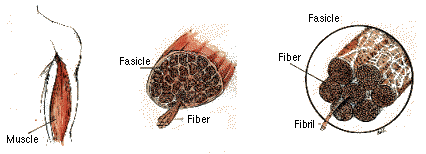


14.2) Muscle Fiber Types
Ralph Giarnella MD
Subject: Re: Muscle Fiber Type Conversion
Several studies have shown the conversion of type II fibers to type I.
Under conditions of chronic electrical stimulation the Extensor Digitorum
Longus in rats (which is primarily fast twitch) becomes almost entirely slow
twitch, indicating a considerable conversion of type II to type I. Also,
hyperthyroidism in rats can convert the almost entirely slow twitch soleus
muscle in rats to primarily fast twitch. If we immobilize a limb we can also
observe a conversion of fast twitch fibers to slow twitch fibers. In fact,
there are a host of different treatments (drugs, metabolic perturbations,
hormones, activity patterns) that can enduce a large scale muscle fiber type
conversion. The fact that we can shift a muscle from 98% type I to better than
50% type II indicates that some fibers are shifting from type I to type II.
Mike Prevost, Ph.D.14.3) Lactate aka Lactic Acid
From: "David LaPorte (Biochem)" (david-l@lenti.med.umn.edu)
Subject: Lactic acid
>From: DHaller@edc.org (DHaller)
>1. Lactic Acid: How/why is it formed?
The body has two ways to use glucose: aerobic and anaerobic glycolysis.
Aerobic glycolysis is more efficient because electrons which are liberated
from glucose are transferred to oxygen. This process produces energy
which the cell can trap as ATP. When there isn't enough oxygen, the cell
needs some other way to dump these electrons or the system will back up
and stop. The cell dumps these electrons into pyruvic acid, a product of
glucose, converting it to lactic acid.
David C. LaPorte
Department of Biochemistry
University of Minnesota
Minneapolis, MN 5545514.4) Muscle Growth
15 Other Areas
15.1 Nerve Impulses
15.2 Quick and Dirty Guide to Neurotransmitters
15.3 Cocaine, Nicotine, Amphetamines, and Dopamine
15.4 Leptin, Thermogenesis, and the Fat Thermostat
Subject: Free Fatty Acids and Thermogenesis
I've been reading a book on thermogenics by Daniel B. Mowrey. It's entitled "Fat
Management! The Thermogenic Factor." (Victory Publications, 1994, ISBN
0-93621-07-2.) It suggests that, under the right conditions, raising FFAs will stimulate the burning off of FFAs independently of the need for production of energy.
From: "Paul L. Moses" (theseus@dgs.dgsys.com)
Subject: The Leptin-Diabetes link
I picked up the 11/15/96 issue of Science for the article on leptin. The
article is entitled, "Modulation of Insulin Activities by Leptin" by Cohen, Novick, and Rubenstein.
From: "Paul L. Moses" (theseus@dgs.dgsys.com)
Subject: Leptin tolerance
For those of you new to the list, leptin is our new friend that keeps
making the news. It seems to be pivotal in fat metabolism.
1) Leptin levels rise with food intake.
2) Leptin antagonizes NPY, the hunger signal.
3) Over time, high food intake causes production of the peptide which blocks the MC4 receptor.
4) The body still thinks it is hungry and continues feeding.
5) Leptin levels rise further.
6) Steps 4 and 5 continue until "enough" leptin gets through the block to turn off the hunger signal.
7) By this time, supernormal leptin levels *may be disrupting insulin function* in other body tissues.
Subject: Re: Leptin tolerance
Date: Thu, 23 Jan 1997 08:48:31 -0600 (CST)
Were there any "solutions" to bring leptin levels back to normal?
Keith
[Not that I saw, since I do not believe the study was a weight--loss
experiment. Still, remember that lowering leptin levels in an obese
person will only worsen the problem, because leptin antagonizes NPY,
the hunger signal. Although it is unclear, it would seem that something
about weight loss reduces or removes the protein that blocks the MC4
receptor. At that point leptin again can be effective...or maybe not.
This could explain the "Oprah syndrome" - people who lose a lot of
weight and then gain it back: levels of the MC4 blocker never diminish
despite the weight loss. Speculation. PLM]
From: "Paul L. Moses" (theseus@dgs.dgsys.com)
Subject: Thoughts and more news updates
+++Another leptin study has concluded that low levels of leptin can lead to
weight gain.
From: "Paul L. Moses" (theseus@dgs.dgsys.com)
Subject: Leptin, Agouti, and Insulin
Another piece of the jigsaw puzzle has cropped up. Actually, there are
two pieces of the puzzle.
If you recall, new research has shown that a small peptide can block the
MC4 receptor in the hypothalamus. This receptor seems to be the site where
leptin signals the body to activate thermogenesis and feel satiated in
response to excess food intake. If the receptor is blocked, hunger and fat
storage continue unchecked.
The small peptide in question is in fact a protein called agouti that is
produced in skin. Something about obesity causes excess production of
agouti. Not only does agouti block the MC4 receptor (against leptin), but
interestingly, its normal action is to inhibit the production of melanin in
the skin.
A new study has explored the relationship between agouti and insulin.
Apparently high levels of insulin enhance the effects of agouti on weight
gain. Mice with the same levels of agouti were either given insulin or
not. Mice with high insulin levels gained twice as much weight as the
others.
2. Increase in obesity generates a rise in agouti levels.
3. Agouti slows leptin efficiency.
4. Leptin levels rise to compensate.
5. Leptin levels slow insulin efficiency.
6. Insulin levels rise to compensate.
7. Insulin levels enhance agouti (somehow).
8. Go back to step 3.
From: "Paul L. Moses" (theseus@dgs.dgsys.com)
Subject: Agouti: Seasonal adaption?
It struck me as I was mulling over the bits and pieces of leptin, tanning,
cold, appetite, and evolution that agouti might very well be a way to
account for seasonal weight fluctuations!
From: "Paul L. Moses" (theseus@dgs.dgsys.com)
Subject: UCP2: A discovery we already knew?
If you've seen any of the recent stories on the new discovery of the
"weight loss gene", you've probably thought it is sort of old hat. At
least I did.
From: "Paul L. Moses" (theseus@dgs.dgsys.com)
Subject: Leptin also acts directly
More news about the obesity hormone leptin, with some major implications
for our understanding of fat metabolism.
From: "Paul L. Moses" (theseus@dgs.dgsys.com)
Subject: Leptin in humans
The evidence on leptin's role in obesity just keeps growing. New findings further underline and support what we have been seeing all along.
Facts summarized from articles on Reuters and the New York Times.15.5 Thryoid Hormone Functions
Date: 20 May 96 10:37:13 EDT
Subject: Thyroid Question
>Now that we are on the subject of hormones, does anyone
>know if supplementing hormones causes your own body to
>produce less? It would seem your body would try to balance
>hormone levels out, especially hormones so related to basic
>metabolism like from the thyroid. However, I guess if that
>were the case, birth control pills would then be less effective
>over time, etc. Any thoughts?
Date: Wed, 15 May 1996 18:13:54 -0400
Subject: Re: Thyroid hormone-Stress/low carbs
Scott asked: I wasn't quite sure about the answers to your questions so I went to my
bookshelf and opened the Williams Textbook of Endocrinology 8th edition
- Saunders. What I found may prove to be as interesting to you as it was to
me. I will try to paraphrase it in laymens terms
1) Can thyroid be affected by overtraining? I read in a Weider mag it could.
The text does not address the topic of overtraining specifically but rather
more generally stress. Insofar as overtraining is probably a result of
excess stress perhaps the following may answer your question.
"Stress is an important regulator of thyroid stimulating hormone (TSH)
secretion. Stressful stimuli in animals inhibit the release of both TSH and
GH (growth hormone). In the rat this effect is due at least in part to the
release of somatostatin, possibly the consequence of central CRH
(corticotropin hormone) mobilization. In humans, severe physical stress
also probably inhibits TSH release. "
2) Can hypothyroid be a temporary state induced by over-training and
glycogen depletion?
The simple answer to your question seems to be a definite yes. And what
surprised me the most was that it appears that the amount of carbohyrate in
your diet rather than the total calories seems to be the most important
factor in determining that you might become hypothyroid. In individuals who
had become hypothyroid on a starvation diet it appears that simply giving
them 200 grams (800 cal) of pure carbos restores them to a normal thyroid
state whereas giving them the same amount of calories as either protein or
fat does not. Below are some excerpts from the text.
"Nutritional Influences:
Alterations in nutritional state, whether short-term or chronic, and whether
the result of underfeed, overfeed, or merely a change in substrate mix,
affect various aspects of throid hormone economy, especially peripheral
hormone metabolism. when normal thyroid lean or obese subjects are starved,
the serum total and free T3 (thyroid hormone) concentrations decrease
abruptly, often into the clearly hypothyroid range.. ..
These aspects of peripheral thyroid metabolism are exquisitely sensitive to
changes in the carbohydrate content of the diet. The abnormal thyroid
concentrations in serum are quickly restored to normal, not only by refeeding
with a balanced diet but also by administration of small quantities (800kcal)
of pure carbohydrate. Similiar quantities of protein have no effect on the
serum thyroid level. Calories given as fat are ineffective in restoring
normal thyroid hormone. Other evidence of these relationships is that
patients receiving low calorie diets composed principally of carbohydrate
display little or no change in the serum thyroid hormones.
Ralph Giarnella MD
From: "Paul L. Moses" (theseus@dgs.dgsys.com)
Subject: Re: Caffeine and Thyroid
+Date: Fri, 21 Feb 1997 15:07:09 -0400 (EDT)
+From: SLMITCHELL@Gems.VCU.EDU
+Subject: Caffeine and Thyroid
+
+I have a question about caffeine supplementation and the thyroid. It
+seems that a lot of people tend to be taking caffeine pills. I'm just
+wondering if anybody knows what effect this is having on the thyroid.
+That is, is it making more thyroxin, T3, or T4 when being stimulated
+with high levels of caffeine? Is it fooled by caffeine's effect of
+increasing metabolism and "thinking" that its making too much thyroxin,
+T3 or T4, does it cut back on its production of any of these? Also,
+does caffeine in any way effect TSH (Thyroid Stimulating Hormone)?
+Finally, if the caffeine is stopped (gradually or suddenly) does the
+thyroid go back to its normal level if it is indeed affected?
From: Chat2Chet@aol.com
Subject: Thyroid hormone - a few more details...
Here is some requested additional information about thyroid hormone function:
Robert D. Chetlin, M.S., C.S.C.S., A.C.S.M. Certified15.6 Growth Hormone
Before:

  |           |
 -------------------cell membrane
  |           |
high      low

Binding step 1:

  |GH      |
 -------------------
  |          |
 H           L

Binding complete:

  |GH|
 -------------------
 |   |
 H   L
Subject: GH info
GH is involved with the growth processes of skeletal muscle as well as
other tissues in the body.15.7 L-Carnitine
1. Ransone, JW and Lefavi, RG. (1997). The effects of dietary L-carnitine
on anaerobic exercise in elite male athletes. Journal of Strength and
Conditioning Research. 11(1):4-7.
Strength and Conditioning
Sport Nutrition Consultant
Houston, TX 15.8 Glucosamine Sulfate
Date: Mon, 17 Mar 1997 07:41:16 -0500
How it works (according to my doctor):
He claims that collagen and glycosaminoglycans (GAGs) make up the two main
components that "together continuously construct and reconstruct your tendons and ligaments." Glucosamine is "the major precursor to GAGs". The body makes limited quantities of glucosamine and so supplements help increase GAG levels by up to 170%.
Subject: RE: Glucosamine sulfate
Glucosamine is one of the ingredients in a number of products
currently on the veterinary market which are billed as being
"chondroprotective" agents for use in treating osteoarthritis in both dogs and
horses. Glucosamine is a precursor for proteoglycan synthesis in cartilage. It's well absorbed when taken orally and its administration has been shown to stimulate proteoglycan synthesis. The theory is that it helps to allay the effects of osteoarthritis by moving the metabolic equilibrium more towards synthesis of cartilge matrix rather than towards its breakdown.15.9 GHB - Gamma Hydroxybuterate
GHB IS A DEPRESSANT. NEVER TAKE GHB WITH ALCOHOL.
From: "Michael A. Burns" (burn0039@gold.tc.umn.edu)
Subject: Re: FDA GHB warning
>From: TMccull230@aol.com
> Subject: FDA RE-ISSUES WARNING ON GHB
>
> In recent months there has been a resurgence of media and
> public interest in the use of gamma hydroxybutyric acid (GHB) for
> body building and "recreational" uses. Despite renewed claims
> that it is legal, GHB continues to be an unapproved and
> potentially dangerous drug and cannot be legally marketed in the
> U.S. Therefore, FDA is renewing its warning against the use of
> this product.
Michael A. Burns
Subject: Re: GHB...What's The Point
Date: Mon, 24 Feb 1997 23:08:44 -0000
> As I don't necessarily trust the FDA to make an intelligent decision
> about compounds I can use or can't use legally, does anyone know anthing
> more about GBH? How does it work? How effective is it as an anabolic
> agent? Side effects? Dose? Were the deaths and injuries as a result
> of anabolic or recreational use?
alexanders@guernsey.net15.10 OKG - Ornithine Alpha Keto-Glutarate
From: "Paul L. Moses" (theseus@dgs.dgsys.com)
Subject: OKG
Last fall I decided to give OKG (Ornithine Alpha Ketoglutarate) a try after
corresponding with Brad and a researcher at WVU who had conducted a study
on it. I experienced strength and size increases, and personally, I think
this supplement is worthwhile.
After that, there's an email from Brad Maust about how to take OKG.
Paul
Subject: Re: OKG
Robert D. Chetlin, M.S., C.S.C.S., A.C.S.M. Certified
Exercise Physiologist
Department of Human Performance & Applied Exercise Science
WVU School of Medicine
P.O. Box 6116
Morgantown, WV 26506-6116
Subject: OKG
At 18:54 9/9/96, Paul L. Moses wrote:
> Alright...
>
>I ordered two 100 cap 1250 mg Sportspharma OKGs. You said 8 per day.
>200/8 =25 days?
>What is the protocol? Do I take 8 every day or can I skip one day a week?
Cheers!
--
Brad Maust
ichibon@ipad.estd.wvu.edu15.11 Glycemic Index
 Breads
        Rye
                Crispbread                              95
                Whole meal                              89
                Whole grain, i.e. pumpernickel          68
        Wheat
                White                                  100
                Whole meal                             100
 Pasta
        Macaroni
                White, boiled 5 min.                    64
        Spaghetti
                Brown, boiled 15 min.                   61
                White, boiled 15 min.                   61
                White, boiled 5 min.                    45
                Protein enriched                        38
        Star pasta
                White, boiled 5 min.                    54
 Tortilla
        Corn                                           100*
 Cereal grains
        Barley (pearled)                                31
        Buckwheat                                       74
        Bulgur                                          65
        Millet                                         103
        Rice
                Brown                                   81
                Instant, boiled 1 min.                  65
                Instant, boiled 6 min.                 121
                Polished, boiled 5 min.                 58
                Polished, boiled 15 min.                79
                Parboiled, boiled 5 min.                54
                Parboiled, boiled 25 min.               65
        Rye kernels                                     47
        Sweet corn                                      80
        Wheat kernels                                   63
 Breakfast cereals
        All Bran                                        74
        Cornflakes                                     115
        Muesli                                          96
        Porridge oats                                   87
        Puffed rice                                    132
        Shredded wheat                                  97
        Weetabix                                       109
 Cookies
        Digestive                                       82
        Oatmeal                                         78
        Rich tea                                        80
        Plain crackers (water biscuits)                 91
        Ryvita                                          95
 Pastry                                                 81*
 Sponge cake                                            63*
 Root vegetables
        Beetroot                                        88*
        Carrots                                        117*
        Parsnips                                       134*
        Potato
                Instant                                118
                Mashed                                 100
                New, boiled                             80
                Russet, baked                          128
                Sweet                                   70
        Rutabaga (Swede)                                99*
        Yam                                             74
 Legumes
        Baked beans (canned)                            60
        Bengal gram dal                                 12
        Black beans                                     43*
        Blackeye peas                                   46*
        Brown beans                                     54*
        Broad beans (Fava beans)                       109*
        Butter beans                                    46
        Chick peas (Garbanzo)                           49
        Green peas
                Dried                                   50
                Frozen                                  65
                Marrowfat                               65*
        Haricot (white) beans                           57
        Kidney beans                                    45
        Lima beans                                      50*
        Red lentils                                     37
        Soy beans
                Dried                                   20
                Canned                                  22
 Fruit
        Apricots, dried                                 46
        Apricots, canned                                91
        Apple                                           53
        Apple juice                                     59
        Banana                                          84
        Fruit cocktail                                  79
        Grapes                                          62
        Grapefruit juice                                69
        Orange                                          59
        Orange juice                                    67
        Peaches                                         40
        Peaches, canned                                 74
        Pears                                           58
        Pears, canned                                   63
        Pineapple juice                                 66
        Plum                                            34
        Raisins                                         88*
 Sugars
        Fructose                                        31
        Glucose                                        138
        Honey                                          126
        Maltose                                        152
        Sucrose                                         89
 Snack foods
        Corn chips                                      99
        Potato chips                                    77
        Peanuts                                         15
        Mars Bar                                        94*
 Dairy products
        Ice cream                                       52
        Skim milk                                       46
        Whole milk                                      49
        2% milk                                         48*
        Yogurt                                          52

 Miscellaneous
        Fish fingers                                    52*
        Lucozade                                       131*
        Nopal (prickly pear)                            10*
        Sausages                                        39*
        Tomato soup                                     52*
-------------
138 Glucose
134 Cooked parsnips
132 Puffed rice
131 Lucozade
128 Potato, Russet, baked
126 Honey
121 Rice, instant, boiled 6 min.
118 Potato, instant
117 Cooked carrots
115 Cornflakes
109 Weetabix
109 Broad beans (Fava beans)
103 Millet
100 Tortilla, corn
100 Potato, mashed
100 Bread, wheat, whole meal
100 Bread, wheat, white
99 Rutabaga (Swede)
99 Corn chips
97 Shredded wheat
96 Muesli
95 Cookies, Ryvita
95 Bread, rye, crispbread
94 Mars Bar
91 Cookies, plain crackers
91 Apricots, canned
89 SUCROSE
89 Bread, rye, whole meal
88 Raisins
88 Beetroot
87 Porridge oats
84 Banana
82 Cookies, digestive
81 Rice, brown
81 Pastry
80 Sweet corn
80 Potato, new, boiled
80 Cookies, rich tea
79 Rice, polished, boiled 15 min.
79 Fruit cocktail
78 Cookies, oatmeal
77 Potato chips
74 Yam
74 Peaches, canned
74 Buckwheat
74 All Bran
70 Potato, sweet
69 Grapefruit juice
68 Bread, rye pumpernickel
67 Orange juice
66 Pineapple juice
65 Rice, parboiled, boiled 25 min.
65 Rice, instant, boiled 1 min.
65 Green peas, marrowfat
65 Green peas, frozen
65 Bulgur
64 Macaroni, white, boiled 5 min
63 Wheat kernels
63 Sponge cake
63 Pears, canned
62 Grapes
61 Spaghetti, white, boiled 15 min.
61 Spaghetti, brown, boiled 15 min.
60 Baked beans (canned)
59 Orange
59 Apple juice
58 Rice, polished, boiled 5 min.
58 Pears
57 Haricot (white) beans
54 Rice, parboiled, boiled 5 min.
54 Pasta, star white, boiled 5 min.
54 Brown beans
53 Apple
52 Yogurt
52 Tomato soup
52 Ice cream
52 Fish fingers
50 Lima beans
50 Green peas, dried
49 Whole milk
49 Chick peas (Garbanzo)
48 2% milk
47 Rye kernels
46 Skim milk
46 Butter beans
46 Blackeye peas
46 Apricots, dried
45 Spaghetti, white, boiled 5 min.
45 Kidney beans
43 Black beans
40 Peaches
39 Sausages
38 Pasta, spaghetti, protein enriched
37 Red lentils
34 Plum
31 Fructose
31 Barley (pearled)
22 Soy beans, canned
20 Soy beans, dried
15 Peanuts
12 Bengal gram dal
10 Nopal (prickly pear)

Among the literally hundreds of studies of the Glycemic Index in the scientific literature, these are some of the most important:
Frati-Munari, A.C. ["The Glycemic Index of Some Foods Common in Mexico"], (Gac Med Mex, Vol. 127, No. 2, March-April 1991, pp. 163-171) [as abstracted in Medline].
Jenkins, David J.A. et al. "Glycemic Index of Foods: a Physiological Basis for Carbohydrate Exchange" (The American Journal of Clinical Nutrition, Vol 34, March 1981, pp. 362-366).
Jenkins, David J.A. et al. "Starchy Foods and Glycemic Index" (Diabetes Care, Vol. 11, No. 2, February 1988, pp. 149-159).
Miller, Jannette Brand, et al. "Rice: a High or Low Glycemic Index Food?" (The American Journal of Clinical Nutrition, Vol 56, 1992, pp. 1034-1036.
Miller, Jannette C. Brand. "Importance of Glycemic Index in Diabetes" (The American Journal of Clinical Nutrition, Vol. 59 (supplement), 1994, pp. 747S-752S).
Rassmussen, Ole. "Day-to-day Variation of the Glycemic Response in Subjects with Insulin-dependent Diabetes with Standardized Premeal Blood Glucose and Prandial Insulin Concentrations" (The American Journal of Clinical Nutrition, Vol 57, 1993, pp. 908-911).
Smith, Ulf. "Carbohydrates, Fat, and Insulin Action" (The American Journal of Clinical Nutrition, Vol. 59 (supplement), 1994, pp. 686S-689S).
Wolever, Thomas M.S. et al. "The Glycemic Index: Methodology and Clinical Implications" (The American Journal of Clinical Nutrition, Vol. 54, 1991, pp. 846- 854).
Wolever, Thomas M.S. et al. "Glycemic Index of Fruits and Fruit Products in Patients with Diabetes" (The International Journal of Food Sciences and Nutrition, Vol. 43, 1993, pp.205-212).
15.12 10 Commandments of Sports Nutrition
Over the weekend I thought it might be a good idea to summarize the basic ideas of the list in a set of "guidelines", and owing to the many dumb Bible jokes people have made to me about my name I figured why not go for it...
So I give you these Fifteen /crash\..uh..Ten Commandments of Sports Nutrition!
I. Eat enough food.
II. When in doubt, drink more water.
III. Get enough sleep.
.IV. Beware of overtraining and overactivity.
V. Avoid junk food.
VI. Eat at least 1.5 grams of protein per kilogram of bodyweight, or more.
VII. Choose low GI carbohydrates over high GI carbohydrates.
VIII. Avoid ingesting raw eggs or raw egg whites.
IX. Take a multivitamin.
X. Stay away from the "S" brand of supplements.
XI. Keep dietary fat below 30% and avoid saturated fats.
XII. Listen to your body - don't think of it as your opponent or an object.
XIII. Forget about smoking, drinking, and recreational drugs.
XIV. Set goals and use variation consciously at least every few months.
XV. Genetics are no excuse.
15.13 Safe Fast Foods
Fast food that's (supposed to be) less than 30% CFF (calories from fat).
More info would be appreciated. If you can, get the nutrition info pamphlets and figure
out which menu items are less than 30% calories from fat.
Email a summary to the list. Also, if you know of any menu changes, let us know.
Restaurant data here for: McDonald's, Chick Fil A, Roy Rogers, Boston Chicken, Pizza Hut, Wendy's, Subway, La Salsa, Taco Bell, Burger King, Dairy Queen, Kentucky Fried Chicken, Long John Silver
From: witherow@geordi.calspan.com (Kimberly Witherow)
Subject: Lowdown on McDonalds
I finally decided to stop lurking and make a contribution. Here's the nutritional breakdown for McDonalds. Suprisingly if you have a sweet tooth McDonalds can satisfy it without much fat. On the other hand if you're practicing the high fat diet then McDonalds is definitely the place to go.
| item | calories | fat g | chol g | sodium mg | carb g | protein g | cff |
| Hamburger | 270 | 9 | 30 | 530 | 35 | 12 | 29.6% |
| McLean Deluxe | 340 | 12 | 60 | 810 | 37 | 24 | 29.4% |
| McGrilled Chicken Classic | 250 | 3 | 45 | 510 | 33 | 24 | 12% |
| Salads | |||||||
| Chunky Chicken Salad* | 160 | 5 | 75 | 320 | 8 | 23 | 28.1% |
| Breakfast | |||||||
| English Muffin | 140 | 2 | 0 | 220 | 25 | 4 | 14.3% |
| Hotcakes (plain) | 280 | 4 | 10 | 600 | 54 | 8 | 12.5% |
| Hotcakes w/ Syrup & Margarine | 560 | 14 | 10 | 750 | 100 | 8 | 21.4% |
| Apple Bran Muffin | 180 | 0.5 | 0 | 210 | 40 | 4 | 2.8% |
| Desserts/Shakes | |||||||
| Vanilla Lowfat Frozen Yogurt Cone | 120 | 0.5 | 5 | 85 | 24 | 4 | 4.2% |
| Strawberry LF Frozen Yogurt Sundae | 240 | 1 | 5 | 115 | 51 | 6 | 4.2% |
| Hot Fudge LF Frozen Yogurt Sundae | 290 | 5 | 5 | 190 | 54 | 8 | 15.5% |
| Hot Caramel LF Frozen Yogurt Sundae | 310 | 3 | 5 | 200 | 63 | 7 | 9.7% |
| McDonaldland Cookies | 260 | 15 | 0 | 220 | 37 | 3 | 30.8% |
| Small Vanilla Shake | 310 | 5 | 25 | 170 | 54 | 12 | 14.5% |
| Small Chocolate Shake | 350 | 6 | 25 | 240 | 62 | 13 | 14.3% |
| Small Strawberry Shake | 340 | 5 | 25 | 170 | 63 | 12 | 13.2% |
* = Eat it plain because the dressing with the least fat is Lite Vinaigrette with 40% fat.
From: CAROLINE@lib.uttyl.edu
Subject: Chick-fil-a eats
Below find the nutrition listing for Chick-fil-a. I am only including menu items with less than 30% calories from fat. I leave you to your own devices in regard to the beverages. kc=calories, p=protein in grams, f=fat in grams, c=carbs in grams, s=sodium in mg, ch=cholesterol in mg, cff=%calories from fat.
| Item | kilocalories | protein | fat | carbs | sodium | chol | cff |
| Chicken (no bun, pressure fried) | 219 | 35.86 | 6.78 | 1.54 | 801 | 41.6 | 27.86% |
| Chargrilled chicken | 258 | 30.1 | 4.83 | 23.70 | 1121 | 40.0 | 16.85% |
| Chargrilled chicken deluxe | 266 | 30.5 | 4.93 | 25.5 | 1125 | 40.0 | 16.68% |
| Chargrilled chicken, no bun | 128 | 26.40 | 2.47 | 1.0 | 698 | 31.8 | 17.37% |
| "Grilled and Lites" skewers | 97 | 20.00 | 1.76 | 0.38 | 280 | 3.0 | 16.33% |
| Hearty Breast of Chicken soup | 152 | 15.75 | 2.67 | 11.06 | 530 | 45.8 | 15.81% |
| Chargrilled chick garden salad | 126 | 20.3 | 2.13 | 8.26 | 567 | 27.6 | 15.21% |
| Tossed salad with lite Italian dressing | 43 | 1 | 1.2 | 7 | 856 | c0 | 25.12% |
Should you decide to spulrge and throw caution to the wind, BEWARE the chicken salad sandwich and the chicken salad plate! The salad plate has 57.84% cff!!!!!!! Also, the chargrilled chicken sandwich (not the deluxe) is simply a piece of chicken on a bun with a pickle slice! Is it really worth a couple of dollars? I was disappointed. What I wanted to be a treat turned out to be a waste of my hard earned $$$.
From: ldodds@ccmpo-d.draper.com
Subject: Subway nutrition
Here's a summary of some Subway info I got from a local store: (all info is for a footlong sub)
| Sub | kCal | Fat | cff |
| Ham&Cheese | 643.33 | 17.94 | 25.10%* |
| Turkey | 644.53 | 19.25 | 26.88% |
| Subway Club | 692.93 | 22.23 | 28.87% |
| Veggies&Cheese | 535.33 | 17.21 | 28.93% |
| Roast Beef | 689.33 | 23.21 | 30.30% |
If you get a Wheat roll, add another 30 kCal and a gram of fat.
*There might be a problem with this number. In all other cases, getting the Wheat roll added 30 kCal and 1 gram of fat. In this case, getting the Wheat roll added 30 kCal but 4 gr of fat! That's 125% cff which cannot be right. I think that means the original 17.94 gr Fat number is wrong.
I also do not know what is included on each sandwich. (i.e. Does this include oil/mayo???) They do say that the numbers do NOT include salt/pepper. Even at that the sodium numbers range from 1500-3100 mg per sandwich.
ROY ROGERS...another report on safe fast food options.
Roy Rogers is a scary place for healthy eating. To put it in
perspective, three of the four *desserts* on the menu are lower in fat than
many of the entrees and side dishes
But if you are stuck, here are the top picks...
| item | cal | carb | protein | fat |
| 3 Pancakes | 280 | 56 g | 8 g | 2 g |
| 3 pancakes w/2 bacon (!) | 350 | 56 g | 13 g | 9 g |
| plain bagel | 300 | 60 g | 10 g | 2 g |
| raisin bagel | 300 | 63 g | 10 g | 1 g |
| Plain hamburger | 260 | 33 g | 11 g | 9 g |
| *Roast Beef Sandwich | 260 | 30 g | 24 g | 4 g |
| Grilled Chicken Sandwich | 340 | 32g | 25 g | 11 g |
| 1/4 Roy's Roaster (white meat, skin off) | 190 | 2 g | 32 g | 6 g |
| Grilled Chicken Salad # | 120 | 2 g | 18 g | 4 g |
| Baked Potato (plain) | 230 | 27 g | 3 g | 1 g |
| Mashed potatoes | 92 | 20 g | 2 g | 0 g |
| gravy | 20 | 3 g | 0 g | 0 g |
| baked beans | 160 | 30 g | 6 g | 2 g |
| vanilla frozen yogurt cone | 180 | 29 g | 5 g | 4 g |
| hot fudge sundae | 320 | 50 g | 8 g | 10 g |
| strawberry sundae | 260 | 44 g | 6 g | 6 g |
*= probable best choice
#=note: a salad with more protein and fat than carbs!! who woulda thunk?
Caveat - Fast food restaurants are the lair of Satan! At least for decent eating habits...
The Hand Tossed pizza is the only round pizza to make it below 30% CFF, and just barely. I'm sure that individual pizzas will be over the line if the cook uses more cooking oil or whatever....
Per Slice:
| item | cal | carb | protein | fat |
| Hand Tossed Cheese | 235 | 29 | 13 | 7 |
| Hand Tossed Ham | 213 | 29 | 12 | 5 |
| Hand Tossed Veggie Lovers | 216 cal | 30 | 11 | 6 |
| Cheese Bigfoot | 186 | 25 | 10 | 6 |
| Almost but not quite: | ||||
| Hand Tossed Beef ( 33% CFF ) | 260 | 29 | 15 | 9 |
| Hand Tossed Pepperoni (31% CFF ) | 238 | 29 | 12 | 8 |
| Pepperoni Bigfoot ( 31% CFF ) | 205 | 25 | 10 | 7 |
| Pep, Mush & Saus Bigfoot (33% CFF ) | 214 | 25 | 11 | 8 |
The propaganda brochure also has the following quote:
"Nutritionists agree that you should get your energy from a proper
balance of nutrients such as protein, carbohydrates and fat. While the
toppings you choose will change the proportions, you'll be happy to learn
that Pizza Hut pizza contains all three of these energy sources."
| Item | kcal | carb | protein | fat |
| *Chicken Breast sandwich | 420 | 50 | 41 | 5 |
| *1/4 White Meat chicken No Skin | 160 | 0 | 31 | 4 |
| *BBQ baked beans | 330 | 55 | 11 | 10 |
| *whole kernel corn | 190 | 39 | 6 | 4 |
| *rice pilaf | 180 | 32 | 5 | 5 |
| corn bread | 200 | 33 | 3 | 6 |
| hot cinnamon apples | 250 | 55 | 0 | 4.5 |
| fruit salad | 70 | 17 | 1 | .5 |
| cranberry relish | 370 | 74 | 2 | 5 |
| steamed vegetables | 35 | 7 | 2 | 0.5 |
| new potatoes | 140 | 25 | 3 | 3 |
* = probable best choices
OK, as promised, here are some excerpts from the nutritional propaganda brochures I picked up last week. I'm only going to give the numbers for the lower fat items ( < 30% CFF).
WENDY'S| item | calories | carbs | protein | fat |
| Grilled chicken sandwich | 290 | 35 | 24 | 7 |
| Baked potato (plain) | 310 | 71 | 7 | 0 |
| Frosty (!) (12 oz small) | 340 | 76 | 12 | 10 |
| Chili (8 oz) | 190 | 20 | 19 | 6 |
| Jr. Hamburger | 260 | 33 | 15 | 9 (31% CFF) |
A frosty is 26% CFF, while the chili is about 32% CFF - almost but not quite LF.
From: John Bozsony
Subject: La Salsa Nutritional Information
Well, I finally remembered to pick up a list from my favorite fast food place, La Salsa. They seem to be all over in the LA area. I haven't seen any outside of the city. Anyway, here is the requisite info.:
| Item | Cal. | Fat(gm) | CFF % | Na(mg) | Cholesterol(mg) |
| 1/2 Rice & 1/Beans | 350 | 4.6 | 11.8 | 522 | 2.8 |
| Arroz Mexicano | 217 | 3.9 | 16.0 | 65 | 0.0 |
| Bean & Cheese Burrito | 559 | 14.0 | 22.5 | 1066 | 14.2 |
| California Burrito | 516 | 14.8 | 25.8 | 1071 | 7.1 |
| Carne Asada Combo | 934 | 27.5 | 26.5 | 864 | 132.1 |
| Fish Taco | 236 | 7.8 | 29.5 | 484 | 36.0 |
| Frijoles La Salsa | 314 | 3.9 | 11.3 | 774 | 2.8 |
| Orig. Gourmet Burrito | 509 | 16.3 | 28.8 | 937 | 61.7 |
| Pollo Asado Combo | 863 | 18.1 | 18.9 | 990 | 133.8 |
| Mucho Taco | 266 | 7.5 | 25.5 | 283 | 39.9 |
| 2 Taco Basket-Steak | 343 | 9.8 | 25.8 | 175 | 64.6 |
| 2 Taco Combo-Chicken | 694 | 13.2 | 17.1 | 854 | 68.3 |
| 2 Taco Combo-Steak | 729 | 17.9 | 22.1 | 796 | 67.5 |
| Vegetarian Taco | 292 | 7.8 | 24.1 | 402 | 7.1 |
Also a little promo from their menu:
"We care about your health. Our chicken is skinless and
trimmed. Our steak is lean. Our black beans contain no
lard or oils. We make our fresh salsa daily. We use only
canola or peanut oils. We accommodate vegetarian requests.
We do not own a can opener."
Hmmm. . . I think I'll stop on the way home and pick up a burrito. :-)
Border Lights - new LF entrees that are filling and taste something like chewy insulation
| Item | cal | carb | protein | fat |
| Light taco | 180 | 13 | 11 | 5 |
| Light soft taco | 181 | 22 | 12 | 5 |
| Light taco supreme | 162 | 16 | 12 | 5 |
| Light soft taco supreme | 199 | 25 | 14 | 5 |
Figures are as reliable as can be expected when they come from the fast food outlet....
Here are some fast food values for the web page.
Burger King| Item | Calories | Protein-grms | Carbs-grms | Fat-grms | Percentage |
| BK Broiler - Chicken | 280 | 20 | 29 | 10 | 32.1% |
| BK Broiler sauce .4oz | 37 | 0 | 1 | 4 | 97.3% |
| Item | Calories | Protein-grms | Carbs-grms | Fat-grms | Percentage |
| BBQ beef | 225 | 12 | 34 | 4 | 16.0% |
| chicken fillet - grilled | 300 | 25 | 33 | 8 | 24.0% |
| Blizzard,straw-reg | 570 | 13 | 92 | 16 | 25.3% |
| Breeze, straw - reg | 420 | 12 | 90 | 1 | 2.1% |
| ice cream cone - reg | 230 | 6 | 36 | 7 | 27.4% |
| DQ Ice CreamSand | 140 | 3 | 24 | 4 | 25.7% |
| yogurt cone | 180 | 6 | 38 | 1 | 5.0% |
| yogurt cup | 170 | 6 | 35 | 1 | 5.3% |
| yogurt straw sundae | 200 | 6 | 43 | 1 | 4.5% |
NOTHING. No item on the menu is less than 50% CFF, and some are up to 70%.
| Item | Calories | Protein-grms | Carbs-grms | Fat-grms | Percentage |
| chicken, lt herb - 1pc | 120 | 22 | 1 | 4 | 30.0% |
| fish,lemon crumb - 5oz | 150 | 29 | 4 | 1 | 6.0% |
| hushpuppy, 1pc | 70 | 2 | 10 | 2 | 25.7% |
| rice, 4.0oz | 160 | 3 | 30 | 3 | 16.9% |
| roll, 1pc | 110 | 4 | 23 | 1 | 8.2% |
15.14 Metabolism During and After Exercise
During rest, the body use slightly more fat than carbohydrate for its fuel, along with a small percentage of protein.
In the first fractions of seconds of exercise, muscles depend on ATP for muscle contraction. The energy from fat, glucose and protein are ultimately transferred to ATP, but the cells can only store tiny amount of ATP. As the exercise continue more ATP must be made and a muscle enzyme is signaled to break down another high-energy compound, phospho- creatine (PC). PC supplies last for few seconds (less than 30) and in that time more ATP is produced from glucose and fat. PC is also produced from fat and glucose. A hormone called thyroxin acts on the muscle to increase their metabolic rate and produce more ATP. A lot of heat is released in this production.
If the exercise is aerobic, that is there is enough oxygen, muscles can "burn" the glucose thoroughly and we talk about aerobic metabolism. Aerobic metabolism happens inside the mitochondria of the cell. Both fat and glucose are metabolized aerobicly in the mitochondira of the cell.
If the exercise is very intense and the heart and lung cannot provide enough oxygen, the extra energy must come from glucose which can be metabolized without oxygen (fat cannot be metabolized without oxygen). This can only last for short time because the glucose is changed to lactic acid and held as such until there is enough oxygen. In this state the muscle are said to be in a oxygen dept. Lactic acid buildup can cause burning pain and can lead to exhaustion within seconds if the blood cannot clear it away. Therefore you have to stop or reduce the exercise after a while and your body begins producing energy aerobically again. After your muscle has recovered you can repeat this high intense exercise. This sort of exercise is called anaerobic. Weightlifting and sprinting are good examples.
Within the first 20 minutes or so of moderate exercise, a person uses up about one-fifth of the available glycogen. As the muscle devour their own glycogen, they become ravenous for more glucose and increase their uptake of blood glucose 20-fold or more. Very soon the blood glucose start to fall and the hormone glucagon is released into the blood. This hormone acts on the liver to promote the breakdown of glycogen to glucose, the conversion of amino acids to glucose and the release of glucose to the blood, to keep the blood glucose level constant. The protein syntheses is decreased and the use of protein as energy is increased.
Early in the exercise, the blood fatty acid concentration fall as the muscles begin to draw on the available fatty acids. This is also valid for weightlifting where blood fat (and glucose) is used between sets to generate ATP and PC. If the exercise is continued for more than few minutes the hormone epinephrine (fight or flight hormone) is released (how early, depends on how trained the athlete is). This hormone acts on the fat cells to release fatty acids into the blood which the muscle cells absorb. The more fatty acids in the blood the more the use of fat as energy. After about 20 minutes of exercise, the blood fatty acid concentration rises and surpasses the normal resting concentration. Another group of hormone, called glucocorticoids (stress hormones) is also released and they promotes the release and use of fatty acid but also the use of glucose and breakdown of proteins. (The growth hormone also release fatty acid into the blood, but it is turned off during exercise and is turned on by insulin during the night after exercise.)
The fat stores are virtually unlimited source of energy but without glucose ( from glycogen ) the exercise performance is greatly impaired. If the glycogen stores are depleted, glucose have to come from the outside, (usually through carbohydrate drinks). As glycogen stores are depleted hypoglycemia hits. It brings nervous system function almost to a halt, making exercise difficult, if not impossible. This is "hitting the wall" in a marathon, and different from the sudden fatigue that one feels after a set of weightlifting. For a trained runner eating a normal mixed diet (55% of calories from carbs) it take about 2 hour of constant running to deplete the glycogen stores. If the runner consume diet containing 83% of calories from carbs 2 days before, he/she might run for up to 3 hour before hitting the wall (P. Astrand, Something old, and something new... very new, Nutrition Today, June 1968 pp. 9-11.). Weightlifters use relative more glucose vs. fat than runners do, but the calories burned per hour are much lower. The possibility for a trained weightlifter to "hit the wall" during long and intense session, are almost zero.
The size of the glycogen stores depends partly on the carbohydrate content of the diet (also the total amount of carbs consumed) and the rate at which you will use glycogen during exercise. High intensity exercise increase the amount of glycogen the muscles can to store. The body constantly uses and replenishes its glycogen stores.
After the exercise, the blood glucose is lower than normal, but will soon reach its normal level if the glycogen stores have not been depleted. The fat-releasing hormones (epinephrine and glucocorticoids) remain active the next 2-3 hours and fat use may continue at an accelerated rate. The metabolism is up to 25% higher than normal.
The hormone epinephrine keeps the insulin level from rising too high in response to glucose in the blood. This explains why consuming food high in GI during and the next 3 hour after exercise, doesn't increase your body fat. All the carbs goes to restore the glycogen stores. Glucose goes into muscle glycogen and fructose goes into liver glycogen. It wouldn't be wise to simultaneously releasing fatty acid into the blood and transferring it back into the fat cells. Nature is very logical.
Several hours afterwards, the protein synthesis becomes normal and the body begin to repair and rebuild itself. During sleep the growth hormone is released. As mentioned earlier, the growth hormone release fatty acid into the blood. The use of fatty acid is increased and the body seems to relay mainly on fat as energy during rebuilding. Fat supplies 60 % of the body's ongoing energy need during rest. (M.H. Willhams, Nutritional Aspects of Human Physical and Athletic Performance, 2 nd ed. (Springfield, Ill.: Thomas Books, 1985) p. 110 ).
Every source I have says that athletes should not eat 3 hours before an exercise or a least eat very light. If an exerciser makes the mistake of taking sugar within the three hours before exercise, before insulin secretion is suppressed, it will stimulate insulin to pour forth, and hypoglycemia then becomes likely. Research on athletics shows that a sugar drink taken directly before exercise can reduce athletic performance by 25% . Drinking a lot of water on the other hand increases performance.
Diet high in (complex) carbs the day before exercise increase the glycogen stores, which increase the possible duration of the exercise, but not the performance. This diet also spare the use of protein as energy.
During exercise it is wise to drink water. A rapid water loss equal to 5% of the body weight can reduce muscular work capacity by 20 - 30%. If the exercise is going on at rapid pace for more than one and half hour, you should drink carbohydrate drinks which contain 60 - 80 gr.carbs/liter. More carbs taste too sweet. If the exercise is high in intensity, high GI drinks are better. Endurance athlete should also consume drinks high in GI. Some producers of sportsdrinks add fructose to increase sweetness without increasing the total calories. This is aimed at people trying to lose fat without exercise. Insulin is not increased after the exercise is started and remain so the next 2 or 3 hour afterwards. Solid food should be avoided during exercise. For bodybuilding and weightlifting there is no need to consume anything during exercise, except water.
After the exercise the ability of the gastrointestinal tract to absorb nutrients, vitamins, minerals and trace minerals is increased and this opportunity should be used to eat meal which are high in nutrients, carbs and containing protein from different sources. During the exercise lots of minerals are lost through sweat, which need to be replaced. Shortage of these minerals decrease performance and they are the building block of many enzymes and hormones which control the metabolism. Unrefined foods are higher in minerals than refined. Food high in GI is prefered and should be consumed if there is a need of very rapid restore of glycogen store, that is if you have been training in the evening and plan to train again the morning after.
I pointed out in a post earlier that it is nearly impossible to know the GI of a meal composed of variety of food. Such meal are more likely to contain completer distribution of nutrition and are absorbed better. It is good to give the muscle time to recover so the need to restore the glycogen rapidly is not necessary for a bodybuilder. The glycogen stores are restored fully in one or two day if the diet contain high carbs. If the GI of the food, that is consumed within 2 hours after exercise, is high, it can only have positive effects.
I hope this answers some questions.
Geir Gudmundsson
email : uh2n@rz.uni-karlsruhe.de
15.15 More on the CEA Stack
First, let's start with some definitions.
Agonists are chemical agents which stimulate a certain kind of response. Usually agonists are compounds which activate a receptor in cell membranes.
Antagonists are chemical agents which work against a certain kind of response. Antagonist compounds may block a receptor so that it cannot be activated, or they may activate a different receptor in the same cell and activate a process which works against the process connected to the first kind of receptor.
Receptors are protein-based structures embedded in cell membranes which serve as relays for signals. External chemical agents such as hormones or prostaglandins encounter the receptors on the outside of the cell. When these agents connect with the receptor, it undergoes a structural change which causes secondary messengers *within* the cell to activate or deactivate. Secondary messengers then start up particular enzyme reactions inside the cell.
Catecholamines are more commonly known as "stress hormones". Specifically these are the chemicals epinepherine and norepinepherine. They are also called adrenaline and noradrenaline.
Now, on to the mechanics of the CAE stack.
Ephedrine does not appear to directly stimulate nerve or muscle tissue but seems instead to increase the release of the norepinepherine (NA in the diagrams below) and probably also epinepherine (Adr below). Thus it seems likely that ephedrine can activate all receptors that respond to these hormones (the adrenoreceptors).
Studies have found that tolerance to ephedrine's effects on heart rate and blood pressure occurs, but that the thermogenic effects remain unchanged and even increase with chronic use. This suggests that beta-3 adrenoceptors are being affected. Other studies have found lower amounts of lean tissue loss in subjects on a low calorie diet as compared to control subjects (not receiving ephedrine). That suggests an effect on beta-2 adrenoceptors, which seem to be linked to protein synthesis. The subjects receiving ephedrine also experienced greater rates of fat loss. Still other studies show that the thermogenic response to ephedrine comes primarily from skeletal muscle and visceral organs, with only a small contribution from brown adipose tissue (BAT). Some evidence suggests that chronic use can enhance the function of BAT and its contribution to thermogenesis.
The body normally uses a variety of methods to rein in the stress hormones. It can inhibit the release of catecholamines in the first place. It can mobilize antagonists to act on receptors in the synaptic junction. It can also act within the cell to slow the propagation of signals via secondary messengers.
The CAE stack combination (200 mg caffeine, 325 mg aspirin, 20-25 mg ephedrine) targets all of these stages. Ephedrine apparently enhances the release of catecholamines. Aspirin, as we saw in the FAQs, blocks the formation of prostaglandins. These prostaglandins normally would blunt the effect of the catecholamines in the synaptic gap. Finally, caffeine antagonizes the adenosine receptor and, more importantly, the phosphodiesterase enzymes within the cell. Check the FAQ entry on caffeine for more specifics.

Whether or not it is necessary to include aspirin in the "stack" is unclear. Different studies reach different conclusions as to whether it enhances thermogenesis or not better than just caffeine and ephedrine together. One interpretation of the conflicting studies is that the CAE combination is better for obese subjects to enhance fat loss, while a CE combination is more appropriate for lean muscular subjects who have already "adapted" to the stack (with an increased metabolic rate and higher receptor response, and a dampening of the effects on heart rate and nervousness).
Timeframe considerations.
Tolerance appears to develop after two to four weeks of use. Fat loss effects seem to reach a point of diminishing returns after 24 weeks. After that point, the stack seems to simply maintain an elevated metabolic rate.

The take home lesson for people who do use the stack is: DO NOT increase the doses or frequency of the stack when acclimation occurs! Although you may be able to tolerate it better over time, it is still having powerful and effective consequences on your metabolism.
Again, PLEASE review the FAQ section on Ephedrine to appreciate the consequences and risks of this drug.
The source for the diagrams and the substance of the material presented here is:
Dulloo, A.G. (1993). Ephedrine, xanthines, and prostaglandin-inhibitors: Actions, and interactions in the stimulation of thermogenesis. International Journal of Obesity, 17 (supp. 1), S35 - S40.
 Return to Nutrition and Weightlifting Page